

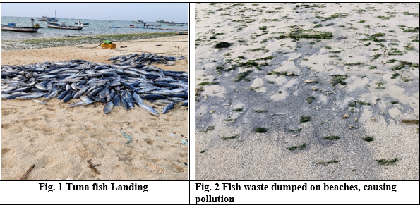
Lakshadweep, a fragile coral island ecosystem heavily dependent on marine fisheries, produces over 21,000 tonnes of fish annually. Alongside this production comes a major challenge 6,300 to 10,500 tonnes of fish waste each year, often dumped near landing centres and beaches. This not only threatened coral reefs and coastal sanitation but also resulted in the loss of valuable nutrients that could have supported local agriculture and livelihoods.
Recognising this challenge as an opportunity, ICAR–Krishi Vigyan Kendra, Lakshadweep, in collaboration with ICAR–Central Institute of Fisheries Technology, Kochi, successfully demonstrated a sustainable and decentralized fish waste valorisation model transforming what was once an environmental liability into an economic and ecological asset.
The Initiative
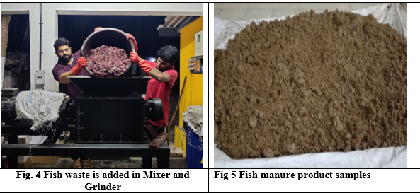
On 2 October 2021, a Fish Waste Management Unit was established in Lakshadweep with technical support from ICAR–CIFT. The unit, equipped with shredders and mixers worth ₹3.5 lakh, introduced a 500 kg/day fish waste processing line. This facility enabled the conversion of fish waste into value-added products such as:
• Organic fish manure through composting with cocopeat and microbial cultures
• Fish silage, a protein-rich liquid suitable for animal feed and fertiliser
• Poultry and aquaculture feed using nutrient-rich tuna waste
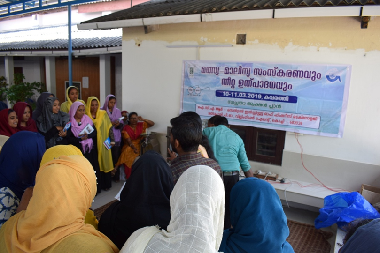
To ensure sustainability, KVK–Lakshadweep focused strongly on capacity building and community ownership. Structured training programmes were organised for farmers, fishers, women Self-Help Groups (SHGs), and rural youth, covering scientific waste processing, quality control, entrepreneurship, and eco-friendly practices. Continuous handholding, demonstrations, and exposure visits strengthened confidence and adoption at the grassroots level.
Measurable Impact
The intervention delivered clear economic, environmental, and social gains:
•112 beneficiaries trained, including SHGs and local entrepreneurs
•Four women-led SHGs incubated, each producing about 2,890 kg per month
•Average monthly income of ₹14,450 per SHG, creating stable local livelihoods
•On-Farm Trials (OFTs) showed a Benefit–Cost ratio of 1.78 for fish waste–based ornamental fish feed, compared to 1.02 for commercial feed
•Significant reduction in fish waste dumping on beaches, improving coastal sanitation and public health
The initiative also reduced input costs for organic farming and animal husbandry, strengthened the circular economy, and enhanced livelihood resilience in the island ecosystem.
Broader Significance
This success story demonstrates that fish waste is not a burden but a valuable bio-resource. By integrating environmental protection with enterprise development, the Lakshadweep model offers a replicable framework for island territories and coastal regions where waste disposal options are limited.
The initiative aligns strongly with national priorities under the Blue Economy, Swachh Bharat Mission, and organic farming programmes, while supporting sustainable fisheries and women-led entrepreneurship.
Conclusion
The collaborative effort of KVK–Lakshadweep and ICAR–CIFT has proven that sustainable fish waste management can deliver a win–win outcome protecting fragile marine ecosystems while generating income, employment, and local self-reliance. Validated through OFTs, FLDs, and mandatory KVK activities, this model stands as a compelling success story of innovation, sustainability, and community-driven development, offering valuable lessons for small island ecosystems across India and beyond.
(Source: ICAR-Krishi Vigyan Kendra, Lakshadweep)




फेसबुक पर लाइक करें
यूट्यूब पर सदस्यता लें
X पर फॉलो करना X
इंस्टाग्राम पर लाइक करें