

Lakshadweep, India’s smallest Union Territory, has traditionally depended on coconut cultivation as the backbone of food security and livelihoods. Over time, however, rodent infestation emerged as one of the most serious threats to coconut productivity, leading to severe yield losses and growing economic hardship for farmers. Conventional rodent control practices such as community hunts and chemical rodenticides gradually lost effectiveness due to social changes, scarcity of skilled climbers, dense coconut canopies, and ultimately the declaration of Lakshadweep as an “Organic State,” which prohibited chemical control methods altogether. This combination of ecological, social, and regulatory challenges demanded a sustainable and innovative alternative.
In response, ICAR–Krishi Vigyan Kendra, Lakshadweep, in collaboration with Kerala Agricultural University, ICAR–AINPVPM, and the Department of Agriculture, UT Lakshadweep Administration, initiated an eco-friendly intervention based on biological control of rodents using Barn Owls (Tyto alba). This approach sought to restore ecological balance while addressing the persistent problem of rodent damage in coconut plantations.
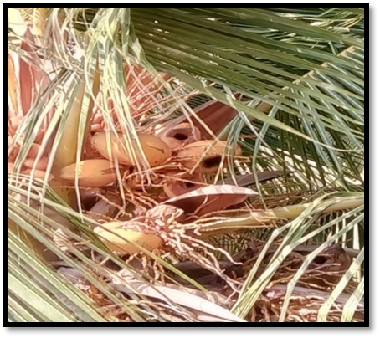
The extent of rodent damage had reached alarming proportions. On Kavaratti Island alone, assessments indicated yield losses of up to 44 percent, resulting in an estimated economic loss of ₹6.04 crore per year. Even in more recent years, losses continued at 30–40 percent, posing a serious threat to the sustainability of coconut-based livelihoods and the island’s agrarian economy.
Recognizing the ecological suitability of Barn Owls as natural predators of rodents, KVK Lakshadweep designed a pilot Integrated Pest Management programme centered on biological control. As part of the intervention, three pairs of Barn Owls were procured from wildlife rescue centres in Kerala with all statutory approvals. A centrally located aviary measuring 40 ft × 15 ft was constructed at the State Medicinal Plants Garden, Kavaratti, with an investment of approximately ₹8 lakh. The owls underwent safe transport, quarantine, and an 82-day acclimatization period to ensure successful adaptation to the island environment.
Community participation formed a crucial pillar of the programme. Awareness campaigns, school-level programmes, public announcements, and informative signage were implemented to build community acceptance and ensure protection of the Barn Owls. Scientific monitoring was undertaken across approximately 2,000 coconut palms covering all 12 wards of Kavaratti Island, with pellet analysis confirming active predation on rodents and validating the effectiveness of the intervention.
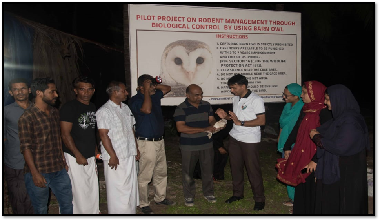
The outcomes of the programme exceeded expectations. All introduced Barn Owls survived and adapted successfully, soon breeding and increasing their population to more than 35 individuals. Farmers reported a visible and consistent decline in rodent activity and coconut damage, which was further corroborated through systematic monitoring and pellet analysis. Notably, there were no incidents of poultry predation or adverse ecological impacts, reinforcing the safety and ecological compatibility of the approach. The initiative aligned seamlessly with Lakshadweep’s organic farming mandate and contributed positively to ecological balance.
From an economic and environmental perspective, the intervention proved highly cost-effective. With a one-time investment of around ₹10 lakh, the programme delivered long-term and sustainable rodent control. It eliminated reliance on chemical rodenticides, safeguarded soil health and biodiversity, protected human well-being, and significantly reduced economic losses caused by rodent damage.
The success achieved on Kavaratti Island stands as a strong proof-of-concept, demonstrating that Barn Owl–based biological control is practical, scalable, and environmentally sound, particularly for island ecosystems and organic farming regions. Encouraged by these results, the initiative offers a clear roadmap for scaling up Barn Owl introduction, institutionalizing community awareness, establishing routine ecological monitoring, and replicating the model across other islands of Lakshadweep and similar agro-ecological regions.
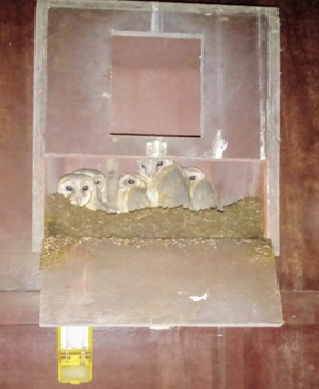
In conclusion, the Barn Owl biological control programme in Kavaratti Island transformed a long-standing agricultural challenge into a compelling story of innovation and sustainability. By harnessing nature’s predator–prey balance, the initiative restored coconut productivity, protected the environment, and strengthened farmer livelihoods. It now stands as a shining example of how ecological solutions can deliver lasting agricultural success under organic farming systems.
(Source: ICAR–Krishi Vigyan Kendra, Lakshadweep)




फेसबुक पर लाइक करें
यूट्यूब पर सदस्यता लें
X पर फॉलो करना X
इंस्टाग्राम पर लाइक करें