

Food security is incomplete without nutritional security, and India continues to face a serious challenge of child malnutrition, with nearly 43 percent of children under five being underweight and 48 percent suffering from stunting due to chronic undernutrition. Even in Kerala, the National Family Health Survey has revealed that more than 75 percent of children experience mild to moderate malnutrition, underscoring the urgent need for affordable, nutritious, and easily accessible supplementary foods. At the same time, farm women play a pivotal role in strengthening household nutrition security by contributing to food production, improving dietary quality, and diversifying food consumption, thereby directly influencing the nutritional well-being of families.
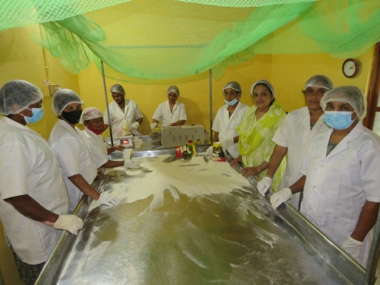
Recognizing these challenges and opportunities, ICAR–Krishi Vigyan Kendra (KVK), Kasaragod developed and popularized Amrutham Nutrimix, a low-cost, pre-cooked, ready-to-eat supplementary food formulated from locally available grains and greens. This innovation addressed malnutrition among children, particularly those attending Anganwadis, while simultaneously creating a sustainable pathway for women’s self-employment, income generation, and social upliftment through Kudumbashree-based enterprises. Over the years, the Nutrimix programme has emerged as a model of large-scale technology application, effectively linking child nutrition with women empowerment.
Malnutrition among preschool children remained a major concern, as many lacked access to a balanced diet during their critical formative years. The food traditionally provided in Anganwadis, such as rice gruel and green gram, was often nutritionally inadequate, monotonous, and insufficient to meet the dietary needs of growing children. The absence of properly packaged and convenient supplementary foods that could be easily prepared and distributed, particularly in remote and rural Anganwadis, further reduced the effectiveness of government nutrition programmes.
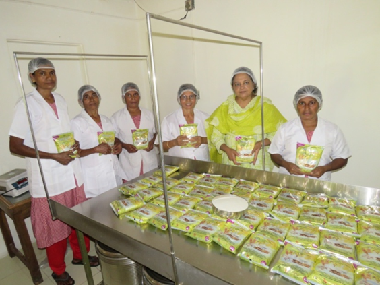
At the same time, women self-help groups in the region faced limited opportunities for stable income generation. Most women depended on low-paid daily wage labour or beedi work, which offered little financial security or long-term empowerment. This economic dependence constrained their role in household decision-making and perpetuated gender inequality within families, highlighting the need for an intervention that could simultaneously ensure nutritional security for children and promote economic empowerment for rural women.
To address these dual challenges, ICAR–KVK Kasaragod implemented a series of strategic interventions that laid the foundation for the successful Amrutham Nutrimix enterprise. The initiative began with on-farm testing of various supplementary food formulations among Anganwadi children under the ICDS project, along with organoleptic and consumer preference evaluations involving teachers, doctors, and self-help group members. This process resulted in the development of a refined, pre-cooked blend of wheat, soya chunks, groundnut, Bengal gram, and jaggery that was nutritious, palatable, and convenient for preschool children.
Following this, frontline demonstrations were conducted in selected Panchayats to standardize methods of roasting, pulverizing, mixing, and packaging. Practical training programmes, group meetings, nutrition awareness campaigns, and exhibitions complemented these efforts, equipping women with production and marketing skills. Self-help groups were also trained to prepare value-added Nutrimix products such as ladoo, burfi, steam cake, and upma, creating additional income opportunities.
The initiative gained further momentum through collaboration with Kudumbashree, Kerala’s statewide network of women’s self-help groups, which facilitated large-scale upscaling and designated the Keerthi Nutrimix Unit at Bedadka as a Master Training Centre. This centre imparts production and quality assurance skills to women from across the state. The collaborative approach ensured that Nutrimix reached even the remotest Anganwadis while transforming rural women into confident entrepreneurs who earned stable incomes, enhanced their self-esteem, and actively participated in household decision-making.
Feedback from Anganwadi teachers and health staff confirmed the effectiveness of Amrutham Nutrimix, reporting improved health, weight gain, and high acceptability among children. Mothers appreciated its taste, ease of preparation, and nutritional value. The technology also transformed women’s livelihoods, with 241 Nutrimix units now employing 1,584 women, each earning ₹10,000–12,000 per month. With an annual production of 18,000 MT benefitting more than 5.5 lakh children, the programme has simultaneously addressed malnutrition and strengthened women’s economic independence and social status.
After its initial success in Kasaragod, Amrutham Nutrimix was scaled up across Kerala through Kudumbashree, becoming one of the most successful women-led nutrition enterprises in the state. At present, 241 units operate across Kerala, producing about 18,000 MT annually and reaching over 5.5 lakh children. Malappuram leads with 53 units producing 200 tonnes per month, followed by Kozhikode with 50 units and Kannur with 30 units.
The Nutrimix enterprise has proven to be highly profitable and sustainable. For a monthly production of 2,500 kg, the total cost is approximately ₹66,500, covering labour, raw materials, fuel, packaging, electricity, rent, and transport. With a production cost of ₹26.62 per kg and a realized price of ₹56 per kg, the net profit stands at ₹29.38 per kg, resulting in a benefit–cost ratio of 2.1. This ensures steady monthly income for women self-help group members and replaces uncertain wage labour with dignified entrepreneurship, while surplus earnings are often pooled for reinvestment and member loans.
Beyond nutritional security and income generation, the Amrutham Nutrimix initiative has created lasting social benefits. Women who were earlier confined to low-paid beedi work or daily wage labour now enjoy stable incomes, improved household stability, and the ability to independently meet educational and daily expenses. By pooling surplus earnings and extending interest-free loans within groups, self-help groups have strengthened financial resilience, enhanced confidence, and improved women’s decision-making power and social dignity.
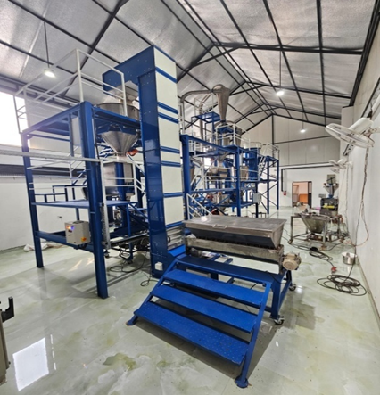
The horizontal spread of Amrutham Nutrimix began with KVK Kasaragod’s trials and self-help group-led units such as Kandamkuttichal, Keerthi, Akshaya, and Sanjeevani, which quickly gained acceptance through Anganwadis, retail shops, and door-to-door sales. With Kudumbashree’s support, the Keerthi Unit at Bedadka evolved into a Master Training Centre, training nearly 900 women and facilitating statewide adoption. Today, 241 units across Kerala produce 18,000 MT annually, reaching 5.5 lakh children and employing 1,584 women who earn ₹5,000–6,000 per month. The Sanjeevani Amrutham Nutrimix Unit of Thazhekkode, Malappuram, operates fully automatic machines producing tonnes of Nutrimix every month.
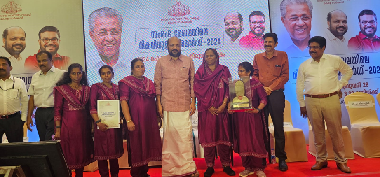
The Kerala Kudumbashree received the Glenmark Nutrition Award from the UN World Food Programme in 2022 for successfully reaching five lakh children through the Amrutham Nutrimix initiative. The model has attracted national and international attention, with entrepreneurs from Mumbai and Karnataka, as well as delegations from Sri Lanka and South Africa, visiting KVK Kasaragod and the Nutrimix Master Training Centre at Bedadka to study and replicate the enterprise.
Overall, the Amrutham Nutrimix initiative of ICAR–KVK Kasaragod was conceived to address persistent child malnutrition and limited livelihood opportunities for rural women. Through systematic testing, demonstrations, and capacity building of women’s self-help groups, a pre-cooked supplementary food mix evolved into a widely accepted nutrition intervention. With strong institutional support from Kudumbashree, the technology achieved rapid statewide adoption, benefitting over 5.5 lakh children annually and enabling women to earn steady incomes with a benefit–cost ratio of 2.1. Beyond economic gains, the initiative has strengthened household stability, enhanced gender equality, and positioned Nutrimix as a model of large-scale, community-led technology adoption that advances both child nutritional security and women’s empowerment.
(Source: ICAR-Krishi Vigyan Kendra, Kasaragod, Kerala)





फेसबुक पर लाइक करें
यूट्यूब पर सदस्यता लें
X पर फॉलो करना X
इंस्टाग्राम पर लाइक करें