

The ICAR-Central Institute of Agricultural Engineering, Bhopal has been playing a pivotal role in strengthening agricultural mechanization and post-harvest engineering in India. With a mandate to enhance farm productivity, reduce drudgery, improve energy efficiency, and minimize post-harvest losses, the institute has consistently contributed towards building a robust agri-value chain through research, technology development, capacity building, technology assessment, and dissemination.
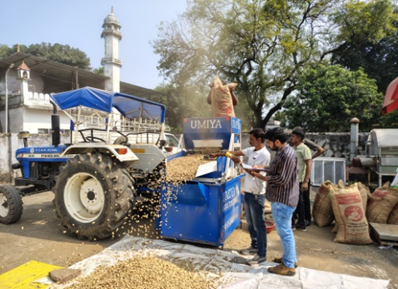
In line with this vision, the establishment of the Post-Harvest Equipment/Machinery (PHEM) Testing Centre under the Agro-Produce Processing Division at ICAR-CIAE, Bhopal, has emerged as a landmark initiative. Authorized by the Department of Agriculture & Farmers Welfare, Government of India, the centre serves as a nationally recognized facility for certification and performance evaluation of post-harvest machinery. Over the years, it has evolved into a credible platform for manufacturers, entrepreneurs, and stakeholders across the country to validate the quality, efficiency, and performance of post-harvest machinery.
The PHEM Testing Centre is equipped with advanced instrumentation, modern laboratories, and a highly skilled technical team. The testing protocols strictly follow the standards prescribed by the Bureau of Indian Standards (BIS), ensuring uniformity in fabrication, reliability in performance, and nationwide acceptance of testing outcomes. The centre is authorized to evaluate a diverse range of post-harvest machinery, including cleaner-cum-graders, destoners, mini rice mills, flour mills, dal mills, oil expellers, dryers, and several other processing units.
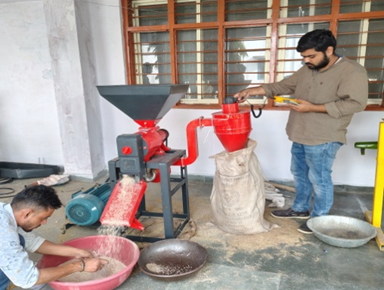
The evaluation process involves comprehensive no-load, load, and long-run tests, along with detailed assessment of constructional components and material quality. Critical performance parameters such as capacity, efficiency, energy consumption, grain losses, and output quality are meticulously examined to ensure the machines meet the required standards.
The centre has attracted participation from manufacturers and stakeholders across multiple states, demonstrating its national relevance and outreach. Machinery for testing has been received extensively from Haryana, Uttar Pradesh, Gujarat, Madhya Pradesh, Chhattisgarh, and Maharashtra. The nature of machinery submitted often reflects the agro-climatic conditions and cropping patterns of the respective regions. For instance, mini rice mills are predominantly received from Uttar Pradesh, particularly from the Tanda region where rice cultivation is widespread and tractor-operated mini rice mills are highly popular. Similarly, Maharashtra’s diversified agricultural production system has led to the submission of a wide variety of machinery ranging from cleaner-cum-graders and dal mills to oil expellers, sugarcane juice extractors, and papad-making machines.
Since its inception, the PHEM Testing Centre has successfully tested 152 post-harvest machines and generated revenue amounting to ₹230 lakh. Following infrastructure upgradation in 2024, the centre now has the capacity to test 40–50 machines annually, with an estimated revenue generation potential of nearly ₹80 lakh per year.
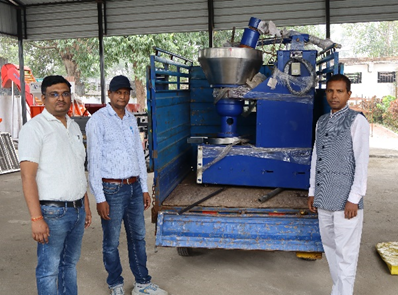
The number of machines submitted for testing is influenced by factors such as government subsidy schemes, validity periods of previously certified machines, market demand, and the introduction of new agricultural technologies. A steady rise in testing applications reflects the growing confidence of manufacturers and stakeholders in the centre’s technical excellence and credibility.
Among the different categories of machinery tested, seed and grain cleaner-cum-graders account for nearly 48% of the total machines evaluated. Their prominence underscores the crucial role they play in improving grain quality, purity, and market value. Simple cleaning and grading operations can enhance the market value of food grains by nearly 10–15%, enabling farmers to secure better returns from cereals, pulses, oilseeds, millets, and other crops. Consequently, the scientific performance evaluation of such machinery is instrumental in helping farmers and entrepreneurs select efficient and reliable equipment for post-harvest operations.
Beyond technology validation, the PHEM Testing Centre has also emerged as a sustainable model for revenue generation. The revenue earned through commercial testing services is effectively reinvested into strengthening research and development activities through corpus fund projects, as well as supporting developmental work of the division and the institute. This self-sustaining model has significantly contributed to innovation in post-harvest technologies, prototype development, and institutional capacity enhancement.
The impact of the centre extends far beyond revenue generation. By ensuring the availability of standardized, efficient, and reliable machinery, the centre contributes directly to reducing post-harvest losses, improving product quality, and enhancing value addition in agricultural produce. It also strongly supports national initiatives promoting agricultural mechanization, food processing, and farmers’ income enhancement by facilitating access to certified and high-performance equipment. In addition, the PHEM Testing Centre has emerged as an important hub for skill development and capacity building in post-harvest engineering and machinery evaluation.
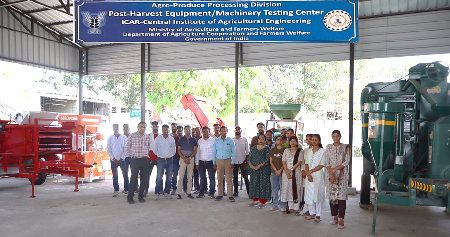
More than 5,000 participants, including faculty members, students, entrepreneurs, manufacturers, and farmers from across the country, have been trained at the centre so far. These programmes have played a significant role in spreading awareness, strengthening technical knowledge, and promoting adoption of improved post-harvest technologies among stakeholders.
The remarkable success of the PHEM Testing Centre at ICAR-CIAE, Bhopal, stands as a compelling example of how institutional expertise, when aligned with national priorities, can deliver impactful outcomes in quality assurance, technological advancement, capacity building, and financial sustainability. The centre continues to strengthen India’s post-harvest sector and remains poised to further expand its services and technological outreach in the years ahead.
(Source: ICAR-Central Institute of Agricultural Engineering, Bhopal)





फेसबुक पर लाइक करें
यूट्यूब पर सदस्यता लें
X पर फॉलो करना X
इंस्टाग्राम पर लाइक करें