

29 June 2026, Chennai
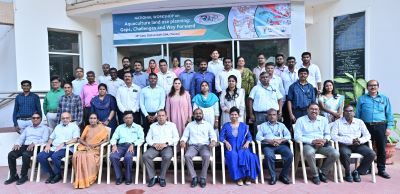
ICAR-Central Institute of Brackishwater Aquaculture, Chennai conducted a national workshop on Aquaculture Land Use Planning – Gaps, Challenges and Way forward today at Chennai. Shri Devasenapathy, IAS, the Member Secretary, CAA, Dr Chelsasini, Director, Fisheries, Dr P. Krishnan, Director, Bay of Bengal Programme , Dr Mohamed Koya, Fisheries Development Commissioner, Govt. of India. Dr A.G. Ponniah, Former-Director, ICAR-CIBA, Dr Kuldeep K Lal, Director, ICAR-CIBA, Officials from the coastal states, shrimp industry representatives and scientists of CIBA participated in the workshop.
Shri. Devasenapathy, IAS, Secretary, CAA underlined that every state, which wishes to promote aquaculture, should start with RAZP to minimise the conflicts and other issues associated with aquaculture planning. Proper planning helps in efficient use of resources, RAZP is the blue print for that. RAZP can help in mid-course corrections of regulatory guidelines, which needs to be state specific.
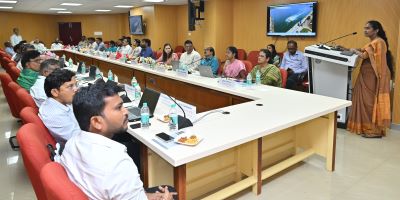
Dr. Kuldeep K Lal in his context setting remarks highlighted that RAZP helps in area and species zonation including the traceability of aquaculture sites avoiding land use conflicts with other primary production sectors like agriculture and facilitate the structured aquaculture with adherence to food safety.
Dr Mohammed Koya, Fisheries Development Commissioner, Govt. of India felt that RAZP is one of the best outputs brought out by CIBA. The methodology of RAZP may be presented to Fisheries Ministry, Govt. of India for wider consultations and upscaling is possible.
Dr P. Krishnan, Director, BoBP stated that the CAA needs to give the legitimacy to the RAZP and the methodology so that the development departments can adopt RAZP for aquaculture planning.
ICAR-CIBA has developed a Responsible Aquaculture Zone Planning (RAZP) tool kit to identify potential land resources for aquaculture expansion. The RAZP framework systematically excludes environmentally sensitive and restricted areas and integrates multiple datasets, including land use and land cover derived from satellite imagery, water quality and availability, soil characteristics, and existing regulatory frameworks and field verification. It identifies suitable areas based on resource availability, particularly water sources, and prioritizes lands that are currently salt affected, unproductive or unsuitable for agriculture.
Mapping of existing aquaculture farms provides insights into their spatial distribution and extent, while the identification of potential zones highlights areas for future expansion without causing environmental degradation or user conflicts. The RAZP framework has been implemented in states such as Tamil Nadu, Puducherry, Maharashtra, and Gujarat, and there are plans to extend it to other coastal states. The workshop was conducted to sensitize the states about the RAZP tool kit for aquaculture planning and deliberate on the state specific issues in responsible development of aquaculture in the states.
Dr A.G. Ponniah observed that the RAZP framework effectively translates scientific information into a practical decision-support language that meets the requirements of State regulatory agencies.
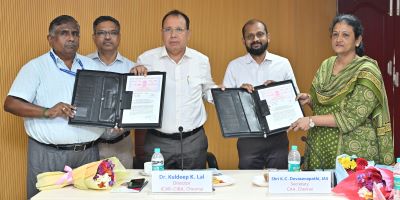
During the workshop, a Memorandum of Understanding (MoU) was signed between ICAR–Central Institute of Brackishwater Aquaculture and the Coastal Aquaculture Authority (CAA). The MoU aims to strengthen collaboration in preparing technical content and promoting coastal aquaculture technologies through print, electronic, and social media platforms, thereby enhancing outreach and dissemination among stakeholders.
(Source: ICAR–Central Institute of Brackishwater Aquaculture, Chennai)





फेसबुक पर लाइक करें
यूट्यूब पर सदस्यता लें
X पर फॉलो करना X
इंस्टाग्राम पर लाइक करें