

12-14 May 2026, Hyderabad
ICAR-Central Research Institute for Dryland Agriculture, Hyderabad organised a field mobilisation programme under the Odisha Agriculture Drought Mitigation Programme (OADMP) project in Raruan Block of Mayurbhanj district, Odisha, from 12–14 May 2026. The initiative focused on mobilising village committees for the identification and registration of farmers willing to adopt climate-resilient non-paddy crops and natural green manuring practices.
The scientific team conducted extensive field activities across the Gram Panchayats of Godapalasa, Bhanjakia, and Tilokuti in collaboration with the Block Agriculture Officer (BAO) and Block Technology Manager (BTM) of Raruan Block. Through interactive meetings with village committees, the team mapped targeted land parcels and prepared a verified database of farmers to facilitate direct input support under the project.
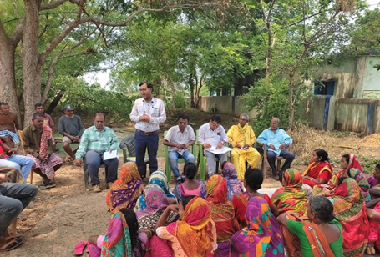
The target villages currently depend predominantly on continuous rice cultivation during the Kharif season. To promote sustainable agriculture and reduce climate vulnerability, ICAR-CRIDA is encouraging crop diversification in upland areas by identifying progressive cultivators through village committees who can serve as model farmers for wider adoption within their communities.
Under the initiative, the registered farmers will gradually shift from traditional paddy cultivation to climate-resilient alternative crops such as pigeonpea, groundnut, ragi, and maize.
In addition to upland crop diversification, the programme places significant emphasis on biological soil rejuvenation through the cultivation of Dhaincha as a green manure crop in lowland paddy fields. Scientists, along with village committee members, sensitised identified farmers on utilising pre-monsoon showers for timely sowing of Dhaincha.
The scientists explained that Dhaincha naturally fixes atmospheric nitrogen and, when incorporated into the soil during its peak vegetative stage after 6–8 weeks of growth, helps restore soil fertility naturally before the main cropping season. Through active involvement of village committees, a transparent and community-supported mechanism has been established for seed distribution and monitoring of field-level implementation.
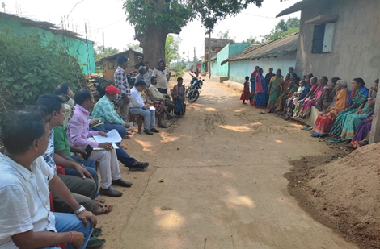
During the programme, the scientific team also highlighted the long-term economic benefits of strengthening post-harvest infrastructure and enhancing local self-reliance. The proposed interventions include the establishment of decentralised mini-mills, community-managed seed banks to address local seed shortages, and Custom Hiring Centres (CHCs) to improve smallholders’ access to agricultural machinery at affordable rates.
To further enhance land productivity and create additional income opportunities, farmers will also be supported in establishing plantations of high-value fruit crops such as mango, litchi, guava, and pomegranate along with dedicated timber plantation lines, thereby generating sustainable long-term revenue streams for the region.
(Source: ICAR-Central Research Institute for Dryland Agriculture, Hyderabad)





फेसबुक पर लाइक करें
यूट्यूब पर सदस्यता लें
X पर फॉलो करना X
इंस्टाग्राम पर लाइक करें