

The Government of India, through the Ministry of Social Justice and Empowerment (MSJ&E), has been implementing the Central Sector Scheme of Special Central Assistance (SCA) to the Scheduled Castes Sub Plan (SCSP) since 1980, with a focus on advancing the socio-economic development of Scheduled Caste (SC) communities, particularly those living below the poverty line. The scheme is designed to expand livelihood opportunities and address critical developmental gaps.
Under this initiative, the Indian Council of Agricultural Research, New Delhi, has been supporting the ICAR-Central Institute of Agricultural Engineering, Bhopal since 2018–19. Building on this support, the institute has implemented a series of targeted interventions from April 2019 onwards, focusing on awareness generation, technology dissemination, skill development, and direct benefit transfer to rural beneficiaries.
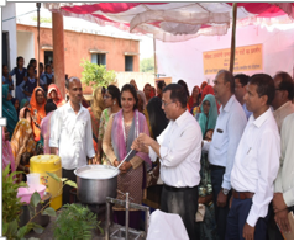
The programme has made a substantial impact, reaching 10,509 beneficiary families covering a rural population of 52,545 across 80 villages in districts of Bhopal, Ujjain, Datia, Vidisha, and parts of Tamil Nadu. This was achieved through a combination of direct benefit transfer and the organization of 176 training programmes, skill development initiatives, and field demonstrations.
Year-wise progress reflects the sustained outreach of the programme: 1,399 families (6,995 individuals) benefited in 2019–20; 1,014 families (5,070 individuals) in 2020–21; followed by 1,009 (5,045) in 2021–22; 2,355 (11,775) in 2022–23; 1,070 (3,850) in 2023–24; 1,403 (7,015) in 2024–25; and 2,759 families (13,795 individuals) in 2025–26.
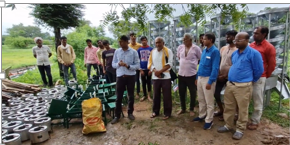
A major component of the initiative has been capacity building through structured training programmes on agricultural engineering and allied sectors. Farmers and rural youth were trained in enterprise development in food processing, including soybean processing, along with farm mechanization, renewable energy applications, and efficient irrigation practices. These efforts significantly enhanced awareness and capabilities for adopting modern agricultural technologies and establishing agri-based enterprises.
The distribution of agricultural tools, equipment, and input materials under direct benefit transfer has been instrumental in strengthening livelihoods. A total of 11,917 agricultural tools and equipment, 37 tonnes of quality seeds (wheat, gram, and maize), and 20 tonnes of fertilizers were distributed among beneficiaries. The use of improved seeds alone led to a 20–30% increase in wheat productivity in selected villages of Bhopal district.
Mechanization support through tools such as manually operated cono weeders, hand ridgers, inclined plate planters, Naveen dibblers, twin wheel hoes, vegetable transplanters, stalk uprooters, and dryland weeders has significantly reduced drudgery and improved operational efficiency. Around 40–50% of beneficiaries have adopted these technologies, resulting in nearly a 20% increase in productivity of crops such as wheat, soybean, rice, and vegetables.
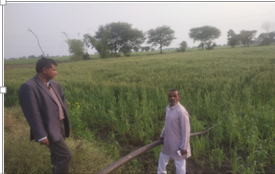
Post-harvest and value-addition interventions have further strengthened income generation. A set of soybean processing equipment including wet grinders, storage tanks, and pressure cookers was distributed to 151 beneficiaries, enabling them to produce value-added products such as soya milk, tofu, tomato puree, and fruit-based items at the household level. Equipment like spiral graders, manual air screen cleaners, sack holders, and maize shellers have seen 100% adoption, improving cleaning and grading efficiency and enabling farmers to secure nearly 20% higher market returns.
Irrigation and water-use efficiency interventions have also delivered notable outcomes. Drip-tape irrigation systems provided to 100 farmers in Coimbatore enhanced coriander cultivation profitability, while the distribution of sprayers, irrigation pipes, and pumps improved water-use efficiency and productivity for approximately 3,000 farmers. Additionally, tarpaulin sheets distributed to 100 rural women in Tamil Nadu facilitated efficient groundnut decortication.
The programme has had a transformative impact on women’s empowerment. Skill development initiatives combined with the distribution of women-friendly technologies have reduced drudgery in farm operations, supported the establishment of rural agro-enterprises, and provided sustainable livelihood opportunities to around 4,500 rural women.
The initiative has received encouragement from several dignitaries, including Shri Shivraj Singh Chouhan, Union Minister of Agriculture & Farmers Welfare; Dr M. L. Jat, Secretary, DARE and Director General, ICAR; Smt Pragya Singh Thakur, Member of Parliament, Bhopal; Smt Sandhya Rai, Member of Parliament, Bhind; Shri Vishnu Khatri; and Smt Sushma Singh, along with Directors and other officials, who participated in direct benefit transfer events and motivated beneficiaries to effectively utilize the support provided.
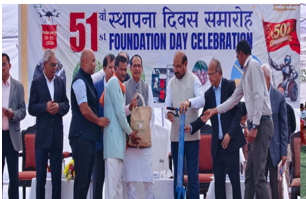
Overall, the integration of direct benefit transfer, field-level technological interventions including high-yielding seed varieties, fertilizers, ICAR-CIAE developed tools and machinery, renewable energy devices, irrigation systems such as drip-tape technology, and food processing equipment along with structured training and skill development programmes, has significantly enhanced the efficiency of agricultural production systems. The initiative stands as a compelling example of how targeted interventions can drive livelihood support, promote self-employment, and foster inclusive economic development among rural communities.
(Source: ICAR-Central Institute of Agricultural Engineering, Bhopal)





फेसबुक पर लाइक करें
यूट्यूब पर सदस्यता लें
X पर फॉलो करना X
इंस्टाग्राम पर लाइक करें