

A Major Breakthrough in Poultry Health
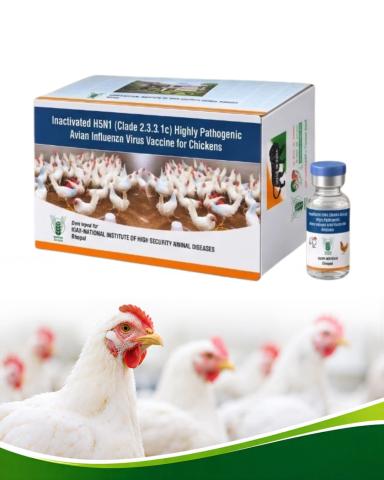
The Indian Council of Agricultural Research (ICAR), through its National Institute of High Security Animal Diseases (ICAR-NIHSAD), Bhopal, has achieved a major breakthrough with the development of India’s first indigenous inactivated vaccine against Highly Pathogenic Avian Influenza (HPAI), commonly known as bird flu. Designed for chickens, the vaccine specifically targets H5N1 Clade 2.3.2.1a, responsible for most bird flu outbreaks in chickens. It is the world’s first vaccine developed against this specific variant, for which no specific commercial vaccine was previously available. The vaccine aims to protect against strains circulating in India and strengthen preparedness for controlling outbreaks.
HPAI is a highly infectious disease that can cause mortality of nearly 100% among infected birds, leading to substantial losses through culling, movement restrictions and trade disruptions. Since its first detection in India in 2006, more than 500 combined outbreaks involving H5N1 and H5N8 subtypes have been reported. Its zoonotic potential also makes it a public health concern.
The vaccine assumes significance given the scale of economic and livelihood risks associated with the disease. A major outbreak could put over 20% of India’s poultry population at risk and potentially reduce GDP growth by up to 1.5%. The 2006 outbreak alone caused estimated direct and indirect losses of ₹2,200–3,000 crore. By strengthening preventive disease control, the vaccine is expected to safeguard poultry health, reduce economic losses and protect farmers’ livelihoods.
This breakthrough strengthens India’s indigenous animal vaccine development capabilities, poultry disease preparedness and biosecurity, while advancing the vision of Atmanirbhar Bharat and the integrated One Health approach, recognising the interconnectedness of animal, human and environmental health.