


29 May 2026, Sri Vijaya Puram, Andaman & Nicobar Islands
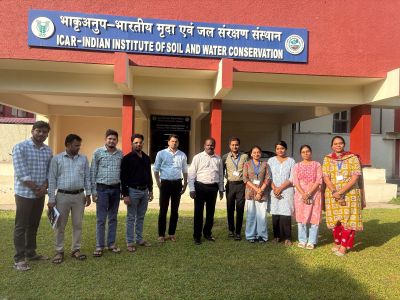
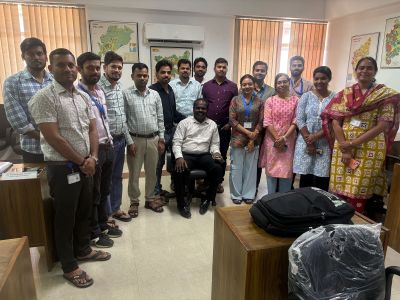
Dr M. Muruganandam, Head, Fisheries Science Division, ICAR–Central Island Agricultural Research Institute, Sri Vijaya Puram, Andaman & Nicobar Islands, delivered a series of special lectures to the 131st batch officer trainees of ICAR–Indian Institute of Soil and Water Conservation, Dehradun, today.
Dr Muruganandam was invited as a Special Guest Faculty Member for the Regular Officer Training Programme conducted by ICAR-IISWC, Dehradun from 22 April to 21 August 2026.
During his lectures, he elaborated on the principles of integrated watershed management and its diverse components, including drainage lines, rivers of different orders, wastelands and underutilized lands, water harvesting structures, farm ponds, aquatic resources, rural livestock, rangelands, and community grasslands. He highlighted the opportunities emerging from the interconnections among these components, such as water harvesting, river management, upland–lowland interactions, upstream–downstream linkages, and fodder management.
Explaining several contemporary concepts, Dr Muruganandam discussed the “Mountain to Ocean (M2O)” source-to-sink approach and the river continuum concept, which explains how fish species occupy different stretches of river ecosystems and why these aspects must be considered while planning conservation strategies. He also highlighted the relationship between runoff concentration time and environmental pollution potential, along with the assumptions involved in designing water harvesting structures (WHSs), limitations associated with runoff availability, landscape constraints, and water-use opportunities.
He emphasized the need to balance water harvesting potential with livelihood opportunities and discussed the effective design of water harvesting structures for integrated fish farming. Further, he explained the importance of balancing seasonal fodder availability with responsible grazing and rangeland management. Advanced fish farming technologies, water quality management, optimization of production inputs, and resource-efficient technologies for fisheries- and livestock-based rural livelihoods and food production systems were also highlighted during the sessions.
Dr. Muruganandam stressed that watershed management, fisheries development, and livestock production are inherently complementary and together play a crucial role in ensuring food security, nutritional well-being, and livelihood enhancement through micro-enterprise development.
Emphasizing that farming and food production systems are subsets of broader environmental management frameworks, he underlined the importance of balanced fertilizer use in the present context of fertilizer scarcity and ongoing nationwide awareness campaigns promoting judicious fertilizer application.
The lecture sessions concluded with an interactive question-and-answer session, during which the officer trainees actively engaged in discussions on integrated natural resource management and sustainable food production systems.
Around 20 officer trainees from Uttar Pradesh and Chhattisgarh attended the sessions.
(Source: ICAR–Central Island Agricultural Research Institute, Sri Vijaya Puram, Andaman & Nicobar Islands)





Like on Facebook
Subscribe on Youtube
Follow on X X
Like on instagram