


7 February 2026, New Delhi
A high-level delegation from Sri Lanka, led by Mr. Tilvin Silva, General Secretary of the Janatha Vimukthi Peramuna (JVP), visited ICAR–Indian Agricultural Research Institute, New Delhi, to understand India’s experience in sustainable, climate-resilient, and technology-driven agriculture.
The delegation included Ms. Janaki Adhikari (Central Committee Member, JVP), Mr. Kitnan Selvaraj (Member of Parliament, JVP), Mr. Karunanathan Ilankumaran (Member of Parliament, JVP), Mr. Henathilaka Gamage (Head, Media Unit, JVP), and Mrs. B.R. Kalpana Madhubhashini (Member, International Relations Committee, JVP).
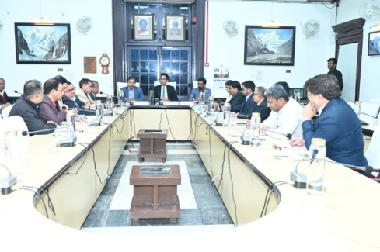
Welcoming the delegation, Ch Srinivasa Rao, Director, ICAR–IARI, highlighted the strong agro-ecological similarities between India and Sri Lanka and underscored the scope for mutual learning and cooperation. Dr. Rao stated that India and Sri Lanka share several common challenges and opportunities in agriculture, including similar soil types, tropical and sub-tropical climates, and comparable cropping systems.
“Both countries are facing pressing issues such as climate variability, coastal salinity ingress, soil degradation, and increasing pressure on natural resources. Addressing these challenges requires science-based, location-specific, and farmer-centric solutions,” he emphasized. He informed the delegation that India has achieved self-sufficiency in foodgrain production through sustained investments in agricultural research, technology dissemination, and institutional support to farmers. “Today, India not only meets its domestic food requirements but also extends support to several African and other developing countries during times of need, sharing both food and agricultural knowledge,” he added.
Dr. Rao elaborated on India’s integrated approach to sustainable agriculture, highlighting efficient management of food waste through recycling of crop residues, composting, and biomass utilization for soil health improvement. He explained that organic and natural farming systems are being promoted in suitable niches, supported by scientific validation, quality inputs, and market linkages. Responding to queries on crop losses due to animals, Dr. Rao explained that India is adopting a combination of technological, agronomic, and community-based solutions, including crop diversification, fencing innovations, repellent crops, and digital surveillance tools.
Dr C. Vishwanathan, Joint Director (Research) ICAR-IARI underlined the growing role of agri-startups in transforming Indian agriculture. “Agri-startups are acting as catalysts for innovation by bringing advanced technologies such as precision farming, sensors, drones, artificial intelligence, and decision-support systems directly to farmers, thereby enhancing productivity, profitability, and sustainability,” he added.
The Sri Lankan delegation actively interacted with scientists and expressed keen interest in India’s experiences related to food waste management, organic production systems, climate adaptation strategies, and mitigation of crop damage.
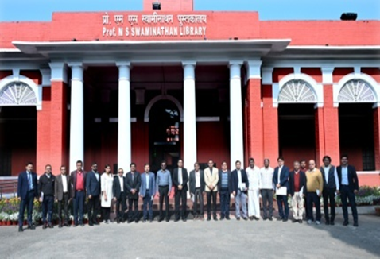
During the visit, the delegation toured state-of-the-art research and innovation facilities at ICAR–IARI, including the Nanaji Deshmukh National Plant Phenomics Facility, the Integrated Farming System (IFS) model, and the Centre for Protected Cultivation Technology, where they were briefed on advanced research aimed at improving resource-use efficiency, crop resilience, and farmers’ income.
The delegation appreciated the comprehensive scientific approach of ICAR–IARI and expressed interest in strengthening bilateral cooperation between India and Sri Lanka in agricultural research, capacity building, and technology exchange for ensuring long-term food and nutrition security.
(Source: ICAR–Indian Agricultural Research Institute, New Delhi)





Like on Facebook
Subscribe on Youtube
Follow on X X
Like on instagram