


30 April 2026
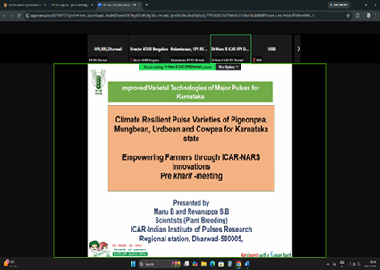
An online meeting on Pre-Kharif for Dissemination of Improved technologies for major pulse crops in convergence mode for Karnataka State was organised today jointly by ICAR-Indian Institute of Pulses Research, Kanpur & IIPR- RS, Dharwad and ICAR-ICAR-Agricultural Technology Application Research Institute, Bengaluru and Karnataka State Department of Agriculture, Govt. of Karnataka.
The meeting was attended by Dr Girish Prasad Dixit, Director, ICAR-IIPR, Kanpur; Dr. Ranjay Singh, Assistant Director General (AE), ICAR; Dr V. Venkatasubramanian, Director, ICAR-ATARI, Bengaluru; Dr Madhusudhan, Additional Director & Nodal Officer, National Pulses Mission, Karnataka State Department of Agriculture (KSDA), Govt of Karnataka; Scientists of IIPR, Kanpur, IIPR-RS, Dharwad, Scientist of ATARI, Bengaluru, Incharges and SMS of KVKs from Karnataka, Deputy Directors of Agriculture (DDA) & Joint Directors of Agriculture (JDA) and Agriculture Officers from different districts of Karnataka.
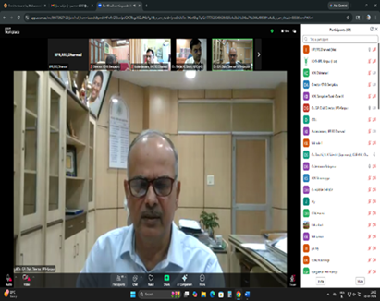
Dr Girish Prasad Dixit outlined the national scenario of pulse production and highlighted Karnataka’s contribution, emphasizing strategies for enhancing production through horizontal and vertical expansion, including a district-wise cluster-based approach. He underscored the importance of pigeonpea in the state and recommended adoption of recently released high-yielding varieties, along with scientific management of wilt disease through coordinated efforts of KVKs and state departments.
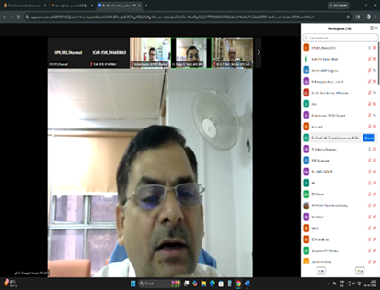
Dr Ranjay Singh appreciated the organization of Pre-Kharif meetings for effective dissemination of improved pulse varieties and technologies. He emphasized the role of KVKs in technology transfer through demonstrations and advised inclusion of these interventions in annual plans. He highlighted the need to address wilt in pigeonpea through improved agronomic practices, encouraged use of recently released varieties, and stressed the importance of clear guidelines for technology dissemination.
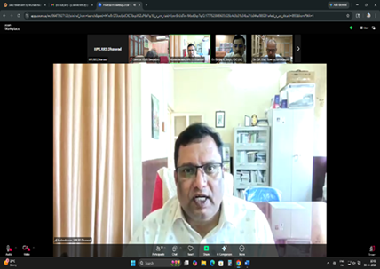
Dr V. Venkatasubramanian emphasized promotion of balanced fertilizer use and integrated nutrient management in pulses, while drawing attention to climate change impacts and the need for adaptive strategies. He also highlighted concerns regarding quality seed availability and called for enhanced financial support for programme implementation.
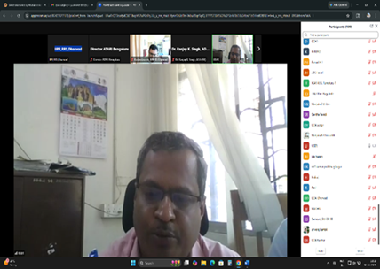
Dr Madhusudhan noted that Karnataka has 34.50 lakh hectares under pulses with a production of 19.0 million tonnes, but faces a significant shortfall in seed availability of improved varieties. He requested support for dissemination and procurement of newly released varieties and highlighted ongoing distribution of mini kits under the National Pulses Mission.
Technical presentations by scientists were followed by discussions, highlighting the need for access to recent varieties and quality seed, biopesticides, drought mitigation strategies, disease- and weed-management solutions, and improved mungbean varieties.
Participants also emphasized the need for clear CFLD guidelines, strengthening of plant. protection efforts, monitoring of seed hubs, and regular pre-season meetings.
A total of 100 participants attended the online meeting.
(Source: ICAR-Indian Institute of Pulses Research, Kanpur)





Like on Facebook
Subscribe on Youtube
Follow on X X
Like on instagram