


4 December 2025, New Delhi
The Indian National Science Academy (INSA), in collaboration with the ICAR–Indian Agricultural Research Institute, organized the INSA–IARI National Seminar on ‘From STEM to STEAM” at ICAR–IARI, New Delhi today. Held as part of the Celebration of Science Week at Delhi 2025, the seminar focused on integrating creativity, societal context and innovation into agricultural education and research through the STEAM framework. The seminar emphasized the need to broaden traditional STEM approaches to better address emerging challenges in agriculture, food security and sustainable development.
Dr. Anupama Singh, Dean & Joint Director (Education), ICAR–IARI, underscored the importance of a holistic transformation from STEM to STEAM.
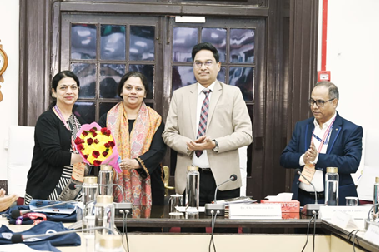
Dr. Brajesh Pandey, Executive Director, INSA and Co-Chair, outlined the rationale behind INSA’s initiative to decentralize its Annual General Meeting through wider scientific engagement across institutions. He said that hosting the seminar at IARI demonstrates INSA’s commitment to expanding scientific outreach and fostering national collaboration.
Prof. Sneh Lata Singla-Pareek, Group Leader, ICGEB and Co-Chair, highlighted ICAR-IARI’s historic contributions to the Green Revolution and national food security. She acknowledged the significance of organizing the seminar at IARI and congratulated the newly elected INSA Fellows.
Chairing the session, Dr. Ch. Srinivasa Rao, Director, ICAR–IARI, commended INSA’s leadership in advancing science in India. Terming the shift from STEM to STEAM both timely and essential, he emphasized the centrality of agriculture to nation-building and Viksit Bharat, reminding that ‘everything can wait, but not food.’ He stated that many Sustainable Development Goals are closely linked to agriculture and highlighted the Prime Minister's recent visits to ICAR-IARI to review research on Integrated Farming Systems, pulses, oilseeds, natural resource management and protected cultivation.
Dr. Rao also addressed major challenges including food wastage, greenhouse gas emissions, climate change, small landholdings and drudgery among farmers. He stressed that agricultural and land-use systems are key to achieving India’s net-zero targets. Advancements in mechanization, Integrated Farming Systems, resource-use efficiency and market stability, he said, are essential for producing more food with fewer resources, less water and reduced emissions. He further said that over 25 Government of India programmes directly support agricultural development, demonstrating the sector’s critical role in improving the livelihoods of poor and vulnerable communities.
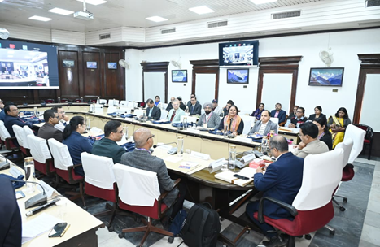
Acknowledging ICAR’s presence in every district of the country, Dr. Rao expressed confidence that stronger collaboration with INSA and partner institutions would accelerate the development of impactful technologies, products and innovations. He thanked INSA for selecting IARI as the seminar venue and expressed hope for enhanced future collaborations.
The seminar was organized in academic partnership with Miranda House, University of Delhi; Jawaharlal Nehru University; Indian Institute of Technology Delhi; Amity University; SRM University; and Ashoka University, reflecting collective efforts to advance interdisciplinary education and research while mainstreaming agriculture within the STEM to STEAM transition.
(Source: ICAR–Indian Agricultural Research Institute, New Delhi)





Like on Facebook
Subscribe on Youtube
Follow on X X
Like on instagram