


22 June 2026, Motihari, Bihar
As part of the nationwide Khet Bachao Abhiyan–2026, ICAR–Mahatma Gandhi Integrated Farming Research Institute, Motihari, in collaboration with the Department of Agriculture, Government of Bihar, organized a Farmer Training-cum-Kisan Gosthi at Piprakothi Block of East Champaran district, Bihar. The programme focused on soil health restoration, balanced fertilizer use, green manuring, crop diversification, crop planning, and climate-resilient farming practices.
Addressing the gathering, the speakers highlighted the objectives of the Khet Bachao Abhiyan and emphasized the importance of biofertilizers, biopesticides, organic manures, and Integrated Farming System (IFS) approaches for restoring soil health and reducing excessive dependence on agrochemicals. They stressed that sustainable farming begins with healthy soils and balanced nutrient management.
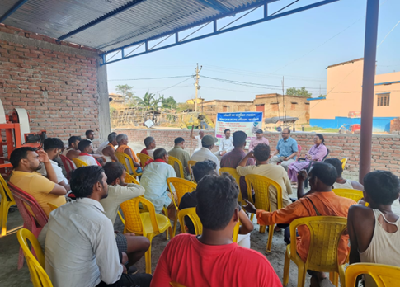
The speakers also explained the strong connection between healthy soil, healthy crops, healthy livestock, and healthy people. They emphasized that the quality of animal feed depends on soil health and nutrient-rich fodder production. Healthy soils produce nutritious crops and fodder, which in turn support healthier livestock and ultimately contribute to better nutrition and health for human populations. Farmers were encouraged to view agriculture, livestock, and nutrition as an interconnected system.
During the technical session, the importance of green manuring for improving soil organic matter, enhancing microbial activity, and reducing fertilizer requirements was highlighted. Farmers were encouraged to cultivate Sesbania (Dhaincha) before rice transplantation and incorporate the biomass into the soil to improve nutrient availability and soil fertility.
The speakers also discussed the common practice of removing fertile topsoil for brick-making. It was explained that when fertile topsoil is excavated and converted into bricks, valuable organic carbon and nutrients accumulated over decades are permanently lost. Similarly, crop residue burning destroys organic matter and beneficial soil organisms, while soil erosion carries away the most fertile portion of the soil. These processes gradually reduce soil productivity, nutrient availability, and water-holding capacity. Farmers were encouraged to conserve topsoil, recycle crop residues, and adopt soil-building practices to sustain agricultural productivity.
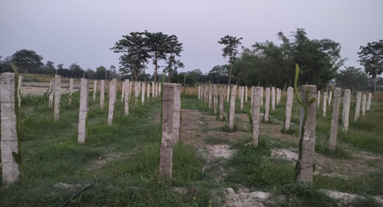
Scientists also emphasized the role of crop diversification and inclusion of legumes such as green gram in cropping systems. Legume crops biologically fix atmospheric nitrogen, improve soil fertility, and reduce fertilizer requirements for succeeding crops while enhancing system sustainability.
Scientists explained that proper crop planning not only improves cropping intensity and resource-use efficiency but also enhances profitability and climate resilience in rice-based production systems.
The programme concluded with a strong message that soil testing, balanced fertilization, green manuring, crop diversification, residue recycling, and protection of fertile topsoil are essential pillars of healthy soils and sustainable agriculture. Farmers appreciated the practical demonstrations and scientific guidance provided under the Khet Bachao Abhiyan and expressed their willingness to adopt the recommended practices during the upcoming cropping season.
A total of 48 farmers participated in the programme and actively interacted with scientists and agricultural officials on issues related to soil fertility management, nutrient-use efficiency, sustainable agriculture, and profitable farming systems.
(Source: ICAR–Mahatma Gandhi Integrated Farming Research Institute, Motihari, Bihar)





Like on Facebook
Subscribe on Youtube
Follow on X X
Like on instagram