


25 June 2026, Motihari, Bihar
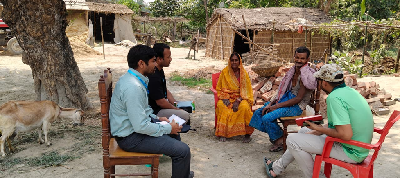
As part of the nationwide Khet Bachao Abhiyan–2026, the ICAR–Mahatma Gandhi Integrated Farming Research Institute, Motihari, in collaboration with the Agricultural Technology Management Agency (ATMA) and the Department of Agriculture, Government of Bihar, organized a farmer awareness programme at Chakia Block in East Champaran district, Bihar. The programme focused on promoting Integrated Farming Systems (IFS), soil health restoration, balanced fertilizer use, crop diversification, green manuring, and fish-based farming models suited to the waterlogged and low-lying agroecosystems of North Bihar.
Introducing the objectives of the campaign, scientists emphasized the importance of protecting soil health through balanced fertilizer application, reducing excessive dependence on chemical fertilizers, promoting biological nutrient sources, encouraging crop diversification, and adopting sustainable resource management practices. Farmers were informed that healthy soils form the foundation of productive, profitable, and climate-resilient agriculture.
During the technical sessions, farmers were encouraged to include at least one legume crop in their annual cropping systems. Scientists explained that continuous cereal-based cultivation without crop diversification often leads to declining soil fertility, nutrient imbalances, and increasing dependence on chemical fertilizers. Farmers were advised to diversify both crops and nutrient sources by integrating pulses, biofertilizers, farmyard manure (FYM), vermicompost, crop residues, and green manures into their farming systems.
Emphasis was placed on adopting soil-test-based nutrient management as the basis for balanced fertilizer application. Farmers were encouraged to integrate chemical fertilizers with organic nutrient sources to improve soil organic carbon, enhance nutrient availability, strengthen soil structure, and increase water-holding capacity. Special attention was given to the cultivation of summer green gram and Dhaincha (Sesbania) as green manure crops capable of biologically fixing atmospheric nitrogen and reducing fertilizer requirements for succeeding kharif crops.
Scientists also highlighted the potential of fish-based Integrated Farming Systems for the waterlogged and flood-prone ecosystems of Bihar. Farmers were informed that nutrient-rich pond water can be effectively utilized for irrigating field and horticultural crops, thereby recycling nutrients and reducing fertilizer requirements. The integration of fisheries with crop production, livestock, and horticulture was recommended to enhance farm income, improve resource-use efficiency, and strengthen livelihood resilience.
The programme also emphasized the importance of fish health management through proper water quality management, disease prevention, balanced nutrition, and resource recycling. Farmers were encouraged to adopt scientific fish farming practices as an integral component of diversified and sustainable farming systems.
Scientists further highlighted the benefits of vermicomposting, composting, crop residue recycling, and green manuring in restoring soil biological health and reducing dependence on external agricultural inputs. During the interactive session, farmers acknowledged that indiscriminate fertilizer use and crop residue burning adversely affect soil health, agricultural productivity, and environmental quality. Participants collectively resolved to reduce residue burning and adopt residue recycling and conservation-based farming practices.
The programme underscored that Integrated Farming Systems combining crops, livestock, fisheries, horticulture, and organic nutrient recycling can generate year-round income, improve resource-use efficiency, minimize climate-related risks, and strengthen the long-term sustainability of farming enterprises.
The programme was attended by officials of ATMA, Agriculture Technology Managers (ATMs), Block Technology Managers (BTMs), personnel from the Department of Agriculture, and scientists and staff of ICAR–MGIFRI, who actively contributed to the discussions and provided field-level technical guidance to farmers.
The programme concluded with a strong message that soil testing, balanced fertilization, crop diversification, biological nitrogen fixation, fish-based farming, crop residue recycling, and Integrated Farming Systems are essential for building productive, profitable, and climate-resilient agricultural systems in Bihar.
A total of 36 farmers, including 24 men and 12 women, actively participated in the programme and interacted with scientists on issues related to soil fertility management, nutrient-use efficiency, climate resilience, and integrated farming approaches.
(Source: ICAR–Mahatma Gandhi Integrated Farming Research Institute, Motihari, Bihar)





Like on Facebook
Subscribe on Youtube
Follow on X X
Like on instagram