


5 December 2025
World Soil Day, observed annually on 5 December, underscores the critical importance of soil as a vital natural resource and promotes the sustainable management of soil ecosystems. The observance aims to raise global awareness about key challenges such as soil degradation, erosion, nutrient imbalance, contamination and the urgent need to safeguard soil biodiversity. Each year, WSD is commemorated with a specific global theme addressing pressing soil-related concerns, including drought, salinity, soil health, sustainable fertilization and organic matter restoration.
The day serves as a powerful reminder that soil is a finite and fragile resource. Its conservation is fundamental to ensuring food security, enhancing climate resilience, protecting the environment and securing the well-being of future generations. By advocating science-based soil health initiatives, World Soil Day reinforces global commitment toward sustainable agri-food systems and the protection of one of Earth’s most valuable natural assets.
In alignment with this global observance, ICAR Institutes across India celebrated World Soil Day through awareness programmes, scientific talks, demonstrations and outreach activities aimed at promoting soil health and sustainable agricultural practices among farmers, students and stakeholders.
ICAR-Directorate of Weed Research, Jabalpur
On the occasion, Dr. J.S. Mishra, Director, ICAR–DWR, emphasized that soils form the foundation of sustainable and resilient cities; however, unplanned urban expansion and the proliferation of concrete structures are severely degrading this essential resource. He urged policymakers, urban planners, civil society and citizens to adopt nature-based and innovative technologies to minimize environmental impacts and enhance the quality of life in growing urban areas.
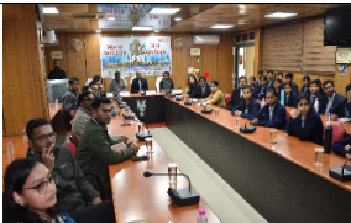
The global significance of World Soil Day celebrated across UN member countries under the FAO framework was underscored, highlighting the growing challenges posed by rapid urban expansion. Speakers drew attention to how expanding urban landscapes are sealing living soil systems beneath concrete, leading to heat island effects, water scarcity, biodiversity loss and weakened ecological resilience. The session also focused on practical, nature-based strategies for restoring and protecting urban soils, showcasing global examples such as green roofs, permeable pavements, rain gardens and integrated green corridors, along with simple citizen-led actions like home composting and reducing excessive cementing.
The programme was attended by over 100 participants, including students from nearby schools, scientists and research fellows.
ICAR–Indian Institute of Soil and Water Conservation, Research Centre, Udhagamandalam
The Chief Guest, Prof. K. S. Subramaniam, Scientific Advisor, Coromandel International Ltd., and Former Director of Research & Founder Head, Centre for Agricultural Nanotechnology, TNAU, delivered insightful remarks on the potential of emerging technologies particularly nanotechnology in enhancing soil health and building a sustainable agricultural future.
The Guest of Honour, Smt. Shibila Mary, Joint Director of Horticulture, The Nilgiris, shared perspectives on the region’s transformation over the past two decades and highlighted key government initiatives promoting organic farming, sustainable horticulture, and household-level kitchen gardens for chemical-free food production.
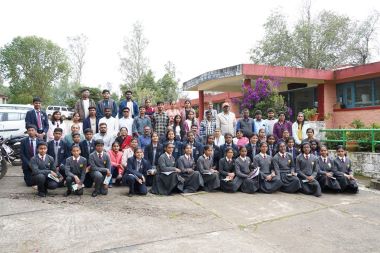
A keynote lecture on nano-fertilizers and nano-based agricultural products underscored their role in improving soil productivity and nutrient-use efficiency. Students actively engaged in discussions, posing questions on advanced agricultural technologies.
A Student–Scientist Interaction Session further deepened awareness on soil health and conservation. The programme concluded with a collective pledge affirming that healthy soils are vital for healthy communities and emphasizing shared responsibility in conserving natural resources.
The event witnessed active participation from nearly 80 attendees, including ICAR staff members, agricultural university students, and schoolchildren from nearby institutions.
ICAR-Krishi Vigyan Kendra, Ranga Reddy
During the event, the significance of observing Soil Day was highlighted, along with discussions on soil fertility, kitchen waste segregation in urban areas, composting, and nutrient management. The program emphasized the vital role of soil health in improving crop productivity.

Farm workers and visitors participated actively in an interactive session, gaining practical insights into enhancing soil quality and adopting eco-friendly agricultural practices.
Around 70 farm and field workers, as well as visitors, attended the program.
(Source: Respective ICAR Institutes)





Like on Facebook
Subscribe on Youtube
Follow on X X
Like on instagram