


16 March 2026, New Delhi
The Division of Soil Science and Agricultural Chemistry, ICAR–Indian Agricultural Research Institute, New Delhi, successfully organized a 21-day Winter School on ‘Advanced Tools and Techniques for Assessment and Management of Pollutants in Soil–Plant–Human Continuum’ from 24 February - 16 March 2026.
The training programme was inaugurated by Dr A.K. Nayak, Deputy Director General (Natural Resource Management), ICAR, and brought together 25 participants from across the country representing State Agricultural Universities (SAUs), ICAR institutes, and Krishi Vigyan Kendras (KVKs).
Speaking at the inaugural session, Dr Nayak, emphasized the growing importance of scientific interventions for monitoring and managing pollutants across the soil–plant–human continuum. He noted that the increasing complexity of environmental contamination calls for advanced tools, interdisciplinary research, and skilled human resources to safeguard natural resources, agricultural productivity, food quality, and human health.
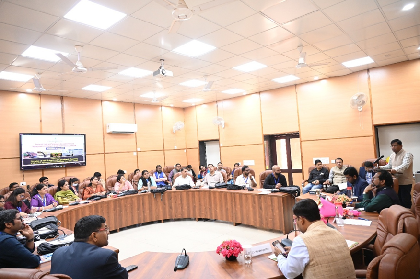
The Winter School was designed to strengthen the scientific and technical capacity of researchers and professionals dealing with the growing challenge of pollutants in the soil–plant–human continuum. The programme focused on enhancing understanding of the sources, behaviour, assessment, and management of contaminants affecting soil quality, crop safety, environmental sustainability, and human health. Participants were provided with hands-on training, interactive technical sessions, and interdisciplinary exposure, enabling them to gain practical insights into modern methods for pollutant assessment and their implications for environmental sustainability, food safety, and public health.
The valedictory function was graced by Dr Ch. Srinivasa Rao, Director, ICAR–IARI, who appreciated the efforts of the organizers in conducting a highly relevant and timely training programme. He congratulated the participants for their active involvement and observed that issues related to pollutants in agricultural systems require integrated, science-based solutions supported by strong analytical capabilities and field-oriented management approaches. He stated that such training programmes play an important role in building national capacity for ensuring safe food systems, healthy soils, environmental sustainability, and improved human well-being.
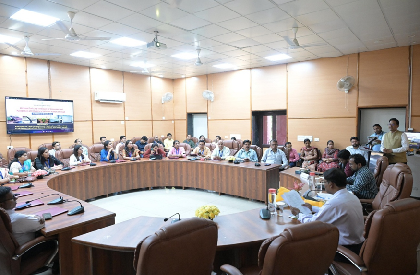
Dr Rao also underlined the need for capacity-building programmes of this nature to equip researchers and professionals with updated knowledge and practical competencies to address emerging environmental challenges effectively.
The Winter School concluded on a highly positive note, with participants gaining valuable theoretical understanding and practical exposure to advanced methods for assessment and management of pollutants in agricultural and environmental systems.
(Source: ICAR–Indian Agricultural Research Institute, New Delhi)





Like on Facebook
Subscribe on Youtube
Follow on X X
Like on instagram