


12 June 2026, Barrackpore
In a significant step toward river ecosystem restoration under the Namami Gange Programme, 7,000 advanced fingerlings of the endangered Himalayan Golden Mahseer (Tor putitora) were released into the Alaknanda River upstream of the Dhari Devi dam area. The Golden Mahseer, the State Fish of Jammu & Kashmir, Himachal Pradesh, Uttarakhand, and Arunachal Pradesh, is an iconic migratory species of immense ecological and socio-economic importance that has declined due to habitat degradation, dam construction, overfishing, and pollution. Organized under the guidance of Dr Pradip Dey, Director, ICAR-Central Inland Fisheries Research Institute, Barrackpore, the programme aimed to conserve this threatened species while restoring aquatic biodiversity and ecological balance in a vital tributary of the Ganga.
The programme held today was implemented by the ICAR-CIFRI, in collaboration with the Department of Zoology, Hemvati Nandan Bahuguna Garhwal University (HNBGU), and the Fisheries Department of Tehri Garhwal, reflecting a strong convergence of research, academia, and field-level fisheries management. Participants emphasized the urgent need to strengthen awareness and community participation in river conservation and aquatic biodiversity protection.
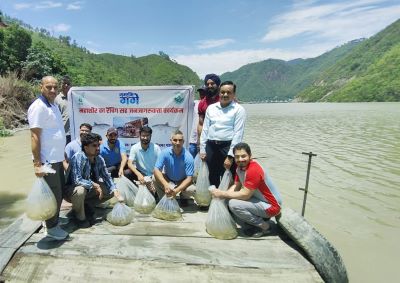
Highlighting the ecological significance of the initiative, the experts stated that the Mahseer designated as the state fish of Uttarakhand has witnessed a steady population decline in Himalayan river systems. Recognized by the International Union for Conservation of Nature (IUCN) as a threatened species, its conservation has become a priority for maintaining healthy riverine ecosystems.
Reflecting on the occasion, Dr Dey, stated that the release of Golden Mahseer fingerlings into the Alaknanda River under the Namami Gange programme exemplifies the pivotal role of science-driven interventions in restoring aquatic biodiversity and revitalizing riverine ecosystems. He emphasized that the initiative aligns closely with national priorities of river rejuvenation, biodiversity conservation, sustainable fisheries development, and the promotion of the Blue Economy, thereby advancing both ecological resilience and livelihood opportunities. He further underscored that the long-term conservation of aquatic resources and the sustainable growth of India's inland fisheries sector depend on the effective convergence of scientific innovation, enabling policies, institutional collaboration, and active community participation.
The fingerlings released during the programme were bred at dedicated Mahseer hatcheries established at HNB Garhwal University’s Chauras Campus and the Fisheries Department facility in Tehri Garhwal. These efforts are supported under the Namami Gange Programme, with technical and financial facilitation through ICAR and ICAR-CIFRI, Barrackpore, reinforcing science-based river restoration interventions.
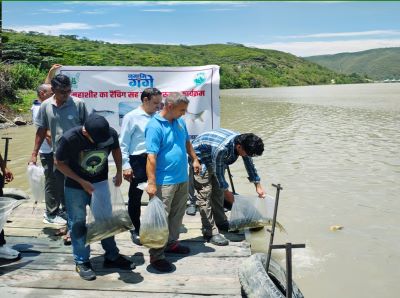
Scientists associated with the initiative including Dr. Upendra Singh, Dr. Jitendra Singh Rana, and Dr. Ranjit Singh underscored the broader conservation impact of the programme. They informed that nearly 40,000 Mahseer juveniles have already been released across different stretches of the Ganga basin under the ongoing mission.
The event also saw active participation from research scholars and local stakeholders, including Sachin, Rahul, Ajay, Ayush, and Rakesh, alongside fish farmers from the region. The gathering collectively reaffirmed a shared pledge to keep the river clean, vibrant, and ecologically resilient, strengthening the vision of a rejuvenated Ganga through community-driven conservation.
(Source: ICAR-Central Inland Fisheries Research Institute, Barrackpore, Kolkata)





Like on Facebook
Subscribe on Youtube
Follow on X X
Like on instagram