


In the coastal district of East Medinipur, West Bengal, a quiet transformation in traditional fish processing is redefining livelihoods and setting new benchmarks for quality and sustainability. At the forefront of this change is Mr. Navendu Bikash Das, a fisheries entrepreneur whose journey reflects the power of innovation backed by scientific support.
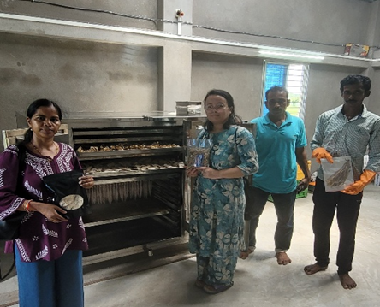
Hailing from Meide Nagar, Nijkasba, Mr. Das grew up observing the conventional open sun-drying method of fish preservation a practice widely followed in coastal communities. While deeply rooted in tradition, the method posed persistent challenges, including dependence on weather conditions, prolonged drying time, and exposure to contaminants such as dust, insects, and microbes. These limitations often resulted in inconsistent product quality, restricting market potential in an increasingly quality-conscious consumer landscape.
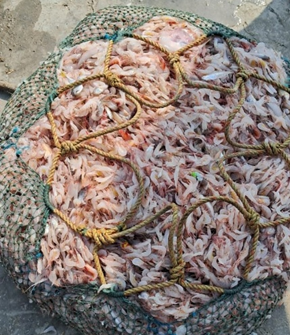
Driven to overcome these challenges, Mr. Das sought scientific solutions and, in 2023, approached the ICAR-Central Institute of Fisheries Education, Kolkata Regional Centre. He was subsequently enrolled in a six-month incubation programme under the institute’s Agri-Business Incubation (ABI) Centre. The programme provided structured training in hygienic fish processing, scientific drying techniques, packaging, and storage. Through hands-on exposure, he gained expertise in processing commercially important marine species such as Bombay duck, anchovy, shrimp, and croakers, equipping him with the technical knowledge required to modernize traditional practices.
Upon completion of the programme, Mr. Das co-founded Tarm Agrotek Private Limited and established a mechanical fish drying unit in his village. With a drying capacity of 100 kg of fresh fish per batch, the unit marked a significant shift towards controlled and hygienic processing. He also secured certification from the Food Safety and Standards Authority of India, ensuring compliance with safety and quality standards.
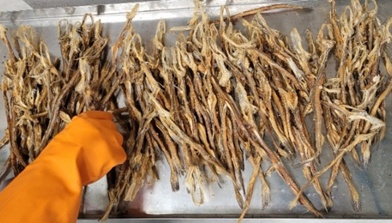
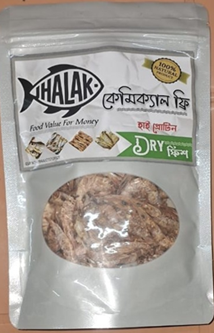
Today, the enterprise produces approximately 2,000 kg of dried fish per month. Among its flagship products is dried small-sized marine shrimp, locally known as “Rangi chingri,” traditionally considered a low-value bycatch. Through controlled mechanical drying, this resource has been transformed into a high-value, nutrient-rich product with enhanced shelf life and market appeal. Other popular offerings include Bombay duck and salted dry croakers, marketed under the brand name “Jhalak”, and sold at ₹600–700 per kg. The adoption of mechanical drying has significantly improved product consistency, hygiene, colour, and texture, contributing to growing demand across regional markets and northeastern cities such as Guwahati.
A notable innovation in Mr. Das’s enterprise is the inclusion of detailed nutritional labelling on product packaging, enhancing consumer trust and product differentiation. In 2025, the enterprise recorded an impressive profit of approximately ₹31 lakh, reflecting both economic viability and scalability.
Further strengthening operations, he has recently established a cold storage facility with a capacity of 10 tonnes to ensure efficient raw material management.
The sustained growth of the enterprise has been supported by continuous technical guidance from ICAR-CIFE, including optimization of drying parameters, packaging solutions, regulatory compliance, and nutritional evaluation.
Mr. Navendu Bikash Das’s journey exemplifies how scientific intervention, capacity building, and entrepreneurial vision can transform traditional fisheries practices into modern, sustainable, and profitable enterprises. His success stands as a compelling model for value addition and technology adoption in India’s fisheries sector.
(Source: ICAR-Central Institute of Fisheries Education, Kolkata Regional Centre)





Like on Facebook
Subscribe on Youtube
Follow on X X
Like on instagram