


Mr. Subhash Vitthal Gadge, a 47-year-old progressive farmer from Pimpri Lokai village of Rahata block in Ahilyanagar district, Maharashtra, exemplifies how protective cultivation can transform farm livelihoods in drought-prone regions. With education up to the 10th standard and over 25 years of farming experience, Mr. Gadge manages a total landholding of 2.4 hectares, comprising 1.6 hectares of rainfed land and 0.4 hectares under irrigation. He also maintains ten cows as part of an integrated farming system, ensuring diversified income and resource recycling.
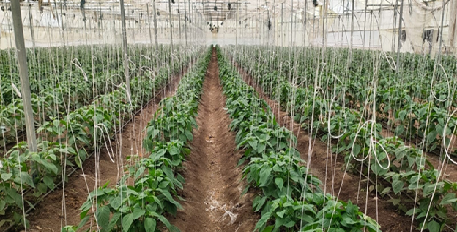
Like many farmers in his village, Mr. Gadge earlier faced serious challenges due to erratic rainfall and recurring droughts, which limited productivity and income from traditional crops such as soybean, pearl millet, and Bengal gram. In search of a sustainable alternative, he adopted protective cultivation by establishing a 3,000 sq. m polyhouse in 2016, following specialized training received from the Krishi Vigyan Kendra (KVK). The total cost of the polyhouse was ₹35 lakh, of which ₹11 lakh was supported through a state government subsidy. He opted for the cultivation of coloured capsicum under a drip irrigation system, enabling precise water and nutrient management.
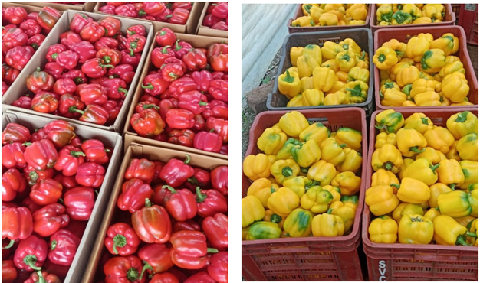
Anticipating limited local demand for coloured capsicum, Mr. Gadge proactively developed strong marketing linkages in major urban markets such as Mumbai and Nashik. To further improve profitability, he reduced production costs by procuring pesticides and nutrients directly from wholesalers at bulk rates. His entrepreneurial approach extended beyond his own farm, as he took the lead in forming a polyhouse cultivators’ group in the region. This collective initiative facilitates bulk input procurement and ensures a consistent supply of produce to markets, helping farmers secure better prices and long-term sustainability.
During the 2025 season, Mr. Gadge planted red and yellow capsicum on 1 June in his 3,000 sq. m polyhouse. To date, he has harvested 20 tonnes of high-quality produce. Market prices during the season ranged from ₹60 to ₹300 per kg, with an average realization of ₹100 per kg. This resulted in a gross income of ₹20 lakh. After meeting the operational costs of approximately ₹5 lakh, he achieved a net income of ₹15 lakh from the polyhouse. With harvesting expected to continue for another three months, he anticipates an additional yield of nearly 10 tonnes.

Owing to his consistent quality, reliable supply, and established market credibility, buyers from Mumbai, Ahmedabad, and Indore now directly approach him at the village level for contractual purchases. Mr. Subhash Gadge’s success story highlights the immense potential of polyhouse-based protective cultivation in enhancing productivity, ensuring income stability, and building resilient market-driven farming systems in water-scarce regions.
(Source: ICAR-Agricultural Technology Application Research Institute, Pune)





Like on Facebook
Subscribe on Youtube
Follow on X X
Like on instagram