


Jackfruit has long been a traditional but underexploited fruit crop in Southern Karnataka, commonly grown as scattered trees with little commercial focus. Despite its rich diversity in colour, texture, and nutritional composition, many superior farmer-selected jackfruit types remained undocumented and underutilized. Recognizing this untapped potential, the ICAR–Indian Institute of Horticultural Research undertook a systematic survey during 2014–2018 to identify, evaluate, and validate elite jackfruit genotypes with coloured flakes and strong market appeal.

This scientific intervention led to the discovery of two exceptional farmer-developed varieties Siddu and Shankara. Distinguished by their attractive coppery-red flakes, firm texture, and superior phytochemical properties, these varieties emerged as high-value genetic resources with significant commercial potential.
A Pioneering Farmer-Led Conservation Model
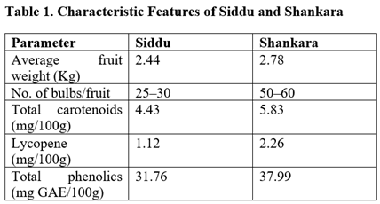
The success of Siddu and Shankara is rooted in the vision and perseverance of two farmers Mr. S. S. Paramesha of Tumakuru district and Sri Shankariah of Tumakuru who conserved these unique jackfruit trees on their farms for over two decades. Their selections exhibited outstanding traits, including a high number of flakes (25–30 in Siddu and 50–60 in Shankara), visually appealing red-copper coloured flesh, and significantly higher levels of carotenoids, lycopene, and phenolic compounds compared to local types.
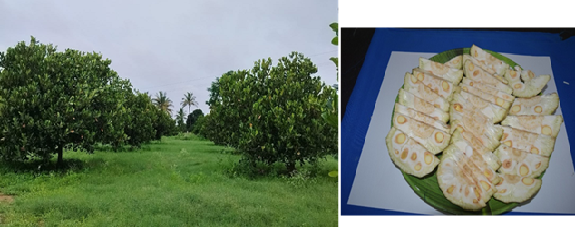 ICAR–IIHR systematically evaluated, documented, and validated these farmer selections, marking the beginning of a unique collaborative model that linked biodiversity conservation with commercialization and livelihood enhancement.
From Biodiversity to Income: An Equitable Commercialization Framework
To ensure fair benefit sharing, ICAR–IIHR adopted a farmer-centric commercialization model, formally recognizing the farmers as “Custodians of Genetic Diversity.” Widespread awareness was generated through mass media outreach, biodiversity fairs, scientific publications, and institutional platforms, leading to strong national demand for planting material.
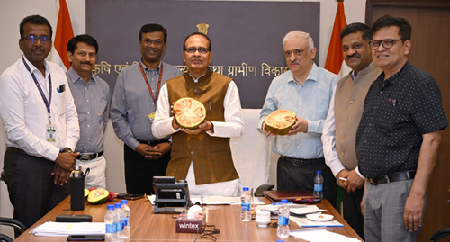
A transparent revenue-sharing mechanism was established, allocating 75% of the income to the farmers and 25% to ICAR–IIHR. The custodian farmers received hands-on training in mass propagation techniques and continue to produce quality planting material in close partnership with the institute, ensuring both genetic purity and sustainability.
Transformational Income Growth
The intervention resulted in remarkable income enhancement for the original conservers. The farmer associated with Siddu earned ₹1.15 crore, while the Shankara custodian earned ₹8.25 lakh. Benefit-sharing payouts through ICAR–IIHR amounted to ₹49.18 lakh for Siddu and ₹19.54 lakh for Shankara. Prior to this initiative, their annual income from jackfruit was merely ₹8,000 and ₹5,000, respectively—clearly demonstrating a transition from subsistence returns to entrepreneurial-scale horticulture.
National Recognition and Legal Protection
In 2023, both Siddu and Shankara were officially registered under the Protection of Plant Varieties and Farmers’ Rights Authority (PPV&FRA). This milestone provided formal recognition of farmers’ innovation, legal ownership, and long-term royalty benefits, reinforcing the value of farmer-led conservation.
Replication and Commercial Success
The model’s impact extended beyond the custodian farmers. Mr. K. S. Ashok Kumar of Doddaballapur adopted Siddu and Shankara across 10 acres of dryland farming. Within four years, he achieved yields of 10.5 tonnes (Siddu) and 9.87 tonnes (Shankara), generating net annual returns of ₹7.90 lakh per acre. He further expanded income avenues through value-added products such as jackfruit halwa, payasam, burrito, kathi roll, biryani, and Manchurian, strengthening local market linkages.
A National Model for Sustainable Horticulture
The Siddu–Shankara initiative has evolved into a nationally recognized model of farmer-led conservation, commercialization, and benefit sharing. It demonstrates that indigenous biodiversity, when supported by scientific validation and institutional partnerships, can create high-value livelihood opportunities. The model empowers farmers as entrepreneurs and custodians of genetic resources, while showcasing how public research institutions can effectively collaborate with rural communities.
By integrating biodiversity conservation, value chain development, and equitable benefit sharing, this initiative illustrates a powerful pathway toward enhanced farmer incomes, rural entrepreneurship, and self-sustaining horticultural development—where protecting biodiversity directly translates into prosperity and resilience for farming communities.
(Source: ICAR–Indian Institute of Horticultural Research, Bengaluru)





Like on Facebook
Subscribe on Youtube
Follow on X X
Like on instagram