


Miss Shabina Khatoon, a 36-year-old progressive woman farmer from Sandwa village of Mawai block in Ayodhya district, Uttar Pradesh, stands as a powerful example of how technology, institutional support, and determination can transform rural livelihoods. A graduate by education, she consciously chose agriculture over a conventional salaried job, driven by a clear vision of becoming an independent agri-entrepreneur. With sustained guidance from Krishi Vigyan Kendra (KVK), Ayodhya, she has successfully integrated scientific crop production with drone technology, evolving a sustainable and profitable enterprise model.
Journey towards Innovation and Enterprise
Hailing from a farming family, Shabina initially practiced conventional subsistence agriculture, earning an annual income of only ₹2.00–2.50 lakh. Despite her educational background, she faced several constraints, including limited capital, inadequate exposure to scientific farming practices, and social hesitation towards women adopting technology-driven agriculture.
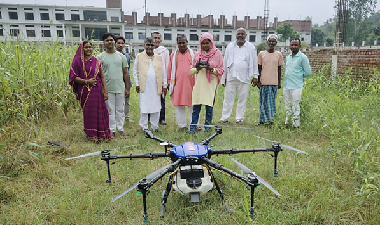
Her transformation began through regular engagement with KVK, Ayodhya, which provided her with technical guidance, confidence, and exposure to modern agricultural innovations. A major turning point came when she was registered under the Government of India’s NAMO Drone Didi Scheme through KVK support and received an agricultural drone free of cost. This intervention proved to be life-changing, opening new avenues of enterprise and leadership.
Enterprise Development and Service Innovation
In 2020, Miss Shabina established a 2,000 sq. m polyhouse, adopting recommended scientific packages of practices for the cultivation of capsicum, strawberries, and seasonal vegetables. Protected cultivation enabled her to achieve higher productivity, superior quality produce, and efficient use of water and inputs.
Alongside crop production, she began utilizing agricultural drones for pesticide and herbicide application in crops such as pigeon pea, oilseeds, sugarcane, and horticultural plantations like banana and mango, where manual spraying is challenging due to crop height and dense canopy. Recognizing the growing demand for this technology, she expanded her activities by offering drone-spraying services on a custom-hiring basis across villages in Ayodhya district.
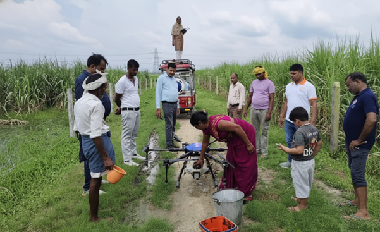
Charging a nominal fee of about ₹400 per acre, her services quickly gained popularity among farmers owing to reduced labour costs, precision application, time efficiency, and improved crop health. Currently, she earns ₹4,000–5,000 per spraying operation, with substantially higher income during peak agricultural seasons. Additional revenue is generated through farmer trainings, on-field demonstrations, and awareness programmes for rural youth.
Market Linkages and Recognition
To promote her drone-based services, Miss Shabina effectively leveraged social media platforms, along with banners and posters, significantly enhancing her visibility at both district and state levels. Farmers fondly recognize her as “Drone Didi”, a title that symbolizes women’s leadership in modern agriculture.
Her farm produce—vegetables and strawberries—is marketed directly to local vendors, wholesalers, and end consumers, including bulk orders for weddings and social events. This direct and market-oriented approach ensures better price realization while minimizing marketing risks.
Economic Impact
At present, Miss Shabina’s integrated agri-enterprise generates an annual gross income of ₹8.00–10.00 lakh, with a net income of ₹5.50–6.50 lakh. Compared to her earlier earnings of ₹2.00–2.50 lakh, this represents nearly a fourfold increase in income, clearly demonstrating the economic impact of KVK-led technological interventions and government support.
Her initiative has also created seasonal employment opportunities, particularly for local women, through participation in drone demonstrations, training programmes, and peak-season operational support.
Social Upliftment and Women Empowerment
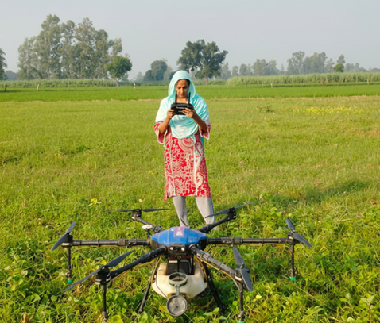
Beyond economic gains, Miss Shabina Khatoon has emerged as a role model for rural women and youth in Ayodhya district. Her enhanced confidence, improved standard of living, and technological expertise have inspired many to view agriculture as a viable and respectable enterprise. She has so far trained 80 women farmers in drone operation and application in agriculture. Notably, she has also trained six women from her village Self-Help Group as “Drone Didis”, who are now independently operating drones and providing spraying services in farmers’ fields—marking a significant milestone in women’s participation in technology-enabled agriculture.
Vision for the Future
Miss Shabina Khatoon envisions building a strong network of “Drone Didis” who can confidently and independently deliver drone-based agricultural services at the grassroots level. Her journey clearly demonstrates how convergence of KVK support, government schemes, and women’s leadership can drive sustainable agricultural development, rural entrepreneurship, and inclusive growth.
(Source: ICAR-Agricultural Technology Application Research Institute, Kanpur)





Like on Facebook
Subscribe on Youtube
Follow on X X
Like on instagram