


16 October 2026, New Delhi
The Module-III Training Programme for Assistants under Reform Utsav, first batch, was organised at ICAR–Indian Agricultural Research Institute, New Delhi, from 5 to 16 October 2026. The programme aimed to enhance the administrative knowledge, professional competence and functional efficiency of Assistants working in ICAR institutions.
The training programme was designed for 50 participants from various institutions of the ICAR system, including 16 from ICAR–IARI, 3 from ICAR–IASRI, 3 from ICAR–NBPGR, 1 from ICAR–NIAEPR, 2 from ICAR–NIPB, 1 from ICAR–NRIIPM and 24 from ICAR Headquarters. This diverse representation provided an opportunity for participants to exchange institutional experiences and develop a broader understanding of administrative functioning across the ICAR system.
A total of 28 resource persons, predominantly drawn from ICAR Headquarters and Delhi-based ICAR institutes, delivered lectures and shared their expertise on various aspects of administrative functioning, rules, procedures and institutional management. This arrangement facilitated interaction with experienced senior officers while minimising expenditure on travel and related logistics. It was also aligned with the Council’s emphasis on economy measures and expenditure rationalisation, without compromising the quality of training.
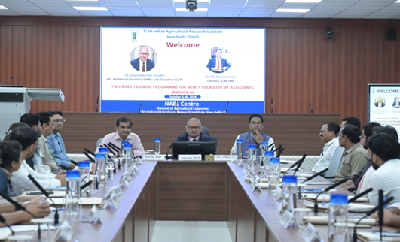
A major highlight of the programme was the special lecture on “AI for Smarter Administration” delivered by Shri Gyanendra Dev Tripathi, IAS, Additional Secretary, DARE & Secretary, ICAR. The lecture highlighted the potential of artificial intelligence in improving administrative efficiency and promoting technology-driven governance.
Dr Ch Srinivasa Rao, Director, ICAR–IARI, New Delhi, also delivered a lecture on “Creating a Positive Environment in the Organisation,” emphasising the importance of teamwork, mutual respect, effective communication and a constructive workplace culture.
As part of the practical exposure component, a field visit to the Institute’s research facilities, namely the Nanaji Deshmukh Plant Phenomics Centre, Centre for Protected Cultivation Technology (CPCT), and Integrated Farming System (IFS), was organised on 8 October 2026. The visit familiarised participants with the Institute’s research infrastructure, agricultural technologies and innovative approaches to farming systems.
On the concluding day, a group presentation activity was organised to encourage collaborative learning, knowledge sharing and the practical application of concepts covered during the training. The activity provided participants with an opportunity to work in teams, articulate their understanding and share their learning with fellow participants.
The valedictory session was held on 16 October 2026, with Dr Shanti Kumar Sharma, Assistant Director General (HRM), ICAR, as the Chief Guest and Dr Ch Srinivasa Rao, Director, ICAR–IARI, New Delhi as Chairperson. The session marked the successful conclusion of the training programme and provided an opportunity to reflect on the knowledge and experience gained during the programme.
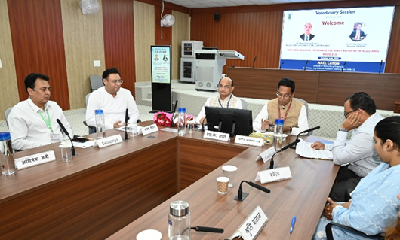
To assess the effectiveness of the training, pre-training and post-training assessments were conducted, and feedback was collected from participants at different stages. These measures provided valuable inputs for evaluating learning outcomes and identifying areas for improvement in future training programmes.
The programme provided a valuable platform for strengthening the administrative capabilities of the participating Assistants, promoting interaction with senior officers and facilitating the exchange of knowledge and best practices across ICAR institutions. The training is expected to contribute to improved efficiency, informed decision-making and more effective discharge of administrative responsibilities.
The programme concluded with a vote of thanks and best wishes to all participants for their future professional endeavours.of their official duties and thereby contribute to the effective functioning of the ICAR system.
(Source: ICAR–Indian Agricultural Research Institute, New Delhi)





फेसबुक पर लाइक करें
यूट्यूब पर सदस्यता लें
X पर फॉलो करना X
इंस्टाग्राम पर लाइक करें