

23-25 November 2026, Jhansi
ICAR-Indian Grassland and Fodder Research Institute, Jhansi, is organizing a training program, during 23-25 November, 2026, on ‘Climate Resilient Integrated Farming Systems, Agroforestry and Agro-Horticulture’ for 30 participants representing Farmer Producer Organisations (FPOs) and Non-Governmental Organisations (NGOs) from seven states. The programme is sponsored by the Bankers Institute of Rural Development (BIRD), Kolkata, with support from NABARD.
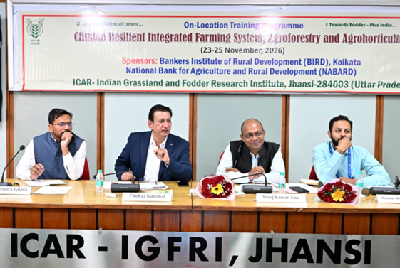
The training programme, through dedicated classroom lectures and practical sessions, aims to strengthen the technical and managerial capacities of FPO and NGO officials in planning, designing, formulating, and implementing integrated farming systems and agro-silvi-pasture based programmes for enhancing agricultural sustainability, climate resilience and rural livelihoods. It focuses on developing a holistic understanding of farming systems and agro-silvi-pasture approaches, enabling participants to integrate diverse agricultural and allied enterprises according to regional agroecological conditions and farmers' needs.
A significant component of the program deals with improved fodder production, management, and conservation technologies to ensure year-round availability of quality fodder, sustain livestock productivity and enhance the income of livestock farmers. These interventions are intended to strengthen their capacity to contribute in realizing fodder security in specialized agroecologies.
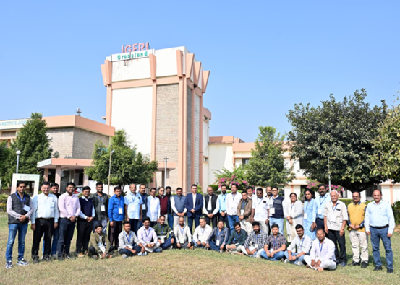
The programme further emphasises integrated natural resource management, efficient utilisation of land, water and biomass resources, and the development of location-specific farming models to address emerging agricultural challenges.
Through this capacity-building initiative, ICAR-IGFRI seeks to facilitate the adoption and wider dissemination of system-based sustainable agriculture approaches for strengthening food, fodder and nutritional security while improving the resilience and livelihood opportunities of farming communities in the particular agroecosystems.
(Source: ICAR-Indian Grassland and Fodder Research Institute, Jhansi)