

17 November 2026, New Delhi
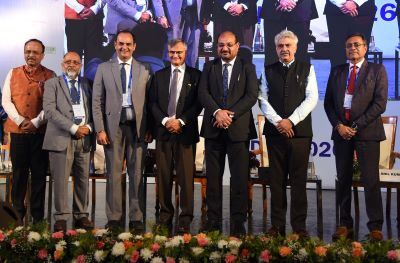
The Indian Council of Agricultural Research (ICAR) and the Research and Information System for Developing Countries (RIS) signed a Memorandum of Understanding (MoU) to strengthen cooperation in agricultural research, knowledge-sharing and capacity-building across the Global South. The MoU was signed during the High-Level Policy Dialogue on “Global South: Towards a New Strategic Partnership”, organised by RIS in collaboration with the Ministry of External Affairs, Government of India, on the occasion of the third Foundation Day of DAKSHIN – Global South Centre of Excellence, at the India Habitat Centre, New Delhi.
Addressing the gathering following the MoU signing, Dr M.L. Jat, Secretary, DARE and Director General, ICAR, congratulated RIS and DAKSHIN on their Foundation Day and reaffirmed ICAR’s commitment to advancing the Government of India's vision of stronger South-South cooperation under the leadership of the Hon’ble Prime Minister Shri Narendra Modi.
Highlighting ICAR’s institutional network and contribution to agricultural development, Dr Jat described it as a century-old apex organisation for agricultural research, education and extension. He outlined its extensive network of 114 research institutions, 152 regional research centres, 731 Krishi Vigyan Kendras (KVKs) and linkages with nearly 80 agricultural universities across the country. He noted that ICAR has spearheaded several agricultural revolutions in India and has also contributed to human resource development across the Global South through the education and training of students and professionals from countries in Africa and Asia.
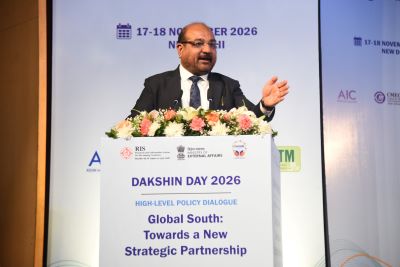
Emphasising ICAR’s existing international engagement, Dr Jat informed that the Council has 74 Memoranda of Understanding with different countries and institutions, nearly 60 per cent of which are with partners from the Global South. He noted that the partnership with RIS and DAKSHIN would provide an important platform to expand these collaborations and explore new opportunities for sharing agricultural knowledge, technologies and expertise.
Highlighting the importance of identifying suitable agro-ecological and recommendation domains across countries, Dr Jat emphasised the need to connect regions with similar agricultural conditions to facilitate the adaptation and application of proven technologies and practices. He stressed that countries should leverage existing knowledge, systems, methods and tools rather than reinventing the wheel, enabling faster and more effective agricultural development through cross-country learning and cooperation.
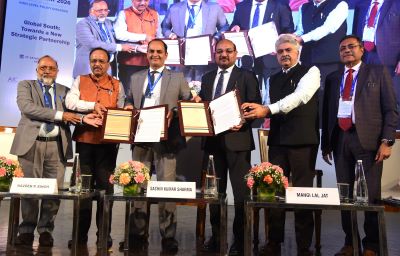
Underlining the need to translate the MoU into tangible outcomes, Dr Jat stated that the signing was only the beginning of a shared journey and that both organisations should move forward with concrete collaborative initiatives. In this context, he highlighted the forthcoming CGIAR Science and Partnership Week, scheduled for mid-April 2027 in India, as an opportunity to bring together partners from the Global South and North. He proposed convening leaders from both regions during the event to facilitate a demand-driven exchange of development priorities, available expertise and capacity gaps, enabling countries to identify areas where they could support one another.
Dr Jat expressed confidence that the partnership between ICAR and RIS would help build stronger institutional linkages, promote mutual learning and advance agricultural cooperation in line with India's commitment to strengthening the Global South.