

15 November 2026, Bengaluru
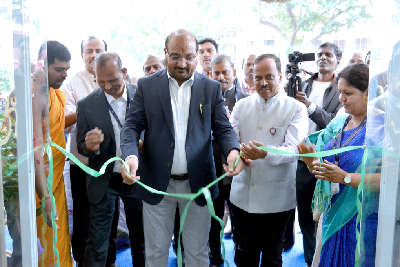
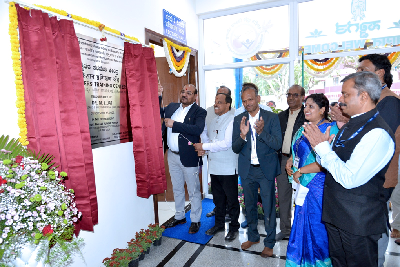
Dr M. L. Jat, Secretary, DARE and Director General, ICAR, inaugurated the Farmers’ Advanced Training Centre (ATC) and the Centre of Excellence for Genome Editing in Horticultural Crops, including a Biosafety Level-II (BSL-II) Laboratory, during his visit to ICAR-Indian Institute of Horticultural Research, Bengaluru, today. The new facilities are expected to strengthen the institute’s capabilities in advanced biotechnology research, genome editing and farmer capacity-building.
Following the inauguration of the Farmers’ Advanced Training Centre, Dr Jat interacted with progressive farmers, incubatees, entrepreneurs, nursery owners and natural farming practitioners who have adopted ICAR-IIHR varieties and technologies. The interaction focused on natural farming practices, horticultural innovations and strategies to mitigate the impact of El Niño and Super El Niño on horticultural crops. Farmers shared their experiences with climate-resilient interventions such as mulching, sprinkler irrigation, border cropping, intercropping with short-duration flower and vegetable crops, and green manuring, highlighting their contribution to improved productivity, produce quality and farm income. Appreciating their innovations, Dr Jat emphasised the need to integrate modern scientific knowledge with traditional wisdom and encouraged educated youth, engineers and agricultural graduates to explore opportunities in agriculture and horticulture.
Addressing scientists, students and other participants, Dr Jat emphasised the need to strengthen the linkages between basic research, field-level application and effective delivery of technologies. He observed that research priorities must be guided by farmers’ needs and ground realities, adding that the true measure of scientific excellence lies in its tangible benefits to farmers and society.
At the Centre of Excellence for Genome Editing in Horticultural Crops, Dr Jat called for developing indigenous expertise and technological capabilities in CRISPR-based genome editing and genome resources. He stressed that India must harness its scientific talent and human capital to develop home-grown technologies and reduce dependence on external agencies. Appreciating the institute’s research on doubled haploids in onion, he encouraged scientists to pursue advanced research with clearly defined pathways for practical application.
Highlighting the contribution of horticulture to national development, Dr Jat observed that agricultural diversification would be crucial to achieving the vision of a USD 30 trillion economy by 2047, including a targeted USD 6 trillion contribution from agriculture and allied sectors. He emphasised that horticulture must contribute not only to economic growth but also to improved nutrition and health, in line with the vision of healthy people and a healthy planet. He called for developing a comprehensive Horticulture Atlas of India to facilitate crop planning based on agro-ecological and biophysical suitability. He also highlighted the potential of perennial and opportunity crops and stressed the need to link horticultural development with local food systems. Referring to the joint ICAR–ICMR SEHAT programme, he underscored the importance of strengthening research on the relationship between crops, nutrition and human health.
Dr Jat urged the scientific community to adopt a ‘business-as-unusual’ approach, move beyond conventional research boundaries and explore emerging areas of opportunity. Identifying biologicals, biofertilisers and microbial technologies as promising areas, he highlighted the largely untapped potential of microbial diversity. He called for interdisciplinary research spanning soil microbiomes to the human gut microbiome, supported by institutional collaborations and opportunities for innovation and entrepreneurship.
Emphasising that human capital is fundamental to national progress, Dr Jat called for sustained efforts to nurture students and young scientists, build their confidence and create opportunities for professional growth. He stressed the need to identify and encourage scientific talent, develop future leaders and strengthen the leadership pipeline. He also underscored the importance of establishing a robust data ecosystem and maintaining a continuous research trajectory connecting ideas, research pipelines and delivery mechanisms.
In view of limited resources, Dr Jat advised institutions to avoid duplication of research and prioritise areas based on their comparative advantage, institutional strengths and scientific excellence. He encouraged ICAR-IIHR to aspire to global standards and leadership while ensuring effective communication and dissemination of its scientific achievements.
The visit also included interactions with postgraduate students, visits to research laboratories and a field visit to the institute’s research facilities. Reiterating that farmers must remain at the centre of research and decision-making, Dr Jat emphasised that scientific excellence must translate into meaningful outcomes for farmers and society.
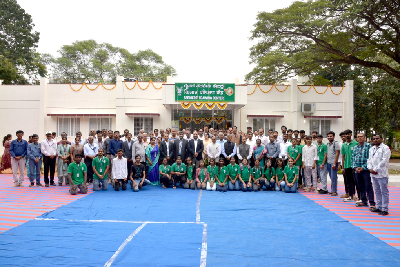
Dr V. B. Patel, ADG (Fruits and Spices); Dr Tusar Kanti Behera, Director, ICAR-IIHR; Directors and Heads of ICAR institutes in Bengaluru; scientists, postgraduate students and research scholars of the institute; innovative farmers; and agri-entrepreneurs were present on the occasion.
(Source: ICAR-Indian Institute of Horticultural Research, Bengaluru)