

Jute, India’s “golden fibre,” has long been valued for its versatile natural fibre. Yet, while the fibre has traditionally driven the economics of jute cultivation, a significant portion of the crop its green leafy biomass remained largely underutilized. Recognizing this untapped resource, ICAR–National Institute of Natural Fibre Engineering & Technology, Kolkata, developed an innovative technology to transform jute leaves into a high-value herbal beverage and health supplement—Amata Moroheiya Infusion.
The innovation marks a shift from a fibre-centric approach to whole-crop value addition, turning an overlooked agricultural by-product into a commercially viable product while opening a new avenue for farmer income.
Turning an Underutilized Resource into a High-Value Product
Jute cultivation generates approximately 4–5 tonnes of green leafy biomass per hectare, much of which has traditionally remained inadequately utilized. At the same time, jute leaves are naturally rich in carotenoids, dietary fibre, vitamins and minerals, offering considerable potential for value-added applications. Building on this nutritional potential, ICAR–NINFET developed a standardized process to convert selected jute leaves into a convenient, flavoured leaf powder packed in tea-bag/sachet form.
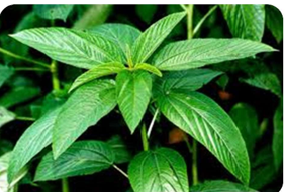
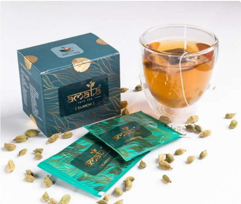
The process encompasses leaf collection, handling, drying, powdering, flavouring and packaging. Natural flavouring agents such as cardamom, ginger and cinnamon are used to create a convenient and appealing product. Scientific evaluation during technology development demonstrated antioxidant activity through parameters including DPPH, total phenolic content (TPC) and ferric reducing antioxidant power (FRAP).
What was once regarded as a low- or no-value portion of the crop was thus transformed into a standardized, branded and market-ready product.
From Innovation to Intellectual Property and Market Readiness
The journey of Amata Moroheiya Infusion demonstrates how scientific innovation can be strengthened through a robust intellectual property and regulatory framework. The technology has been granted Indian Patent No. 594436, with an international patent application filed under PCT No. PCT/IN2022/050608 dated 1 July 2022.
Its commercial identity has been further reinforced through Trademark Registration Nos. 5660781 and 5660782, while the product has received ICAR Technology/Product Certification under Certificate No. ICAR-AE-NINFET-Product-2023-036. It has also secured FSSAI Registration No. 22821042000998, providing the regulatory foundation for its commercialization as a food product.
These milestones have enabled the innovation to progress beyond research and development into a protected, certified and commercially scalable technology.
From Laboratory to the Marketplace
A defining milestone in the success story has been the transition from laboratory innovation to organized commercial production. The technology has been commercialized to three licensees—M/s Divulge, M/s BSNW and M/s BF-BSS, Delhi.
M/s Divulge has established a full-fledged production unit with an installed capacity of approximately five lakh sachets per month, demonstrating the technology’s scalability and market potential. This successful industry adoption reflects a complete technology-transfer pathway in which scientific research has translated into a tangible consumer product and a new commercial opportunity.
Putting Farmers at the Heart of the Value Chain
The most transformative dimension of Amata Moroheiya Infusion lies not merely in the product, but in the new economic opportunity it creates for farmers.
ICAR–NINFET has undertaken extensive awareness and capacity-building initiatives to familiarize farmers with the economic potential of jute leaves. More than 1,000 farmers have been reached through awareness programmes, while 10 rural-level training programmes have been conducted on the collection, handling and utilization of jute leaves.
As a result, jute leaves are emerging as a marketable agricultural raw material rather than an underexploited by-product. Farmers are now able to sell collected leaves through Farmer Producer Companies (FPCs) at approximately ₹350–400 per kg, creating an additional source of income beyond conventional jute fibre. According to the impact information provided for the technology, the overall return to farmers has increased by nearly 100 times.
This represents a significant change in the economics of jute cultivation: the leaf, once overlooked, has become a source of value.
Building a Circular Rural Economy
Amata Moroheiya Infusion is more than a food innovation—it is a promising example of a circular and sustainable agricultural value chain. The model connects cultivation and biomass generation with farmer collection, FPC aggregation, processing, value addition, manufacturing and the consumer market:
Jute cultivation → Leaf biomass → Farmer collection → FPC aggregation → Processing → Value addition → Sachet production → Branded product → Consumer market
This integrated approach creates multiple avenues for economic and rural development, including additional income for farmers, improved utilization of agricultural biomass, employment in collection and processing, opportunities for rural entrepreneurship, and diversification of income in the jute sector.
A Complete Journey from Research to Rural Enterprise
The success of Amata Moroheiya Infusion illustrates the power of taking agricultural research beyond the laboratory and into the marketplace and the farm economy. From identifying an underutilized resource to developing a science-based product, protecting intellectual property, obtaining certification, transferring the technology to industry and creating a market for jute leaves, ICAR–NINFET has established a complete innovation-to-impact pathway.
With patent protection, ICAR certification, FSSAI registration, three commercial licensees, a production capacity of approximately five lakh sachets per month, and direct farmer participation, the technology stands as a compelling example of successful technology transfer and whole-crop utilization.
Impact at a Glance
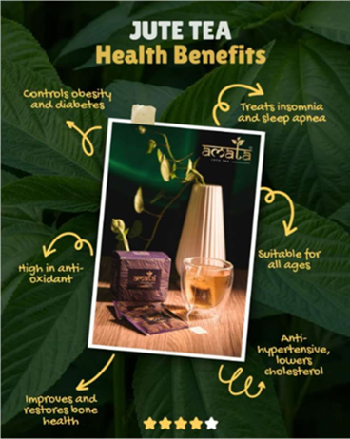
Technology: Jute Leaf Drink – Amata Moroheiya Infusion
Developer: ICAR–National Institute of Natural Fibre Engineering & Technology, Kolkata
Indian Patent: Patent No. 594436
International Patent Application: PCT/IN2022/050608, dated 01.07.2022
ICAR Certification: ICAR-AE-NINFET-Product-2023-036
FSSAI Registration: 22821042000998
Commercial Licensees: M/s Divulge, M/s BSNW and M/s BF-BSS, Delhi
Commercial Production: Full-fledged unit established by M/s Divulge
Installed Capacity: Approximately 5 lakh sachets/month
Farmer Outreach: More than 1,000 farmers
Rural Training: 10 training programmes
Leaf Price to Farmers: ₹350–400/kg through FPCs
Reported Economic Impact: Overall return to farmers increased by nearly 100 times
From Every Leaf, a New Opportunity
Amata Moroheiya Infusion presents a powerful example of how science, innovation, entrepreneurship and farmer participation can converge to create new rural value. By transforming jute leaves from an underutilized biomass into a high-value commercial resource, ICAR–NINFET has expanded the economic potential of the crop beyond its fibre.
The initiative demonstrates that agricultural innovation is not only about increasing production—it is also about unlocking value from what is already available. By creating markets for jute leaves, enabling farmer participation, supporting rural enterprise and promoting value addition, the technology contributes to a more sustainable and diversified jute economy.
From the “golden fibre” to green wealth, Amata Moroheiya Infusion shows how innovation can help create more value from every plant—and turn an overlooked resource into an opportunity for farmers, entrepreneurs and the nation.
(Source: ICAR–National Institute of Natural Fibre Engineering & Technology, Kolkata)





फेसबुक पर लाइक करें
यूट्यूब पर सदस्यता लें
X पर फॉलो करना X
इंस्टाग्राम पर लाइक करें