

2 June 2026, North 24 Parganas
Scientists of ICAR–Central Inland Fisheries Research Institute, Barrackpore have achieved a major breakthrough in the production and ecological restoration of two high-value indigenous catfishes — Mystus tengara and Mystus cavasius — in Chamta beel, North 24 Parganas, West Bengal, under the collaborative CIFRI–WorldFish project.
The initiative pioneered an innovative restoration strategy wherein seeds of these indigenous catfishes were first nurtured under protected captive conditions within specially designed pen enclosures before their phased release into the open wetland ecosystem. This scientific approach substantially enhanced fish survival, growth, and establishment in the natural habitat.
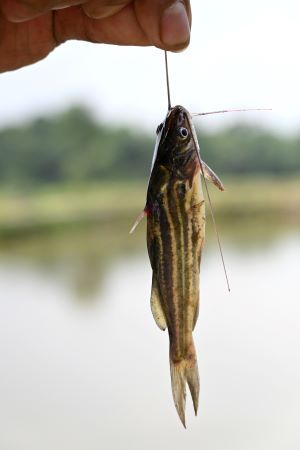
Throughout the culture period, ICAR-CIFRI scientists implemented rigorous wetland management protocols, including optimized stocking density, continuous water quality monitoring, predator management, and nutritionally balanced feed administration. Adaptive scientific interventions ensured favourable environmental conditions within the culture system, leading to improved production performance and reduced losses.
The results have been striking. Within just 4–5 months, both species reached marketable size, opening new economic opportunities for wetland-dependent fishing communities. Mystus tengara, a premium indigenous delicacy, commands nearly five times the market value of Indian Major Carps (IMCs), while Mystus cavasius fetches almost double the price, substantially enhancing income potential for local fishers.
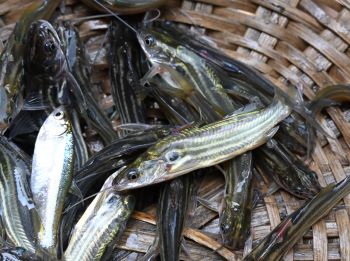
The project also delivered encouraging biological outcomes. Despite winter conditions, Mystus cavasius achieved an impressive average body weight of 19.2 g within five months, underscoring its strong culture potential in wetland ecosystems.
Commenting on the success of the intervention, Dr Pradip Dey, Director, ICAR-CIFRI, stated, “The successful restoration and production of indigenous catfishes in wetland ecosystems highlights the critical role of science-led fisheries management in advancing the twin national priorities of livelihood security and biodiversity conservation. Such evidence-based interventions underscore the need for integrating indigenous species enhancement, ecosystem-based fisheries management, and community participation into inland fisheries development policies. Through scientific seed production, adaptive culture protocols, and sustainable stocking strategies, ICAR-CIFRI is committed to developing scalable models for revitalizing inland open water resources, strengthening fishers’ incomes, and conserving valuable native aquatic genetic resources.”
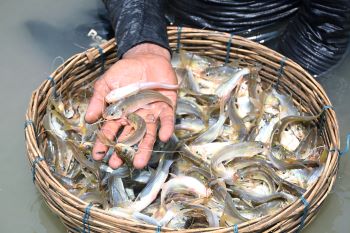
Highlighting the community impact, Mr. Apurba Roy, Secretary, Chamta Fishermen Cooperative Society, remarked, “The scientific support from ICAR-CIFRI has significantly improved fishers’ income through high-value indigenous catfish farming. The return of species like Mystus tengara to our wetland is highly encouraging for both livelihoods and biodiversity conservation.”
The successful intervention demonstrates how science-driven fisheries management can create a powerful convergence of livelihood enhancement, wetland productivity improvement, and indigenous biodiversity restoration, offering a scalable model for community-based conservation and sustainable inland fisheries development.
(Source: ICAR- Central Inland Fisheries Research Institute, Barrackpore)





फेसबुक पर लाइक करें
यूट्यूब पर सदस्यता लें
X पर फॉलो करना X
इंस्टाग्राम पर लाइक करें