

Rational
The sustainability of rice production raises concerns due to high demand, water scarcity and climate change. The conventional flooded paddy production system is the largest consumer of water in agriculture and a major source of GHG emissions. The system of rice intensification (SRI) method, along with alternate wetting and drying irrigation systems, is a promising water-saving and eco-friendly alternative to conventional puddled rice production systems.
Technology description
Modified SRI, which suits local conditions, involves several modifications from the conventional flooded rice cultivation method. The modified SRI included 20 cm x 20 cm plant and row spacing, and the transplanting of a single 14-day-old seedling. Mechanical weeding was undertaken three times, i.e., 10, 20, and 30 days after transplanting. Irrigation was applied at 3-DAD (days after the disappearance of ponded water) throughout the crop growing season and was stopped before 10-15 days of harvest, and integrated nutrient management (5 t FYM/ha and N, P2O5 and K2O @ 80, 40 and 40 kg/ha) was adopted.
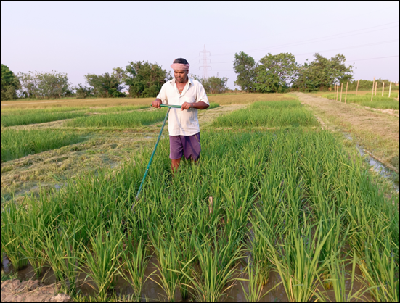
Modified SRI resulted in enhanced grain yield by 36-49%, water savings of 22-35%, and 90% seed savings. Moreover, the modified SRI planting method was observed to require only 1,571 liters of water to produce 1 kg of grain, compared with 2,801 liters under the conventional puddled method. This system significantly enhanced grain yield and nearly doubled the water productivity by saving water, and is promising for irrigated rice production.
(Source: ICAR-Indian Institute of Water Management, Bhubaneswar)





फेसबुक पर लाइक करें
यूट्यूब पर सदस्यता लें
X पर फॉलो करना X
इंस्टाग्राम पर लाइक करें