

Shri Amarchand Sarkar, a 55-year-old vegetable grower from Lankamura village in Bamutia Block of West Tripura district, has demonstrated how adopting an improved potato variety and scientific cultivation practices can enhance productivity and farm returns. Traditionally, he cultivated potato varieties such as Kufri Jyoti and local baby potato but sought better ways to improve production from his limited farmland.
An opportunity came through ICAR–Krishi Vigyan Kendra, West Tripura, which introduced him to the improved potato variety Kufri Himalini. With support from the ICAR–IARI NEH Component and ICAR–CPRI NEH Component, quality planting material was made available for cultivation. Scientists from the ICAR Research Complex for NEH Region, Tripura Centre, provided technical guidance, while ICAR–Agricultural Technology Application Research Institute, Zone VII, Umiam, supported broader extension efforts to promote improved agricultural technologies in the region.
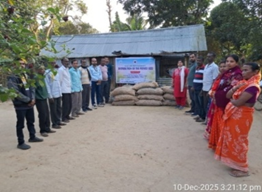
Encouraged by the availability of quality planting material and scientific guidance from KVK experts, Shri Sarkar cultivated Kufri Himalini on approximately 0.08 hectare of land, following recommended cultivation practices. The results at harvest demonstrated the potential of the improved variety under local growing conditions.
Kufri Himalini recorded a yield of 250 quintals per hectare, compared with 173 quintals per hectare from his existing variety. This represented an increase of 77 quintals per hectare, or approximately 44.5% higher productivity. The results highlighted the benefits of selecting suitable varieties and combining quality planting material with scientific crop management, particularly for farmers operating on small landholdings.
Improved Productivity and Economic Returns
The economic assessment of Kufri Himalini indicated promising returns from cultivation, with a reported cultivation cost of ₹1,14,000 per hectare and gross returns of ₹3,75,000 per hectare. The resulting net return was ₹2,61,000 per hectare, with a benefit–cost ratio of 2.28. These figures indicate the variety’s potential to deliver favourable economic returns under suitable growing conditions and demonstrate how improved varieties can help farmers make more productive use of their available land.
Inspiring Wider Adoption
Beyond the increase in yield, the intervention strengthened Shri Sarkar’s confidence in adopting improved agricultural technologies. His experience enabled him to evaluate the performance of Kufri Himalini under his own field conditions and recognise the value of moving beyond familiar cultivation practices.
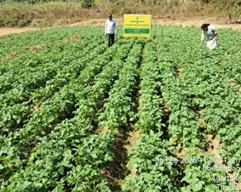
The encouraging results also attracted interest from farmers in Lankamura and neighbouring villages, including Binpara and West Bhubanban. Shri Sarkar’s field served as a practical demonstration of the potential of improved potato varieties when supported by scientific guidance and quality planting material.
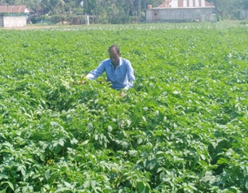
His success underscores the importance of linking agricultural research with field-level demonstrations and farmer support. Continued access to improved planting material, timely technical guidance and extension services can encourage wider adoption of productive potato varieties and help farmers achieve better returns from small landholdings in Tripura.
(Sources: ICAR-KVK West Tripura, ICAR RC for NEH Region, Tripura Centre)





फेसबुक पर लाइक करें
यूट्यूब पर सदस्यता लें
X पर फॉलो करना X
इंस्टाग्राम पर लाइक करें