

Minicoy Island, the southernmost island of the Lakshadweep archipelago, has a long-standing tradition of tuna fishing, particularly through the traditional pole-and-line method. Tuna fisheries are central to the island’s economy, supporting local livelihoods and associated activities such as fish marketing, processing and the preparation of Masmin, a traditional smoke-dried tuna product.
Fishing success depends on the availability and distribution of tuna schools, weather conditions and the time and fuel required to locate fishing grounds. When fish schools are dispersed, fishers may spend extended periods searching for them, increasing fuel consumption and fishing costs. Rough sea conditions during the southwest monsoon can make these operations more challenging and hazardous, exposing fishers to greater risks. Prolonged searching also increases fishing duration and physical exhaustion, affecting the efficiency of fishing operations. These challenges underscore the need for practical technologies that complement traditional fishing knowledge and improve safety and operational efficiency.
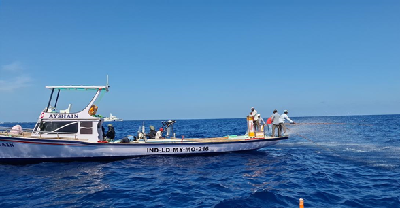
To address these challenges, the ICAR–Central Island Agricultural Research Institute, Regional Station, Minicoy, deployed a Fish Aggregating Device (FAD) on 18 January 2026, in collaboration with the Maliku Masveringe Jamaat (Maliku Fishermen Society), Lakshadweep. The device was anchored approximately 8.5 nautical miles offshore, at latitude 08°24′18.66″ N and longitude 72°57′15.38″ E. The intervention aimed to support traditional pole-and-line fishing for important pelagic species, particularly skipjack tuna (Katsuwonus pelamis) and yellowfin tuna (Thunnus albacares).
FADs provide identifiable offshore locations where fishers can search for tuna aggregations, potentially reducing the time and effort required to locate fish schools. This can help fishers plan trips more efficiently, limit unnecessary searching and reduce fuel requirements while continuing to use their traditional fishing methods.
The impact was assessed by comparing recorded tuna landings in 2025, the pre-deployment year, with those in 2026, following the deployment of the FAD. Total recorded tuna landings increased from 3,289.85 tonnes in 2025 to 4,304.44 tonnes in 2026, an increase of 1,014.59 tonnes (30.84%). This rise indicates higher recorded landings during the post-deployment observation period. However, as the figures represent total tuna landings for the island, the increase cannot be attributed exclusively to the FAD; changes in fishing effort, seasonal conditions and other factors may also have contributed.
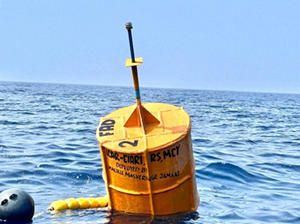
An important operational benefit reported by fishers was a 30–50% reduction in fuel consumption associated with FAD-based fishing operations. Lower fuel requirements can reduce fishing expenditure and improve the economic viability of fishing trips. Easier access to potential tuna aggregation locations may also encourage greater participation in fishing by reducing the time and effort spent searching for fish. Systematic records of fuel use, fishing duration and catch are needed to quantify these benefits more precisely.
The increase in recorded tuna landings also has economic significance. Using an indicative landing price of ₹150 per kilogram, the estimated gross value of total tuna landings was approximately ₹49.35 crore in 2025 and ₹64.57 crore in 2026, a difference of approximately ₹15.22 crore. These figures illustrate the gross value of recorded landings at the assumed price; they do not represent net income earned by fishers or revenue attributable solely to the FAD. Actual returns depend on market prices, fuel expenditure, crew payments and other operational costs.
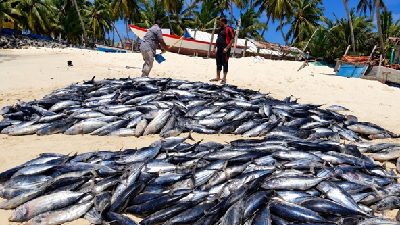
Beyond fishing operations, improved tuna availability may benefit the wider fisheries value chain. Tuna is an important raw material for Masmin production, alongside its role in local consumption and marketing. More efficient fishing may create opportunities for fish handling, processing and value addition, although the extent of these benefits would depend on actual processing volumes, market demand and raw material availability.
The partnership between ICAR–CIARI, Regional Station, Minicoy, and the Maliku Masveringe Jamaat demonstrates the value of collaboration between research institutions and the local fishing community. Combining scientific interventions with fishers’ traditional knowledge provides a practical approach to addressing local fisheries challenges.
Continued monitoring of catch per unit of fishing effort, fuel consumption, fishing-trip duration and seasonal performance will be important for establishing the FAD’s contribution more accurately. Regular maintenance and responsible fishing practices will also be essential to ensure that the technology supports sustainable use of marine resources.
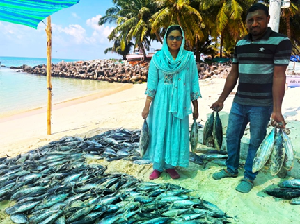
The FAD initiative in Minicoy offers a promising approach to strengthening traditional tuna fisheries through improved fishing efficiency and potentially lower operational costs. The observed increase in recorded tuna landings and the reported reduction in fuel consumption highlight its potential to support fishing livelihoods. Continued scientific assessment and community participation will help establish its long-term benefits and guide the responsible use of FAD technology in Lakshadweep.
(Source: ICAR-Central Island Agricultural Research Institute, Sri Vijayapuram)





फेसबुक पर लाइक करें
यूट्यूब पर सदस्यता लें
X पर फॉलो करना X
इंस्टाग्राम पर लाइक करें