

24 September 2026, Bengaluru
Dr Yashpal Singh Malik, Deputy Director General (Agricultural Education), ICAR, visited ICAR–National Bureau of Agricultural Insect Resources, Bengaluru, today. He was warmly welcomed by Dr. Sunil Joshi, In-charge Director, Dr. K. Subaharan, Head, Division of Germplasm Conservation and Utilization, Sri Mathew, SAO, ICAR-NBAIR, in the presence of scientists, staff members and students of the Institute.
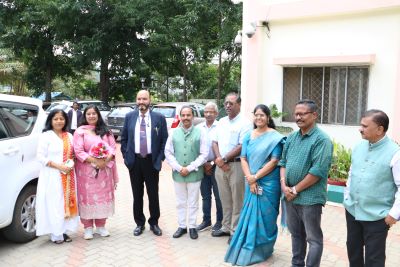
During his visit, Dr Malik toured the key facilities of ICAR-NBAIR, including the National Insect Museum (NIM), Live Insect Repository Unit (LIRU), Insect Biosafety Laboratory (IBSL-2), and ICAR National Fellow Laboratory. He appreciated the significant research activities and contributions being carried out by the scientists and staff of the Bureau. He particularly commended the well-maintained and organized Insect Museum, insect-rearing facilities, genome-editing facilities and the research labs.
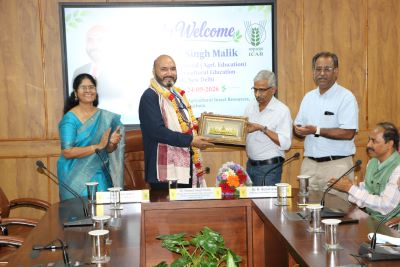
Following the visit to the Institute's facilities and laboratories, Dr Malik addressed the staff in the Conference Hall. He appreciated the efforts of the Institute and emphasized the importance of translating scientific research and innovations into practical solutions for farmers. He encouraged the scientists to effectively disseminate the valuable work being undertaken at the Bureau to enhance its visibility, outreach and impact among the farming community.
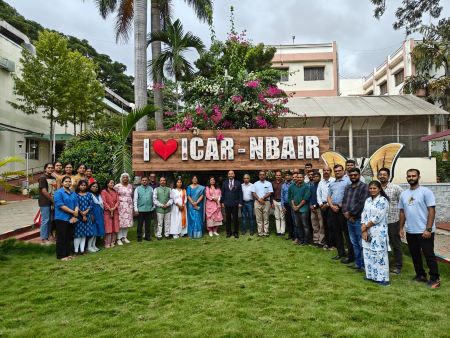
Dr Malik also interacted with the students and encouraged them to work diligently and strive for excellence by producing high-quality research. His interaction with the staff and students was highly inspiring and motivating, encouraging them to further strengthen the impact of their research and contribute more effectively to the science and needs of the farming community.
(Source: ICAR–National Bureau of Agricultural Insect Resources, Bengaluru)





फेसबुक पर लाइक करें
यूट्यूब पर सदस्यता लें
X पर फॉलो करना X
इंस्टाग्राम पर लाइक करें