

Nestled in the lap of the Himalayas, Uttarakhand is home to a vibrant cultural heritage reflected in its rich tradition of handicrafts. Crafted from natural fibres such as bamboo, Moonj grass, Ringal, and Rambaan, these handmade creations embody the artistic excellence and ecological wisdom of the region's indigenous communities. Among them, the Tharu tribe has preserved a unique weaving tradition for generations, producing exquisite baskets and household articles using age-old techniques rooted in harmony with nature.
However, as modern lifestyles evolved, this traditional craft faced an uncertain future. Younger generations were reluctant to continue weaving, considering it economically unviable. A centuries-old art form that once defined the identity and livelihood of the Tharu community was gradually fading away.
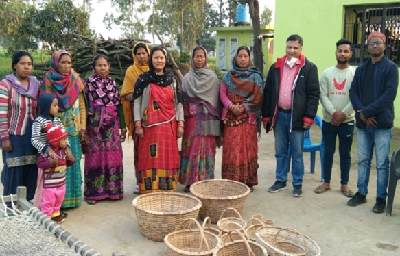
A turning point came with the vision of Tarun Pant, a successful entrepreneur who chose to leave behind a flourishing corporate career to work towards rural development. Inspired by the Hon'ble Prime Minister's vision of 'Local to Global', he established the Adimantar Rural and Tribal Development Foundation with the objective of reviving traditional handicrafts while creating sustainable livelihood opportunities for tribal women.
Working closely with the Tharu community in the Khatima and Sitarganj regions of Udham Singh Nagar district, the Foundation recognised the exceptional craftsmanship of Tharu women, who are renowned for weaving intricate baskets without using moulds or frames—a skill that distinguishes them from many other weaving communities across the country.
To transform this traditional craft into a sustainable enterprise, the Foundation collaborated with professional designers trained at the National Institute of Fashion Technology (NIFT). While preserving the authenticity of traditional weaving techniques, the artisans were introduced to contemporary product designs, modern colour palettes, improved finishing methods, and market-driven innovations.
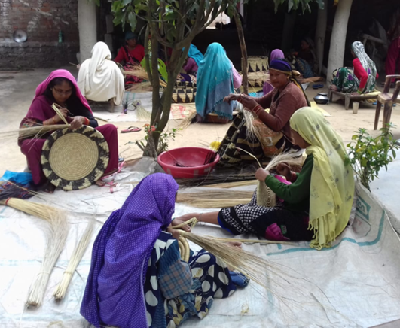
The initiative began with just 20 Tharu women artisans. Equipped with new skills and confidence, these women not only created products that appealed to modern consumers but also emerged as trainers for other women in their villages. Their success laid the foundation for a self-sustaining network of artisans, ensuring that traditional knowledge continued to be passed from one generation to the next.
The initiative soon attracted wider recognition. Krishi Vigyan Kendra (KVK), Dehradun, collaborated with Tarun Pant to replicate the model among farming communities through a series of capacity-building programmes. The movement also received support from organisations such as Patanjali, Om Logistics Ltd., and NECC Ltd., enabling artisans to improve product quality, expand market access, and strengthen their entrepreneurial capabilities.
Several women emerged as master trainers, including Amarwati, Umeshwati, Jemwati, Mayawati, Brijeshwati, Saromwati, Chitrawati, and Nemwati, who played a pivotal role in expanding the initiative across the region by mentoring hundreds of new artisans.
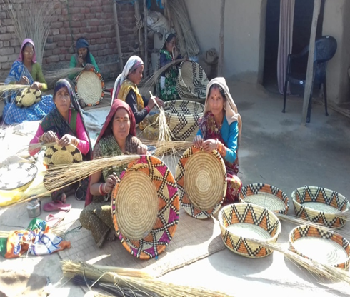
Today, multiple Self-Help Groups (SHGs) are successfully engaged in value addition of Moonj grass through handicraft production. These include Laxmi SHG (annual income: ₹7 lakh), Durga SHG (₹18 lakh), Kalpana SHG (₹16 lakh), Rana Tharu SHG (₹17 lakh), Nav Durga SHG (₹19 lakh), and Rana Tharu Bans Avam Resha Vipanan Sansthan, based in Sitarganj, which has achieved an annual turnover of ₹30 lakh. Led by Mrs. Amarwati, the organisation has emerged as a remarkable example of women-led rural entrepreneurship.
The transformation has been extraordinary. Just six years ago, the collective annual sales of these artisans were less than ₹5 lakh. Today, their combined turnover is expected to cross ₹1.5 crore annually, reflecting the immense potential of integrating traditional knowledge with modern design and market linkages.
What started with 20 women artisans has grown into a movement involving nearly 3,000 rural women, each earning between ₹10,000 and ₹15,000 per month. The initiative has not only enhanced household incomes but has also encouraged young people to rediscover the value of their traditional craft.
The manufacturing process continues to rely on simple, eco-friendly techniques using locally available Moonj grass and handmade tools. While artisans continue to produce traditional products such as Jhappa (large storage containers), Mauni (serving trays), Pauti (decorative jewellery boxes), Gumla (bowls), and Saji (flower baskets), they have also diversified into a wide range of contemporary lifestyle products, including coasters, table mats, mirror frames, jewellery boxes, mobile covers, masks, pen stands, toys, paper weights, colourful bowls, decorative containers, and home décor items.
The quality and uniqueness of these products have enabled them to reach international markets. Today, handcrafted products made by Tharu artisans are sold in 37 countries, including the United States and several European nations, earning appreciation from customers across the globe and attracting interest from leading companies in Uttarakhand.
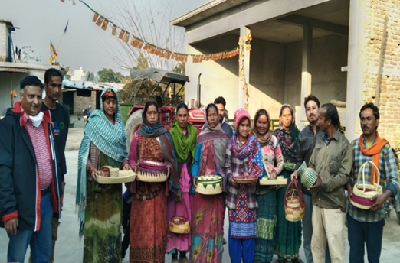
Beyond economic empowerment, the initiative has revived a fading cultural heritage and demonstrated how traditional craftsmanship can become a driver of inclusive rural development. It has strengthened women's leadership, generated sustainable livelihoods, and inspired communities to take pride in their indigenous knowledge systems.
Looking ahead, the Adimantar Rural and Tribal Development Foundation envisions expanding this network to 20,000 skilled artisans, creating one of India's largest community-led handicraft movements. By preserving traditional knowledge while embracing innovation, the initiative continues to exemplify the spirit of 'Local to Global', contributing to the vision of an Aatmanirbhar Bharat.
The journey of the Tharu artisans stands as a powerful reminder that when tradition is nurtured with innovation, institutional support, and market opportunities, it can transform lives, preserve cultural heritage, and create sustainable pathways to prosperity for generations to come.
(Source: G B Pant University of Agriculture & Technology, Krishi Vigyan Kendra, Dhakrani, Dehradun, Uttarakhand)





फेसबुक पर लाइक करें
यूट्यूब पर सदस्यता लें
X पर फॉलो करना X
इंस्टाग्राम पर लाइक करें