

2 July 2026, Chopra, Uttar Dinajpur
Positioning millets as a sustainable solution to climate change and rural livelihood enhancement, Krishi Vigyan Kendra (UBKV), Uttar Dinajpur, under the jurisdiction of ICAR-Agricultural Technology Application Research Institute, Kolkata, organized a Millet Mela-cum-Workshop to promote millets as climate-resilient crops that enable farmers to adapt to anticipated El Niño-induced weather variability while creating opportunities for value addition, entrepreneurship, and income diversification. The event sponsored by NABARD project "Capacity Building and Awareness on Millet Cultivation and Its Value Addition,"
Delivering the keynote address virtually, Dr Pradip Dey, Director, ICAR-ATARI, Kolkata, highlighted the transformative role of millets in promoting climate-resilient agriculture, nutritional security, and rural enterprise. Aligning with the theme of the programme, he described millets as "smart crops for a changing climate" due to their ability to thrive under drought, heat stress, and marginal conditions with minimal water and external inputs. He emphasized that expanding millet cultivation is a strategic climate adaptation measure to mitigate the impacts of El Niño and climate variability while creating sustainable livelihood and enterprise opportunities for rural communities. Highlighting their rich nutritional profile comprising dietary fibre, essential minerals, antioxidants, and micronutrients he stated that millets are key to addressing hidden hunger while advancing sustainable agricultural production and natural resource conservation.
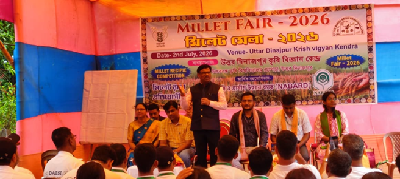
Welcoming the participants, the Head of the KVK underlined the growing importance of millets in addressing climate risks, nutritional insecurity, and livelihood diversification. The Principal Investigator of the NABARD project presented the achievements of the initiative, highlighting its contributions to promoting improved millet cultivation technologies, value addition, processing, women-led enterprises, and millet-based agribusiness for sustainable rural livelihoods.
The dignitaries unanimously emphasized that scaling up millet cultivation and strengthening millet value chains can diversify farm income, improve household nutrition, and build resilience against climatic uncertainties. They also called for stronger convergence among research institutions, extension agencies, financial organizations, and district administration to accelerate technology dissemination, enterprise development, and market linkages for millet-based products.
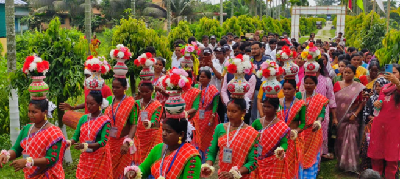
Nearly 200 stakeholders, including farmers, SHG members, rural youth, extension personnel, and input dealers, participated in the event. A Millet Recipe Competition on 1 July 2026 featured 57 millet-based products across 33 innovative recipes, showcasing the potential of nutritious, value-added millet products to promote women-led entrepreneurship and enhance rural incomes. The Millet Mela brought together farmers, researchers, policymakers, financial institutions, SHGs, entrepreneurs, and extension agencies to promote millets as low-input, climate-resilient crops that strengthen food and nutritional security, reduce production risks, and create sustainable livelihood opportunities through value addition.
The Millet Mela concluded with a collective resolve to position millets as "Smart Foods" capable of mitigating the impacts of El Niño and climate change, enhancing nutritional security, conserving natural resources, and promoting resilient, enterprise-driven rural development. The event reaffirmed that coordinated efforts among research institutions, extension systems, financial organizations, policymakers, and farming communities are essential to mainstream millet cultivation and value addition as a cornerstone of climate-smart and economically sustainable agriculture.
(Source: ICAR- Agricultural Technology Application Research Institute, Kolkata)





फेसबुक पर लाइक करें
यूट्यूब पर सदस्यता लें
X पर फॉलो करना X
इंस्टाग्राम पर लाइक करें