

May 2026, Datia
ICAR-National Bureau of Fish Genetic Resources, Lucknow in collaboration with Krishi Vigyan Kendra Datia, College of Fisheries Datia under Rani Lakshmi Bai Central Agricultural University, and International Crops Research Institute for the Semi-Arid Tropics, organized two specialized training programmes on scientific aquaculture under Mission Navshakti, a Scheduled Caste Sub Plan (SCSP) component of ICAR-NBFGR.
The initiative aims to promote entrepreneurship, livelihood security, and capacity building among Scheduled Caste (SC) farmers in the Bundelkhand region through scientific fisheries-based enterprises utilizing rejuvenated ponds. The programme has also received global technical recognition from the Food and Agriculture Organization for its hub-and-spoke cluster model developed for market linkage through collection and distribution centres.
A total of 80 SC farmers, including 13 women participants, were trained in various aspects of scientific freshwater aquaculture, including pond management, stocking practices, harvesting techniques, and sustainable fish farming methods. The programmes focused on enabling farmers to transform available water bodies into viable income-generating enterprises.
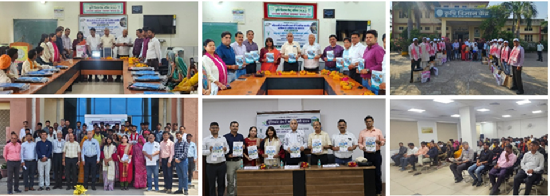
Training at KVK Datia
The first training programme was conducted at Krishi Vigyan Kendra Datia from 4–8 May 2026, benefiting 30 farmers, including three women participants from the Bundelkhand region. Participants received hands-on exposure to sustainable aquaculture practices. To support field-level activities and entrepreneurship, each trainee was provided with a basic entrepreneurship toolkit comprising a 100 W flood solar light, sustainable jute bags, caps, and gamcha.
Training at College of Fisheries, Datia
The second programme was organized at College of Fisheries Datia from 5–6 May 2026, training 50 participants, including 10 women, from four villages of Datia district — Dhikouli, Kamarari, Banvas, and Sewani. The participants belonged to seven Self-Help Groups (SHGs), namely Bakebihari, Deobaba, Jaimatari, Ramrajashankar, Jaikaraundima, and Jai Vaishnu Devi SHGs.
The training modules emphasized scientific pond management, sustainable aquaculture practices, and agri-entrepreneurship to help farmers convert traditional ponds into productive aquaculture units.
Field Visit to Vaishnavatar Producer Company Limited Farms
As part of the programme, trainees participated in an exposure visit to the farms of progressive fish farmers associated with Vaishnavatar Producer Company Limited. The Farmer Producer Organization (FPO) has been playing a significant role in promoting collective farming, technology adoption, and market linkages for fish farmers in the region.
The field visit covered farms across Datia and Shivpuri districts, where participants gained practical exposure to advanced and sustainable fish farming techniques, including Biofloc Technology, Recirculatory Aquaculture Systems (RAS), and integrated fish-cum-poultry farming systems. These technologies are helping farmers improve productivity while ensuring resource efficiency and environmental sustainability.
The trainees also visited a small fish and poultry feed preparation unit operated by FPO members, where they observed the process of quality feed manufacturing tailored for integrated farming systems. The visit provided valuable practical insights complementing the theoretical sessions conducted during the training programmes.
The initiative is expected to strengthen fisheries-based livelihoods in the water-scarce Bundelkhand region while promoting inclusive growth among SC farmers and women SHGs. It is also envisaged to create a replicable model of pond-based aquaculture entrepreneurship contributing to rural economic development, nutritional security, and sustainable utilization of water resources.
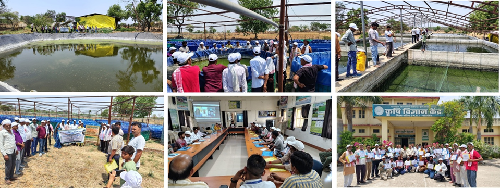
In the Bundelkhand region, International Crops Research Institute for the Semi-Arid Tropics has been actively working on rejuvenation of traditional Haveli systems for water conservation and pond restoration. Improved water availability in the region has encouraged local farmers to adopt fish farming as a sustainable livelihood option.
The capacity-building initiative is expected to empower SC farmers and women self-help groups to successfully undertake fisheries-based enterprises through scientific utilization of rejuvenated water bodies, thereby enhancing income generation, nutritional security, and sustainable rural livelihoods in the Bundelkhand region.
(Source: ICAR-National Bureau of Fish Genetic Resources, Lucknow)





फेसबुक पर लाइक करें
यूट्यूब पर सदस्यता लें
X पर फॉलो करना X
इंस्टाग्राम पर लाइक करें