

In the North Eastern Hill (NEH) region of India, potato farmers have long struggled with a persistent challenge—limited access to healthy and timely seed potatoes. The region’s geographical distance from major seed-producing hubs in northern India often forces farmers to rely on locally available, degenerated seed tubers. This reliance results in lower crop productivity and reduced farm income. Although the ICAR–Central Potato Research Institute (ICAR-CPRI) supplies breeder seed for multiplication, the demand for quality seed potatoes far exceeds the available supply. Low seed replacement rates further compound the problem.
Conventional seed production in the region is also constrained by several biological and environmental factors. To overcome these challenges, researchers have increasingly explored non-conventional seed multiplication technologies such as disease-free microplants, aeroponic minitubers, and Apical Rooted Cuttings (ARC). The favourable agro-climatic conditions of the NEH region—allowing near year-round potato cultivation—make it particularly suitable for rapid seed multiplication. Among these technologies, ARC has emerged as a promising and practical solution for decentralized seed potato production.
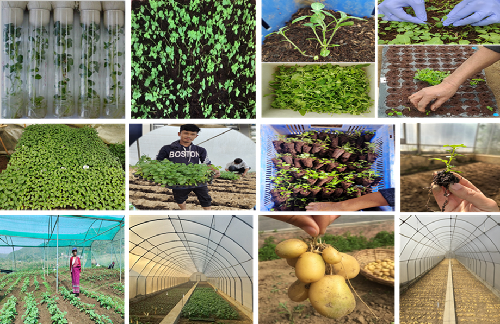
Between 2019 and 2021, ARC technology was evaluated and standardized at the regional stations of ICAR-CPRI, demonstrating its suitability under the region’s conditions. To take this innovation from laboratory to farmers’ fields, the Iaisanlang Farmers Group from Wahlynkien village in Meghalaya was selected as a demonstration site under the ICAR-CPRI Regional Station, Shillong. The group had been formed under the Meghalaya Livelihoods and Access to Markets Project (Megh-LAMP) with the aim of strengthening rural livelihoods and promoting improved agricultural practices.
Members of the farmers’ group underwent extensive training on ARC production techniques, crop health management, seed standards, and recommended agronomic practices. Beginning in 2022, farmers received rooted ARC cuttings along with essential inputs such as fertilizers, fungicides, and pesticides. While farmers contributed their labour, technical guidance and monitoring were provided by ICAR-CPRI scientists and officials from the Meghalaya Basin Management Agency (MBMA). A 200 m² net house at Wahlynkien village was established as the frontline demonstration site for producing minitubers from ARC cuttings.
Each year since 2022, approximately 3,000 ARC cuttings of improved potato varieties—Kufri Himalini, Kufri Megha, and Kufri Giriraj—have been supplied to the group. The results have been encouraging. The survival rate of cuttings improved from 70–80% in 2022 to 80–90% in 2023, reflecting the growing technical confidence of the farmers. Production also increased significantly, with 7,000 minitubers harvested in 2022 and 9,000 in 2023. These minitubers were subsequently multiplied in open fields to produce seed potatoes, and by the summer of 2024, the farmers’ group had accumulated 2,670 kg of quality seed potatoes.
The introduction of ARC technology has brought a remarkable transformation in seed potato production among the Iaisanlang farmers. Access to disease-free, high-quality seed has improved crop productivity and farm incomes while reducing dependence on external seed sources. The farmers’ group has also begun contributing to the seed requirements of nearby villages and neighbouring states, strengthening the concept of decentralized seed production and local seed self-sufficiency.
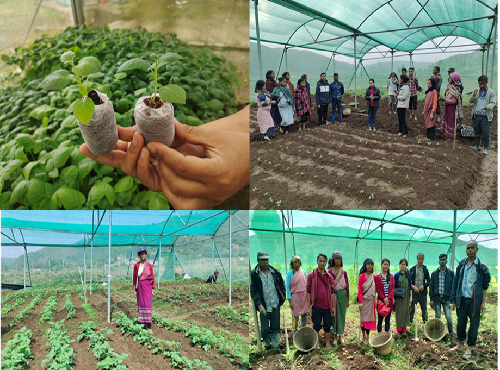
Encouraged by this success, more farmers in the region are showing interest in adopting ARC technology, opening pathways for its wider dissemination across the NEH region. Recognizing its transformative potential, the ARC technology was certified by ICAR in July 2025 and has since been licensed to 12 firms for large-scale commercialization, marking a major milestone in expanding access to quality seed potatoes.
The initiative has highlighted several key lessons. Continuous capacity building and farmer training are essential for the successful adoption of new technologies. Strong collaboration between farmers, scientists, and development agencies plays a vital role in effective technology transfer. Non-conventional seed multiplication techniques such as ARC can help address the long-standing challenge of quality seed availability in remote regions. Equally important is the role of community-based farmer groups, which enable scaling up innovations and ensuring their long-term sustainability.
Today, the Iaisanlang Farmers Group stands as an inspiring example of how scientific innovation, when combined with farmer participation and institutional support, can transform agricultural practices and strengthen rural livelihoods in the hills of Meghalaya.





फेसबुक पर लाइक करें
यूट्यूब पर सदस्यता लें
X पर फॉलो करना X
इंस्टाग्राम पर लाइक करें