

19 January 2026, Guwahati
A one-day consultation workshop on the Promotion of Millet Technologies in North Eastern Hill (NEH) States was successfully organized at the ICAR–Agricultural Technology Application Research Institute, Zone-VI, Guwahati. The programme was jointly conducted by ICAR–Indian Institute of Millets Research, Hyderabad and ICAR–ATARI, Zone-VI, Guwahati, Assam today.
In a special message, Dr. M. L. Jat, Secretary (DARE) & Director General (ICAR), along with the Dr. A.K Nayak, Deputy Director General (Natural Resource Management) and the Vice Chancellors of Agricultural Universities, emphasized the urgent need to intensify efforts for millet promotion in the North Eastern states. They called for a structured and long-term collaborative approach between ICAR-IIMR, ATARIs, State Agricultural Universities and KVKs to address region-specific production constraints, nutritional security and climate resilience. Dr. Amulya K. Mohanty, Director, ICAR-ATARI, Zone-VII, Umiam, Meghalaya, and other delegates were also present during the meeting.
Inaugurating the technical deliberations, Dr. G. Kadirvel, Director, ICAR–ATARI, Guwahati, presented a comprehensive overview of the achievements, mandate and ongoing initiatives of ATARI Zone-VI. He highlighted the critical role of KVKs as frontline extension institutions in translating research outputs into field-level adoption, particularly in ecologically fragile and diverse regions such as the North Eastern Hill states. Dr. Kadirvel emphasized that millets, owing to their climate resilience, low input requirements and high nutritional value, are well suited to the hill farming systems and can significantly contribute to livelihood security, nutritional security and sustainable agriculture in the region.
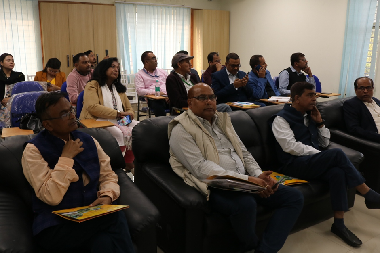
Dr. C. Tara Satyavathi, Director, ICAR-Indian Institute of Millets research, highlighted the progress of NEH-specific activities under millet programmes, elaborating on ongoing research, extension initiatives, and capacity-building efforts being undertaken to popularize millets among farmers, entrepreneurs, and consumers. The presentation underscored the importance of region-specific technologies, value addition, and market linkages to unlock the full potential of millets in the North East.
The participating KVK scientists actively engaged in discussions on constraints faced in millet promotion, including limited availability of quality seed, lack of local processing infrastructure, market access challenges and awareness gaps among farmers and consumers. The sessions enabled exchange of field experiences, identification of priority interventions for different states, and formulation of collaborative action plans for the coming seasons.
The workshop concluded with an interactive discussion and formulation of a roadmap for future collaboration between ICAR–ATARI, ICAR–IIMR and KVKs of the NEH states.
The action points included organizing district-level demonstrations, farmer trainings, exposure visits, promotion of millet-based enterprises, and integration of millet technologies with ongoing government schemes and nutrition programmes.
The workshop brought together representatives from KVKs across Assam, Arunachal Pradesh and Sikkim, providing a common platform for scientists, extension professionals and field functionaries to deliberate on region-specific strategies for accelerating millet cultivation, productivity enhancement, value addition and market integration in the NEH region.
(Source: ICAR–Indian Institute of Millets Research, Hyderabad)




फेसबुक पर लाइक करें
यूट्यूब पर सदस्यता लें
X पर फॉलो करना X
इंस्टाग्राम पर लाइक करें