


24 October 2026, Tripura
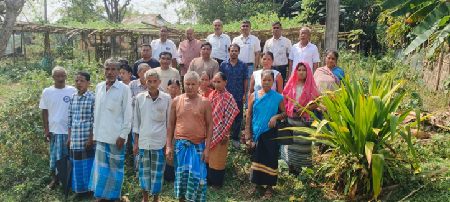
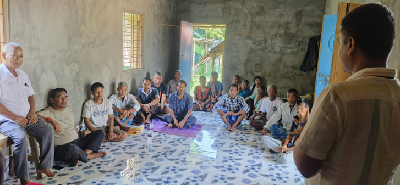
ICAR–Central Inland Fisheries Research Institute, Barrackpore in collaboration with the Department of Fisheries, Government of Tripura, organised the KhetBachaoAbhiyan – Rabi 2026 at Uttar Pulinpur village under Teliamura RD Block in Khowai district, Tripura, today. The programme, conducted under the nationwide initiative of the Ministry of Agriculture and Farmers Welfare, Government of India, promoted scientific farming, balanced fertilizer uses and the conservation of soil and water resources.
Twenty farmers, including 12 men and 8 women, participated in the programme, which focused on practical measures to improve agricultural productivity while minimising environmental risks. The initiative highlighted the importance of soil-test-based nutrient management, crop diversification, efficient resource utilisation and climate-resilient farming in sustaining agricultural livelihoods.
Linking KhetBachaoAbhiyan to One Health
Addressing the farmers, Dr Pradip Dey, Director, ICAR-CIFRI, urged farmers to adopt science-based nutrient management and avoid the indiscriminate use of fertilizers and agrochemicals. He emphasised that maintaining soil fertility and improving crop productivity must go hand in hand with protecting the surrounding environment.
Highlighting the One Health approach, Dr Dey drew attention to the vital connections between agricultural land, water resources, aquatic biodiversity and human well-being. He stressed that protecting farmland also requires safeguarding nearby ponds, wetlands and rivers, which sustain fish production, ecological balance and rural livelihoods. He further cautioned that agricultural runoff containing excess nutrients and agrochemicals can deteriorate water quality and threaten fish populations and aquatic ecosystems. He called for responsible farming practices that protect both agricultural productivity and the natural resources on which rural communities depend.
Protecting Farmers’ Varieties and Traditional Agricultural Heritage
The provisions and significance of the Protection of Plant Varieties and Farmers’ Rights Act, 2001, were highlighted, encouraging farmers to register their traditional and locally developed crop varieties to obtain legal recognition and access the benefits available under the Act.
The contribution of farmers, particularly those in tribal regions, to conserving indigenous crop varieties and traditional landraces was acknowledged. Emphasis was placed on preserving these valuable genetic resources and exploring their integration into agricultural value chains to create opportunities for commercialisation and enhanced farmer income.
Promoting Resource-Efficient and Climate-Resilient Agriculture
The campaign underscored a range of sustainable agricultural interventions, including soil-test-guided fertilizer application, crop diversification, improved utilisation of rice fallows, scientific crop residue management, integrated pest management and climate-resilient farming. Promoting Rabi-season oilseeds and pulses, maize and vegetables, along with natural farming and organic and bio-based inputs, was also highlighted. Efficient irrigation, rainwater harvesting and groundwater recharge were identified as important measures for conserving water and improving resource-use efficiency.
Shri Pijush Das, Fishery Assistant, Department of Fisheries, Government of Tripura, shared practical insights into fishery management, including maintaining suitable water quality, improving the natural productivity of ponds and ensuring healthy fish growth.
The programme reinforced ICAR-CIFRI’s commitment to strengthening agriculture–fisheries linkages and promoting sustainable rural livelihoods. By bringing scientific knowledge and practical guidance directly to farming communities, the KhetBachaoAbhiyan – Rabi 2026 highlighted a crucial message: healthy soil, clean water and sustainable farming are fundamental to productive agriculture, thriving fisheries and resilient rural communities.
(Source: ICAR–Central Inland Fisheries Research Institute, Barrackpore, Kolkata)





Like on Facebook
Subscribe on Youtube
Follow on X X
Like on instagram