

Researchers from the University of Delhi, in association with the ICAR-Indian Institute of Oilseeds Research, Hyderabad have developed a near-complete, chromosome-level reference genome assembly of safflower (Carthamus tinctorius L.), a traditional oilseed crop of India. The effort was supported by the Department of Biotechnology, Government of India under the mission programme of "Minor Oilseeds of Indian Origin" through a network project titled “Exploiting Genetic Diversity for Improvement of Safflower through Genomics Assisted Discovery of QTLs/Genes Associated with Agronomic Traits”.
Safflower is a drought-tolerant crop, suitable for semi-arid regions and known for oil rich in oleic and linoleic acids, with applications in edible oils, biofuels, cosmetics, pharmaceuticals, nutraceuticals, and natural dyes. The safflower improvement has long been constrained by the limited availability of genomic resources. Addressing this gap, the researchers generated a 1.15-gigabase reference genome assembly of safflower, resolving telomeric and centromeric regions and identifying nearly 60,000 protein-coding genes.
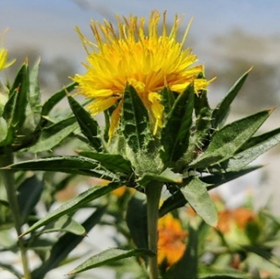
Using the improved reference genome and resequencing of a global core collection of 123 safflower accessions, researchers performed a single-nucleotide polymorphism-based genome-wide association study (GWAS), which identified significant genomic regions and haplotypes associated with key agronomic traits, including seed oil content. In addition, the resequencing data enabled the construction of the first safflower pangenome, capturing genetic variation beyond the reference genome, enriched in stress-response and adaptation-related alleles. These findings provide valuable targets for region-specific breeding programmes aimed at improving safflower performance under diverse environmental conditions. Beyond gene discovery, the researchers also identified elite safflower lines with high oil content, along with accessions containing a high number of variable genes, which could serve as important donor lines in breeding efforts.
Overall, the study offers new insights into the genomic architecture and diversity of safflower by integrating a high-quality reference genome, population-scale resequencing, genome-wide association analysis, and pan-genome construction. The genomic resources generated, including a high-density linkage map, trait-associated genetic markers, and the first safflower pan-genome, are being made publicly available.
This work will help advance safflower improvement programs focused on enhancing yield, oil content, climate resilience and accelerating the development of superior varieties suitable for diverse agro-climatic conditions, and thereby support the national mission of achieving self-sufficiency in domestic edible oil production in India.





फेसबुक पर लाइक करें
यूट्यूब पर सदस्यता लें
X पर फॉलो करना X
इंस्टाग्राम पर लाइक करें