

17 December 2025, Kolkata
The International Crops Research Institute for the Semi-Arid Tropics (ICRISAT), in collaboration with the University of Chicago and ICAR-Agricultural Technology Application Research Institute, Kolkata, organized endline survey training on “Does Subsidized Insurance Crowd out Climate Resilience? Experimental Evidence from India” today. The programme was conducted to build the capacity of field enumerators engaged in data collection across Hooghly, Paschim Medinipur, and Murshidabad districts of West Bengal.
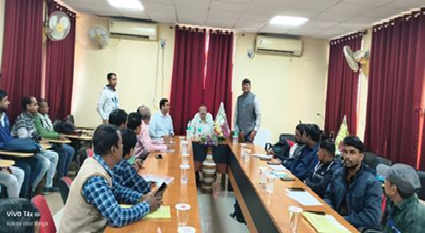
Dr. Pradip Dey, Director, ICAR-ATARI Kolkata, in his address as Chief Guest, highlighted the growing importance of evidence-based policy research in addressing climate risks in agriculture. He emphasized that enumerators play a pivotal role in translating field realities into credible scientific evidence, which ultimately shapes policy interventions. Dr. Dey further urged the participants to conduct surveys with sincerity, sensitivity, and scientific rigor, as the quality of data collected would directly influence the study’s impact.
Mr. Amrita Pal, Associate Manager-Seed Systems, ICRISAT, emphasized the need to strengthen both the capacity and confidence of enumerators, underscoring their pivotal role in generating meaningful insights at the intersection of agricultural insurance and climate resilience in India.
The training covered key aspects of the research framework, including the linkage between subsidized crop insurance and farmers’ climate-resilient practices. Participants were oriented on the structure of the digital survey tools, interview techniques, ethical considerations, and best practices for engaging with farming households. Special emphasis was laid on maintaining data integrity, minimizing respondent bias, and adhering to ethical norms during field interactions.
Interactive sessions, practical illustrations, and open discussions were integral to the training, enabling participants to clarify field-level challenges and operational issues prior to field deployment. The collaborative initiative reflected the shared commitment towards generating robust empirical evidence to inform climate-resilient agricultural strategies.
The programme enabled a shared and uniform understanding of the study objectives, research methodology, and standardized field protocols, which is expected to significantly enhance the accuracy, consistency, and reliability of primary data collection.
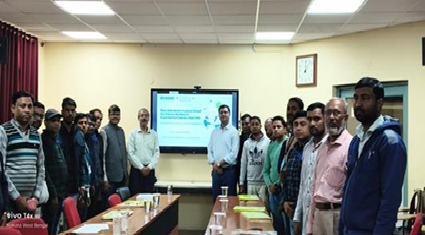
The interactive and elaborated Q&A session further clarified field-level doubts, strengthened the confidence of participants, and ensured their preparedness for effective and coordinated implementation of the survey activities.
A total of 24 members of the ICRISAT-associated survey team representing the three districts participated in the training.
(Source: ICAR-Agricultural Technology Application Research Institute, Kolkata)





फेसबुक पर लाइक करें
यूट्यूब पर सदस्यता लें
X पर फॉलो करना X
इंस्टाग्राम पर लाइक करें