


15 December 2025
ICAR–Indian Institute of Millets Research, which is the Global Centre of Excellence in Millets Research (GCoE), Rajendranagar, Hyderabad, inaugurated two intensive 10-day national training programmes today. The first of its kind training programmes with two separate modules: one, designed to impart skills to handle highly advanced laboratory techniques & equipments for various biological industry needs, and the other one, formulated to train students in entrepreneurship in millets processing, value addition & marketing, fostering entrepreneurship in the nutri-cereals sector.
On the successful completion of the first batch of trainings during 15 – 26 December 2025, Dr. C. Tara Satyavathi, Director, ICAR–IIMR, highlighted the institute’s commitment to developing skilled human resources for India’s growing millets ecosystem. She noted that with the global recognition of millets following the International Year of Millets, there is a growing demand for trained professionals and entrepreneurs capable of driving innovation across production, processing, and commercialisation.
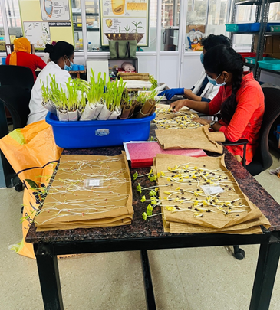
The first programme, “Advanced Laboratory Techniques in Genomics, Tissue Culture, Microscopy & Grain Science” covering a comprehensive suite of laboratory competencies including tissue & food products nutrient analysis techniques, chromatography, spectrophotometry, fermentation, insect pheromones, disease inoculation techniques, plant tissue culture, microbial isolation, molecular biology & genomics techniques, and advanced microscopy techniques. The schedule involves hands-on sessions by expert scientists, providing participants with both scientific foundations and insights into commercial and industrial applications.
Parallelly, ICAR-IIMR commenced a second programme titled “Nutri-Cereals Entrepreneurship Foundation Program,” designed to nurture first-generation entrepreneurs in the millet value chain. Sessions include exposure to millet-based food technologies, regulatory and labelling requirements, funding avenues & government schemes, branding, packaging and marketing strategies, export opportunities, and industrial visits. The programme also features demonstrations on millet value-addition technologies and hands-on trainings.
Both programmes are coordinated by multidisciplinary teams of scientists and research staff from IIMR, with resource persons drawn from specialized domains including grain science, biotechnology, plant pathology, molecular biology, food technology, and agribusiness.
More than 200 agriculture graduates from academic institutions, research laboratories, agri-startups, and food-processing sectors have enrolled for the programmes, which aim to bridge skill gaps and enhance the scientific and entrepreneurial ecosystem for millets. The programmes are completely free of cost provided to SC and ST community students under GCoE - DAPSC/DAPST funding. A series of these two training programmes on different dates were scheduled for all the 200 agri students, graduates who registered for the trainings from across the country. Each batch would include 20 participants, and the aspiring students could register by visiting the IIMR website.
The first batch training report brief:
One training programme titled “Advanced Laboratory Techniques in Genomics, Tissue Culture, Microscopy & Grain Science” provided intensive hands-on exposure to modern laboratory tools and methodologies.
Key Focus Areas:
- Plant tissue nutrient analysis and chromatography
- Spectrophotometry and fermentation technologies
- Insect pheromone analysis and disease inoculation techniques
- Plant tissue culture and microbial isolation
- Molecular biology techniques including DNA extraction, PCR, and electrophoresis
- Advanced microscopy and biological imaging
- Application of biostatistics and AI tools in biological research
Outcomes of the training:
- 100% participant satisfaction with training content and delivery
- Strong learning gains in genomics, microscopy, nutrient analysis, and microbial techniques
- Participants demonstrated high proficiency in core laboratory concepts during post-training evaluation
- Laboratory infrastructure and scientific mentoring, especially in advanced microscopy, genomics, nutrient analysis, microbial laboratories at ICAR-IIMR received unanimous positive feedback
40% of trainees were motivated to take up self-employment, 20% seek opportunities in high profile biological R&D industries, remaining would opt for higher studies.
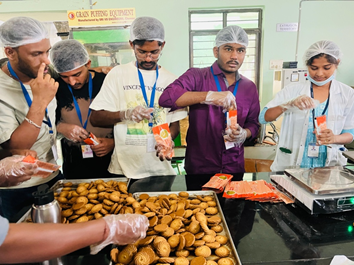
The other training module titled “Nutri Cereals – Entrepreneurship Foundation Program” was designed to build entrepreneurial capacity in millet-based production, processing, and value addition.
Key Components:
- Millet processing and value-addition technologies
- Licensing, labelling, food safety, and regulatory compliance
- Branding, marketing, and export opportunities (including APEDA guidelines)
- Government schemes, MSME support, and startup funding avenues
- Practical demonstrations on millet recipes and packaging techniques
- Exposure visits to Nutri Hub, Centre of Excellence, and food processing units
Outcomes of the training:
- Over 90% of participants reported improved understanding of millet enterprises
- High confidence gained in business planning, branding, and regulatory compliance
- Majority (80%) of trainees expressed readiness to start or expand millet-based ventures
- Exposure visits and practical sessions were rated as highly beneficial
(Source: ICAR–Indian Institute of Millets Research, Hyderabad)





Like on Facebook
Subscribe on Youtube
Follow on X X
Like on instagram