


Chia is an emerging low-water-requiring crop with the potential to thrive under both rainfed and irrigated conditions. It grows well even in marginal soils such as rocky basaltic, sandy, and medium black soils with low fertility. The highly nutritious seeds of chia contain 30–32% dietary fibre and 50–55% Omega-3 fatty acids, with proven medicinal benefits in managing diabetes, obesity, and cardiovascular diseases. However, being a new crop in India, chia cultivation lacks standardized agronomic practices, leading to inconsistent yields and limiting its adoption by farmers. Recognizing this gap, ICAR- National Institute of Abiotic Stress Management, Baramati developed a comprehensive package of practices (POPs) for chia cultivation through agronomic experiments conducted from 2021to 2024.
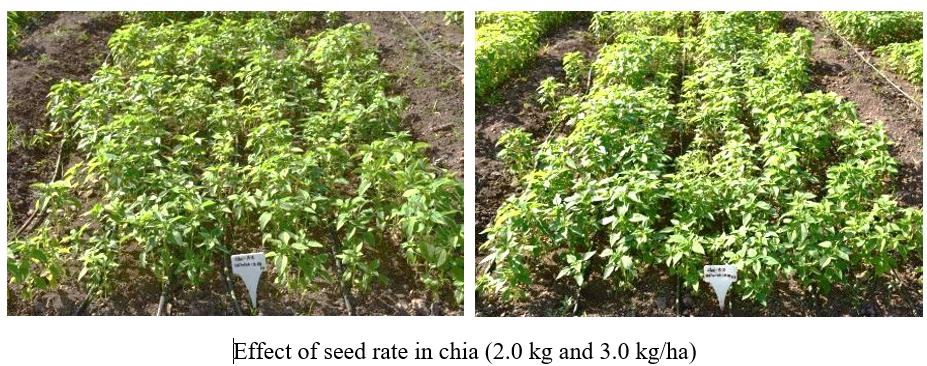
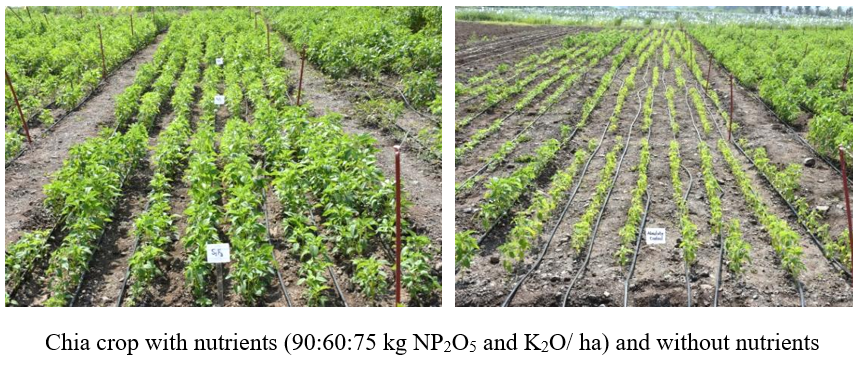
The ideal plant population recommendations include seed rates of 2.0 kg/ha for line sowing and 2.5-3.0 kg/ha for broadcasting. Transplanting the fifteen-day-old seedlings raised in a cocopeat: vermicompost: red soil mix (1:1:1) proved effective for contingent planning and intercropping. The ideal sowing window for higher yield is from 1st August to 15th September. Spacing of 60 × 30 cm (July–September) and 50 × 30 cm (October-November) is optimal. The recommended dose of fertilizers were 90:60:75 kg N:P₂O₅:K₂O per hectare, with nitrogen applied in three splits, with the first one applied as a basal dose (50%) and the remaining 50% N in two splits at 30 and 45 days after sowing (DAS).
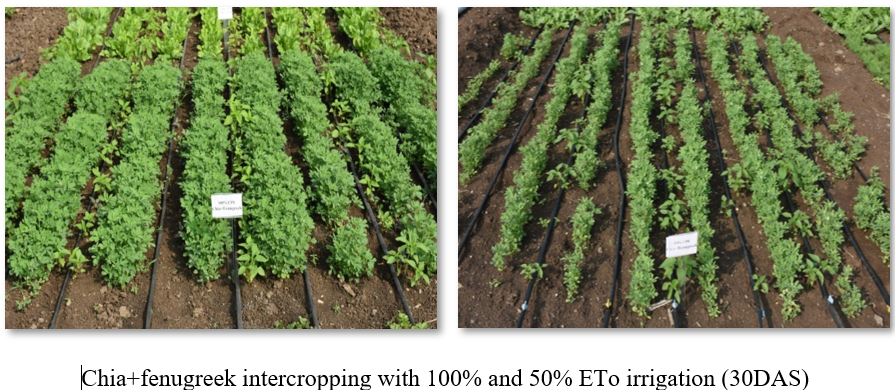
For the rabi season, supplemental irrigation of approx. 350 mm (60% ETo) and foliar spraying of 0.5% KNO₃ at 30 and 45 DAS helps save 40% water. Intercropping chia with leafy vegetables such as fenugreek, in a 1:2 row ratio, enhances productivity and profitability. The chia+fenugreek system yielded 628 kg/ha of chia seed and 4685 kg/ha of green fenugreek, with a chia equivalent yield of 1106 kg ha-1,significantly higher than the monocrop.
Economically, chia monocropping provided net returns of Rs. 75,213/ha (B:C ratio 2.58), while intercropping with fenugreek increased net income to Rs. 1,07,000/ha (B:C ratio 2.89) under full irrigation, and Rs. 75,000/ha (B:C ratio 2.45) under 50% irrigation. The POPs developed by ICAR-NIASM serve as a critical foundation for scaling up chia cultivation in India.
(Source: ICAR-National Institute of Abiotic Stress Management, Malegaon, Baramati, Pune, Maharashtra)





Like on Facebook
Subscribe on Youtube
Follow on X X
Like on instagram