

2 December 2025, New Delhi
ICAR-Indian Agricultural Research Institute Alumni Association organised the 2nd Foundation Day Lecture at the ICAR-Indian Agricultural Research Institute, today focusing on the pivotal role of innovation in building a resilient, inclusive, and future-ready agricultural sector.
In his opening remarks, Dr Ch. Srinivasa Rao, Director, ICAR-IARI and Chief Patron, IAA, emphasised the need for people-centric and innovation-centric agriculture. He highlighted that agriculture today not only ensures food security but also contributes significantly to healthcare, nutrition, livelihoods, and overall societal well-being. He underscored that farmer-focused technological and policy innovations are essential for sustainable agricultural transformation.
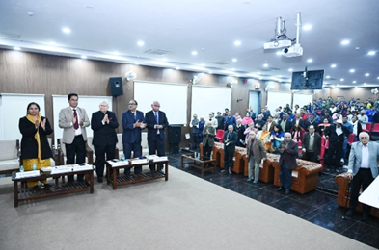
The Chairman’s Remarks were delivered by Dr R.S. Paroda, Chairman, TAAS & President, ICAR-IARI Alumni Association, followed by the felicitation of the distinguished speaker.
The Foundation Day Lecture was delivered by Dr R. A. Mashelkar, Former Director General, Council of Scientific and Industrial Research (CSIR), on the theme ‘Innovation’s Holy Grail: More from Less for More.’ He stated that this vision draws inspiration from Mahatma Gandhi’s philosophy that the Earth provides enough to meet everyone’s needs, but not everyone’s greed. Dr Mashelkar stressed the importance of ensuring equitable access to quality education, even in the presence of income inequality, as a critical enabler of innovation-led development.
Dr Mashelkar elaborated on the challenges in realising the vision of Viksit Bharat, highlighting the need to strengthen innovation ecosystems, including the Innovation Procurement Platform, to accelerate national transformation. He recalled India’s historic journey from food scarcity to food security, and commended the contributions of agricultural scientists and institutions to this achievement.
Highlighting the current challenges faced by Indian agriculture, he referred to climate change, fragmented landholdings, soil degradation, water scarcity, market volatility, and the digital divide. He emphasised that the climate crisis represents the greatest challenge to agriculture, necessitating a shift from conventional approaches to advanced and high-end technologies.
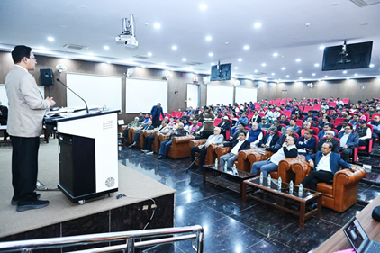
Dr Mashelkar emphasised the importance of machine learning and modern management mechanisms in the agricultural context, citing initiatives such as the Soil Health Card scheme. He outlined key innovation strategies, including precision water management, digital crop twins, the use of drones for fertiliser and pesticide applications, and parametric climate insurance to enhance productivity, resilience, and sustainability.
The programme also included an interactive session with Dr R. A. Mashelkar with faculty members and students, which fostered a rich exchange of ideas on innovation and agriculture.
The programme concluded with a vote of thanks proposed by Dr S. Gautam, Joint Secretary, IACR-IARI Alumni Association.
The event reaffirmed the commitment of ICAR-IARI and the IARI Alumni Association to advancing innovation-driven, climate-resilient, and inclusive agricultural development, aligned with national priorities and the vision of a developed India.
(Source: ICAR-Indian Agricultural Research Institute, New Delhi)





फेसबुक पर लाइक करें
यूट्यूब पर सदस्यता लें
X पर फॉलो करना X
इंस्टाग्राम पर लाइक करें