

27 November 2025, Odisha
ICAR–Indian Institute of Millets Research, Hyderabad, in collaboration with the Department of Agriculture and Farmers’ Empowerment, Odisha, organised a one-day Farmers’ Participatory Varietal Selection cum Field Day on Millets today at Kundra Block, Koraput, Odisha.
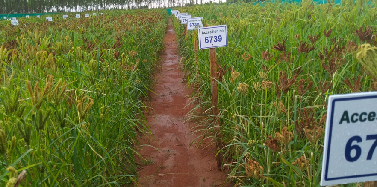
Koraput, renowned for its traditional agricultural systems and recognised by the FAO as a Globally Important Agricultural Heritage Site, is known for its rich diversity of millets and traditional crops. Tribal farmers of the region continue to cultivate and conserve traditional finger millet varieties that align with local agro-ecological conditions and cultural preferences. The programme aimed to integrate this indigenous knowledge with scientific methodologies to identify locally adapted and superior millet varieties for enhanced adoption and resilience in rainfed tribal landscapes.
For the event, 40 traditional and nationally released finger millet varieties were cultivated under farmers’ practice conditions (low or no external inputs) at Kundra. A team of ICAR-IIMR scientists along with representatives from WASSAN and MSSRF, facilitated the participatory varietal selection process.
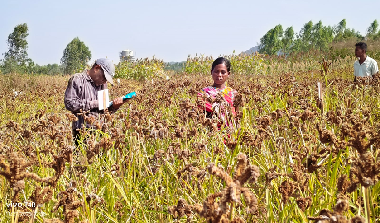
A structured questionnaire was administered to understand current millet cultivation practices, preferred traits, and varietal choices. Farmers evaluated and scored the varieties to identify promising traditional and nationally released types suited to local needs.
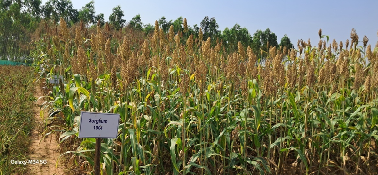
A farmer–scientist interaction session was also conducted, during which participants were briefed on improved production, processing, and value addition technologies across major millets, including sorghum (grain and fodder), pearl millet, finger millet, barnyard millet, little millet, and foxtail millet.
Under the Tribal Sub Plan of the Global Centre of Excellence on Millets (Shree Anna) at ICAR-IIMR, seed and input distribution for the participating tribal farmers has been planned. Future initiatives will focus on mainstreaming high-performing varieties into local production systems, strengthening community-based seed systems, and organising capacity-building programmes on seed production, processing, and value addition. These efforts aim to enhance millet productivity, profitability, and livelihood resilience in the tribal regions of Koraput.
A total of 50 tribal farmers, including several women farmers, took part in the programme.
(Source: ICAR–Indian Institute of Millets Research, Hyderabad)





फेसबुक पर लाइक करें
यूट्यूब पर सदस्यता लें
X पर फॉलो करना X
इंस्टाग्राम पर लाइक करें