


For generations, the fertile plains of Dehradun, Uttarakhand, have been synonymous with traditional agriculture. Farmers cultivated rice, wheat, maize, sugarcane, litchi, and seasonal vegetables across diverse agro-ecological landscapes, sustaining rural livelihoods through conventional cropping systems. However, changing agricultural realities—including rising cultivation costs, declining profitability, urbanization, migration, wild animal infestation, and poor fertilizer-use efficiency—began to threaten the sustainability of these traditional farming practices.
Recognising the need for diversification, farmers started exploring alternative crops that could offer higher returns while making optimum use of the region's favourable agro-climatic conditions. Supported by progressive government policies promoting diversified farming systems, this search for sustainable livelihoods paved the way for an extraordinary transformation through the cultivation of herbal species.
A New Beginning with Herbal Farming
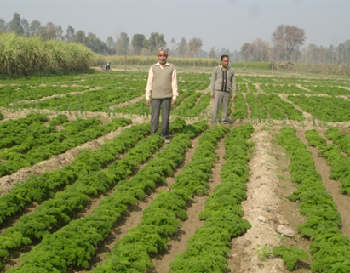
As demand for herbs and value-added food products increased in both domestic and international markets, a group of progressive farmers in Dehradun took a bold step towards cultivating lesser-known herbal crops on a commercial scale. What began as a small initiative has today evolved into a successful model of agricultural diversification and rural entrepreneurship.
At present, more than 68 hectares of land in Dehradun district are under cultivation of herbal species, excluding vetiver and lemon grass. Farmers are successfully cultivating a wide range of herbs, including Dill, Sage, Marjoram, Thyme, Parsley, Basil, Oregano, Coriander, Savoy, Rocula, Celery, Mint, and Chervil. Although these crops were once unfamiliar to most farmers, they have now emerged as an important source of income and employment in the district.
Partnership that Transformed Farming
A major catalyst behind this transformation has been the collaborative support provided by Krishi Vigyan Kendra (KVK), Dehradun, and M/s Flex Foods Pvt. Ltd., Dehradun.
Under a contract farming arrangement introduced in 2006, M/s Flex Foods Pvt. Ltd. supplied quality seeds and planting material to farmers and assured procurement of the produce through a buy-back policy at farm-gate prices. Simultaneously, KVK Dehradun extended continuous technical guidance to growers through Front Line Demonstrations (FLDs), farmer training programmes, and regular advisory services on scientific crop production and management.
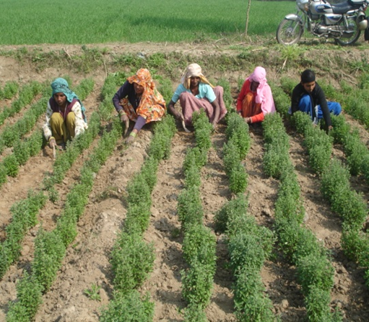
This unique convergence of assured marketing, technical support, and quality inputs encouraged farmers to adopt herbal cultivation with confidence.
Unlike conventional crops, herbal produce has limited direct consumer markets and is primarily grown to meet the requirements of food processing and allied industries. The contract farming model therefore significantly reduced marketing risks while enabling farmers to venture into high-value agriculture.
Building Skills, Confidence and Rural Enterprises
The shift to herbal cultivation brought about much more than an increase in farm income. It transformed the mindset of farmers.
Over the last 10–12 years, farmers have acquired specialised skills in crop production, quality management, harvesting, and marketing of herbal produce. They are now well-equipped to meet industrial quality standards and market specifications while adopting modern production techniques without abandoning their traditional farming systems.
The impact of this transformation is visible across rural communities. Enhanced incomes have enabled farming families to improve their standard of living, construct better homes, and create sustainable livelihood opportunities within their villages. More importantly, the initiative has generated substantial employment for rural youth and farm women, reducing migration and encouraging entrepreneurship at the grassroots.
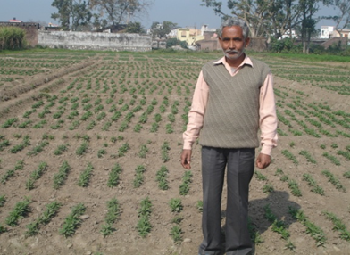
Today, more than 105 young farmers have adopted commercial cultivation of herbal species on a limited scale, demonstrating the growing acceptance of diversified agriculture in the region.
Impressive Production and Income
During 2020–21, herbal cultivation across 68 hectares generated a total production of 2,330 metric tonnes, earning farmers a cumulative income of ₹243.62 lakh.
Among the major crops cultivated were:
Herbal Species | Area (ha) | Production (MT) | Income |
|
|
|
|
Basil | 5.0 | 295 | ₹29.50 lakh |
Coriander | 8.0 | 405 | ₹32.40 lakh |
Dill | 10.0 | 460 | ₹46.00 lakh |
Marjoram | 3.0 | 45 | ₹7.87 lakh |
Parsley | 20.0 | 700 | ₹73.50 lakh |
Thyme | 6.0 | 140 | ₹26.60 lakh |
Celery | 2.1 | 25 | ₹2.25 lakh |
Chervil | 3.5 | 60 | ₹6.60 lakh |
Flat Parsley | 2.5 | 30 | ₹2.70 lakh |
Mint | 2.0 | 65 | ₹6.18 lakh |
Sage | 0.5 | 5 | ₹0.80 lakh |
Rocula | 2.0 | 25 | ₹3.00 lakh |
Savoy | 3.5 | 45 | ₹4.27 lakh |
While Parsley contributed the highest overall income (₹73.50 lakh) owing to its larger cultivation area, Thyme and Marjoram emerged as the most remunerative crops on a per-unit basis, offering farmers significantly higher economic returns than many conventional crops.
Most of these herbs are cultivated during the Rabi and Zaid seasons, when weed infestation remains comparatively low. The harvested produce is supplied directly to processing industries according to strict quality specifications and is widely used in developed countries for food garnishing and flavour enhancement.
Scientific Cultivation for Premium Markets
Herbal farming demands precision and intensive crop management.
Success depends on timely agronomic operations, appropriate crop geometry, optimum plant spacing, balanced fertilizer application, scientific irrigation scheduling, and specialised practices such as pinching and crop training to maximise productivity and preserve the biochemical quality of the herbs.
The cultivation process is highly labour-intensive, with more than 75 per cent of the total production cost spent on labour and labour management. Farm women and skilled workers play a vital role throughout the production cycle, making herbal cultivation an important source of rural employment.
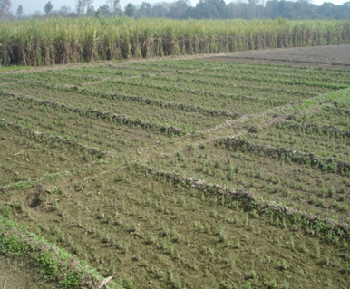
Over the years, farmers have developed considerable expertise in production, harvesting, quality maintenance, and marketing, enabling them to consistently meet industry requirements.
Herbal Farming Outperforms Traditional Crops
The economic comparison between herbal cultivation and conventional farming clearly demonstrates the advantages of crop diversification.
Crop | Cost of Cultivation (₹ lakh/ha ) | Income(₹ lakh/ha) | Net Income (₹ lakh/ha) |
Paddy | 0.45 | 0.90 | 0.45 |
Wheat | 0.42 | 0.98 | 0.56 |
Sugarcane | 0.77 | 1.70 | 0.93 |
Herbal Species | 0.70 | 2.40 | 1.70 |
The figures clearly indicate that herbal farming provides substantially higher net returns compared to traditional crops, making it an attractive supplementary enterprise for farmers seeking higher profitability.
The Road Ahead
Despite its remarkable success, herbal farming presents unique challenges. Since these crops have a highly specialised market, expansion depends on assured marketing channels, standardised production technologies, efficient storage systems, and better processing infrastructure.
Establishing village-level processing units would enable farmers to process surplus produce locally, reduce dependence on a single buyer, promote cottage industries, and create additional employment opportunities. Similarly, developing crop-specific production standards and strengthening institutional support would help farmers consistently produce high-quality, market-oriented herbs while improving the long-term sustainability of the sector.
A Model for Diversified Agriculture
The experience of Dehradun demonstrates how scientific interventions, institutional support, and assured market linkages can transform traditional agriculture into a profitable and sustainable enterprise.
What began as a small contract farming initiative in 2006 has grown into a successful model of diversified agriculture that has enhanced farm incomes, generated employment, encouraged youth entrepreneurship, and strengthened rural livelihoods. By integrating technical guidance from KVK Dehradun with industry support from M/s Flex Foods Pvt. Ltd., farmers have successfully unlocked the immense potential of herbal cultivation, creating a pathway towards resilient agriculture and sustainable rural development in Uttarakhand.
(Source: G B Pant University of Agriculture & Technology, Krishi Vigyan Kendra, Dhakrani, Dehradun, Uttarakhand)





Like on Facebook
Subscribe on Youtube
Follow on X X
Like on instagram