


2-4 September 2026
A three-day Skill Development Training Programme on “Mushroom Production and Processing” was organized at the ICAR Research Complex for Eastern Region Farming System Research Centre for Hill and Plateau Region, Plandu, Ranchi, from 2 to 4 September 2026, The programme aimed to enhance the technical knowledge and practical skills of tribal farmers in mushroom cultivation and processing, thereby promoting livelihood diversification, entrepreneurship, and income generation.
Dr Anup Das, Director, ICAR–Research Complex for Eastern Region, Patna, emphasized mushroom production as an important component of integrated farming systems for enhancing household nutrition and income, particularly among women farmers. He stated that mushroom cultivation is emerging as a promising livelihood option for tribal farming communities in Jharkhand, with women taking a leading role in production and enterprise development. He highlighted the support being extended by the ICAR-RCER’s FSRCHPR, Ranchi Centre through technical guidance, capacity building and supply of quality mushroom spawn to promote sustainable mushroom-based livelihoods among farmers.
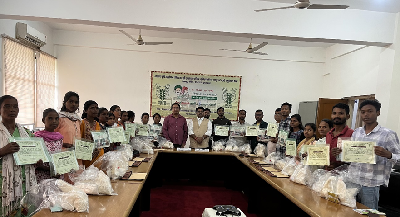
The event focused primarily on the production and processing technologies of Oyster and Milky mushrooms. The participants received technical knowledge, practical demonstrations, and hands-on training covering various aspects of mushroom production, including substrate preparation, spawning, crop management, harvesting, post-harvest handling, and processing. Special emphasis was placed on the adoption of scientific mushroom cultivation technologies and value-addition practices to enhance farm income and create sustainable livelihood opportunities for tribal farmers.
During the valedictory session, the participating farmers shared their experiences, queries and expectations regarding the adoption of mushroom cultivation as a livelihood and entrepreneurial activity. They appreciated the hands-on training on substrate preparation, spawning, crop management, harvesting and processing, which enhanced their practical knowledge and confidence to initiate mushroom cultivation at their respective locations. The farmers raised important queries related to spawn quality and availability, production costs, cultivation facilities, environmental management, contamination control and marketing of fresh mushrooms.
The participants also highlighted the importance of production planning, processing and value addition, entrepreneurship development, and market linkages with local markets, retailers, hotels, restaurants, institutions and direct consumers. They expressed their expectation of continued technical support from ICAR–FSRCHPR, Plandu, through the provision of quality spawn, follow-up guidance, troubleshooting support, refresher training, and assistance in marketing and enterprise development.
The availability of quality, contamination-free spawn, a suitable cultivation unit, proper hygiene, clean water, basic equipment such as humidifiers, adequate technical skills, and effective environmental management are essential for successful mushroom production.
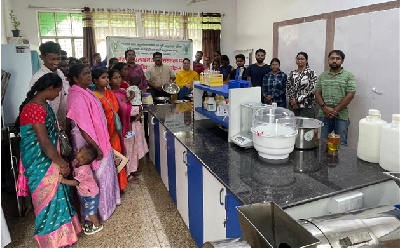
Farmers targeting a net income of approximately ₹12,000 per month may consider a unit of around 500 Oyster mushroom bags cultivated in staggered batches, requiring approximately 150–200 sq. ft. of suitable cultivation space. The production cycle generally includes substrate preparation, pasteurization, spawning, incubation, pinhead initiation, fruiting and harvesting, and may take approximately 45–60 days, depending on the strain and growing conditions.
Women centric FPOs and SHGs may also go for spawn production as not only source of income but also make quality spawn available to farming communities. Mushroom spawn was also provided to the participants to facilitate the adoption of mushroom cultivation at their respective locations and encourage them to take up mushroom production as an income-generating enterprise.
The training successfully imparted practical knowledge and skills in mushroom production and processing to tribal farmers and is expected to contribute to strengthening mushroom-based livelihood and entrepreneurship opportunities in the tribal areas of Jharkhand.
A total of 26 tribal farmers from three districts of Jharkhand participated in the training.
(Source: ICAR-Research Complex for Eastern Region, Patna)





Like on Facebook
Subscribe on Youtube
Follow on X X
Like on instagram