


21 January 2026, Nagpur
A one-day State-Level Workshop on ‘Developing an Action Plan for Researchable Issues Emerging from VKSA–2025’ was organised by Vasantrao Naik Marathwada Krishi Vidyapeeth, Parbhani, and hosted at ICAR–National Bureau of Soil Survey and Land Use Planning, Nagpur, today.
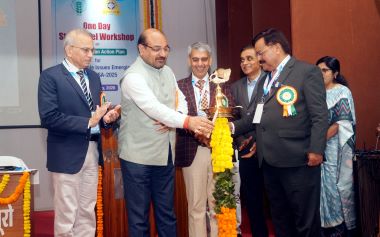
The workshop was attended by Dr. M. L. Jat, Secretary (DARE) and Director General, (ICAR); Shri Vikas Chandra Rastogi, Additional Chief Secretary (Agriculture), Government of Maharashtra; Shri Parimal Singh, Project Director, PoCRA; Dr. D. K. Yadav, Deputy Director General (Crop Science), ICAR; Dr. Indra Mani, Vice-Chancellor, VNMKV, Parbhani; and Dr. N. G. Patil, Director, ICAR–NBSS&LUP, who were present on the dais. Vice-Chancellors of the four State Agricultural Universities in Maharashtra, Directors of ICAR Institutes in the state, scientists, and subject matter experts from ICAR and SAUs also participated in the deliberations.
Shri Suraj Mandhare, IAS, Commissioner of Agriculture, Government of Maharashtra, highlighted priorities such as precision nutrient management, strengthening soil testing laboratories, expanding micro-irrigation supported by solar energy, and improving post-harvest management. He also called for the formulation of focused research projects under the Krishi Samriddhi Yojana. Smt. Varsha Ladda, Director General, MCAER, presented the achievements of the four State Agricultural Universities in Maharashtra.
Welcoming the participants, Dr. Indra Mani, Vice-Chancellor, VNMKV, highlighted the significance of the VKSA programme conducted during pre-Kharif and pre-Rabi seasons, particularly in capturing farmers’ feedback for problem identification and aligning research with practical field-level applicability. He emphasized the importance of collaborative efforts among institutions to deliver effective solutions at farmers’ fields.
In his keynote address, Dr. M. L. Jat, emphasized that the increasing complexity of agriculture cannot be addressed through oversimplified solutions. He highlighted the need for systemic approaches that integrate farms, markets, value chains, institutions, and policy frameworks. Dr. Jat underscored that bridging yield gaps by enabling low-performing farmers to approach attainable yields using existing technologies offers one of the most effective pathways for rapid and scalable impact. He further stressed the importance of breaking institutional silos, strengthening collaboration, and adopting demand-driven research aligned with market realities to ensure improved farmer incomes and long-term agricultural resilience. He also appreciated the leadership of Shri Rastogi in bringing together diverse organizations and institutions across Maharashtra to foster synergy and deliver a unified and clear message to stakeholders.
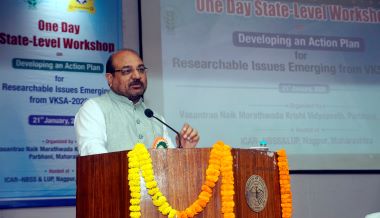
In his address, Dr. D. K. Yadav highlighted key challenges affecting agriculture in Maharashtra, including low crop productivity and pest and disease incidences in cotton, soybean, and pulses. He underlined the need for robust forewarning systems, promotion of climate-resilient high-yielding varieties, and large-scale demonstration of proven technologies at the farmers’ level.
Shri Parimal Singh, Project Director, PoCRA, stressed the importance of institutional collaboration through consortia-based approaches, citing initiatives such as PoCRA and Mahavistar in Maharashtra. He also emphasized the need for open sharing of databases among government institutions to enhance efficiency and impact.
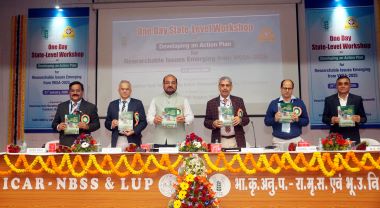
On the occasion, a publication entitled “Validation of Digital Soil Information for Adoption in PoCRA Villages of Maharashtra” was released by the dignitaries.
Addressing the gathering, Shri Vikas Chandra Rastogi, Additional Chief Secretary (Agriculture), Government of Maharashtra, stated that one of the major achievements of the VKSA programme has been the enhanced credibility of government institutions among the farming community. He emphasized the need for scaling up technologies developed by ICAR and SAUs, validating existing technologies, and systematically identifying research gaps for future interventions.
Dr. Sunil Gorantiwar presented six representative project proposals, which were discussed extensively during the workshop.
Dr. K. Sammi Reddy, Director, ICAR–NIASM, presented the researchable issues identified through VKSA across different thematic areas along with a proposed roadmap for 2026–2031.
The workshop also featured ten parallel technical sessions to prepare a draft unified actionable research plan for Maharashtra, covering the following thematic areas:
• Breeding and varietal development, including nutritional security
• Climate-resilient agriculture, including natural and organic farming
• Soil health management, including nutrient and fertilizer management
• Farm mechanization
• Plant protection, including AI-enabled image-based pest and disease detection and management (consortium mode)
• Horticulture
• Post-harvest management, value addition, market linkages, and credit issues
• Emerging technologies for precision agriculture (AI, IoT, drones, robotics, protected cultivation)
• Extension research and dissemination mechanisms
• Livestock management, including fisheries
The parallel sessions were followed by a valedictory session chaired by Shri Vikas Chandra Rastogi. The workshop concluded with a formal vote of thanks by Dr. N. G. Patil, Director, ICAR–NBSS&LUP, Nagpur.
(Source: ICAR–National Bureau of Soil Survey and Land Use Planning, Nagpur)





Like on Facebook
Subscribe on Youtube
Follow on X X
Like on instagram