


8 May 2026, Patna
ICAR Research Complex for Eastern Region, Patna, successfully organized a National Workshop on “Balanced and Eco-Friendly Nutrient Management for Sustainable Agriculture” today. The event brought together over 100 stakeholders, including scientists, experts, and farmers, to address the critical need for sustainable soil health management and develop strategies for curtailing excessive fertilizer use in identified districts.
The Chief Guest, Dr Sanjeev Chaurasia, Member of Legislative Assembly, Digha Assembly Constituency, Bihar emphasized that protecting soil health is a societal duty and a cornerstone of the ‘Viksit Bharat 2047’ vision. Dr Chaurasia urged the farming community to shift toward soil test-based management, green manuring, and organic inputs to ensure long-term agricultural viability.
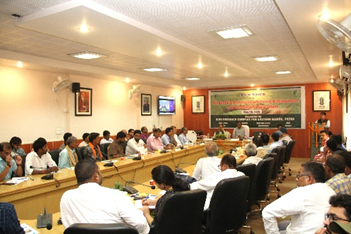
Dr Anup Das, Director, ICAR-RCER, highlighted the ‘Law of Minimum,’ stressing that crop yields are limited by the shortest supply of nutrients. He advocated for Integrated Nutrient Management (INM) a blend of crop residue recycling, organic manures, and micronutrients to reduce environmental losses while meeting modern agricultural demands.
Distinguished experts from various institutions including Dr Bikas Das, Director, National Research Centre on Litchi, Muzaffarpur, Dr Raghvendra Singh, Director, ICAR-Mahatma Gandhi Integrated Farming Research Institute, Motihari, along with other senior officials shared their insights during the programme and emphasized on integrated nutrient management, fertilizer responsive varieties and adoption of recommended cultural practices to reduce dependence on chemical fertilizers while lowering production costs and protecting natural resources.
Technical session witnessed deliberations and interactions on strategies for promoting balanced fertilizer use in Purnea, Organic and integrated nutrient management practices and field experiences on nutrient management in Eastern Region of India. Shift towards rice–maize cropping systems and expansion of potato and makhana cultivation in Purnea were identified as few reasons for excessive DAP use, adversely affecting soil health.
Farmers from different Districts including Purnea districts actively participated in the workshop and shared that lack of awareness often leads to imbalanced fertilizer use, resulting in increased cultivation costs and deterioration of soil health. Farmers also highlighted challenges such as rising prices of chemical fertilizers and limited availability of biofertilizers and quality organic manure.
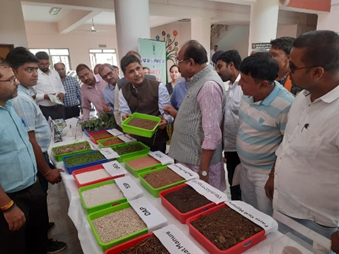
An exhibition showcasing bio-fertilizers and organic inputs provided farmers with accessible alternatives to expensive chemical fertilizers. Experts explained the benefits of cultivating dhaincha during summer as green manure to improve soil fertility and reducing the dependency on chemical fertilizer. Seeds of dhaincha were made available to the participating farmers. A field demonstration on foliar application of urea was also conducted to provide hands-on learning experiences to farmers and minimize nutrient losses.
Around 100 participants including farmers, scientists, experts, and other stakeholders attended the workshop.
(Source: ICAR Research Complex for Eastern Region, Patna)





Like on Facebook
Subscribe on Youtube
Follow on X X
Like on instagram