


Livestock is a cornerstone of Indian agriculture, contributing nearly 4.5% to the national GDP and over 25% to agricultural GDP while providing vital livelihood support to millions of rural households. Beyond its economic value, the sector acts as a dependable buffer against crop failures and ensures steady income through milk, meat, wool, and manure. With rising demand for animal-based products and growing emphasis on sustainable agriculture, livestock has emerged as a key driver of rural economic growth and nutritional security.

Despite being the world’s largest milk producer, India faces a serious structural challenge a 32% deficit in green fodder and 23% shortage of dry fodder. This persistent gap leads to inconsistent feed availability, increased input costs, and reduced milk yields, ultimately undermining rural livelihoods and national food security.
To address this critical bottleneck, the ICAR–Indian Institute of Maize Research, Ludhiana, launched an ambitious initiative titled “Upscaling Maize-Based Silage Value Chain in Punjab & Haryana”, supported by the Ministry of Agriculture & Farmers’ Welfare. The programme promotes maize silage as a scientifically proven, sustainable solution to fodder scarcity and provides farmers with a reliable, nutritious feed resource throughout the year.
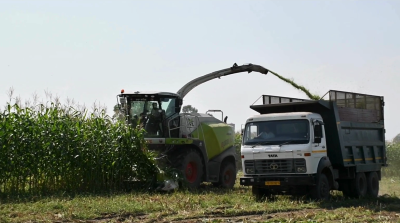
Maize has emerged as the crop of choice for silage due to its high biomass, rich starch content, excellent digestibility, short duration, and superior storage stability. Referred to as the “pickle (achar) of animals”, maize silage is a high-energy, fermented green fodder preserved anaerobically, ready for feeding within 40–45 days and storable for several months without losing quality. Its balanced nutritional profile ideal dry matter levels, 14–20% starch, moderate protein, optimal fiber, and essential minerals makes it a cost-effective, dependable feed for dairy animals.
IIMR’s intervention has been holistic, integrating genetic, agronomic, mechanical, and institutional innovations. The institute introduced high-yielding silage-specific maize hybrids, advanced cultivation practices, and mechanized harvesting technologies to boost fodder yield and quality. A deliberate emphasis on kharif-season production supported crop diversification, reduced groundwater extraction associated with paddy, and improved environmental sustainability.
To ensure inclusivity, ICAR-IIMR promoted multiple silage preparation models pit, drum, bag, and bale silage suitable for farmers of varying scales. This flexibility has catalyzed rural entrepreneurship, leading to the emergence of commercial silage units and vibrant local fodder markets. Through extensive demonstrations and capacity-building efforts, more than 1,000 farmers and dairy stakeholders across five clusters in Punjab and Haryana have been trained in scientific silage production.

The outcomes speak for themselves. In nearly 400 acres of demonstrations conducted across kharif and spring seasons, ICAR-IIMR’s improved technologies delivered a 15% increase in fodder yield over existing farmer practices. Feeding trials revealed 10–20% improvements in milk yield, attributed to the high-energy whole-plant maize silage that includes the cob. ICAR-IIMR also showcased how leftover biomass from baby corn and sweet corn often discarded as waste can be transformed into nutrient-rich silage with supplemental energy sources, effectively turning “waste into feed and wealth.”
Building on this success, ICAR-IIMR is now setting up model silage bale-making units in Punjab and Haryana, each costing about Rs. 1.30 crore. These units will serve as hubs for demonstration, training, quality control, and entrepreneurship development. The initiative is poised to benefit nearly 3,000 farmer families every year, strengthening the silage value chain and ensuring year-round fodder availability.
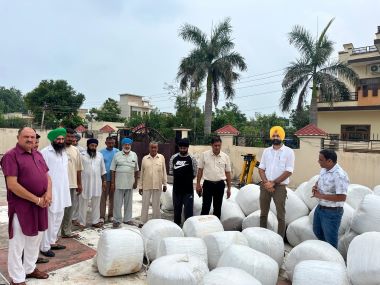
Driven by scientific rigor, innovation, and farmer involvement, maize silage is reshaping livestock feeding systems across North-West India. It is enhancing fodder security, improving dairy productivity, and opening new avenues for rural entrepreneurship. Through its commitment to cultivating and managing maize for silage on 500 acres each in kharif and spring seasons across Punjab and Haryana, ICAR-IIMR is empowering farmers, inspiring silage entrepreneurs, and contributing decisively to a resilient, sustainable agricultural future.
(Source: ICAR–Indian Institute of Maize Research, Ludhiana)





Like on Facebook
Subscribe on Youtube
Follow on X X
Like on instagram