


Sohiong (Prunus napaulensis), an indigenous fruit of Meghalaya traditionally cultivated in the Khasi and Jaintia Hills, holds significant potential for nutritional security, livelihood diversification and sustainable horticultural development. Known for its distinctive flavour and dark-purple fruits, Sohiong offers opportunities for fresh consumption and value-added products. However, its commercial cultivation has been constrained by a long gestation period, limited availability of quality planting material and underdeveloped market linkages.
Research interventions at ICAR Research Complex for North Eastern Hill Region (ICAR-RC NEH), Umiam, have opened new avenues for commercial Sohiong cultivation. The standardisation of tongue grafting has reduced the gestation period from 7–9 years to 3–4 years after planting, enabling growers to potentially realise returns earlier. The research has also led to the identification of promising genotypes, improved production technologies and packaging technology that extends fruit shelf life to up to nine days.
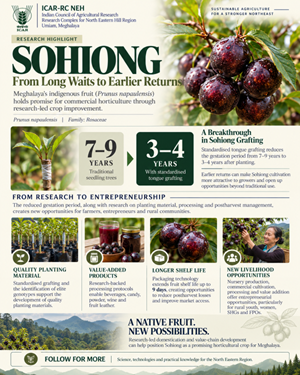
In addition, processing protocols have been standardised for a range of value-added products, including beverages, candy, powder, wine and fruit leather. These developments offer opportunities to expand the utilisation of Sohiong and strengthen value addition across the horticultural value chain.
The interventions hold particular promise for women, rural youth, Self-Help Groups (SHGs) and Farmer Producer Organisations (FPOs), creating opportunities in nursery production, cultivation, processing and marketing. With continued research, greater farmer participation and stronger market linkages, Sohiong could emerge as a commercially promising indigenous fruit crop, contributing to rural livelihoods and the horticultural economy of Meghalaya.
(Source: Division of System Research and Engineering, ICAR-RC NEH, Umiam, Meghalaya)





Like on Facebook
Subscribe on Youtube
Follow on X X
Like on instagram