


In the Balipatna block of Odisha, where acidic soils and imbalanced fertilizer use once constrained agricultural productivity, a remarkable transformation has taken shape. Declining soil health, rising input costs, and stagnating farm incomes had long posed challenges for farmers. What began as a response to these issues has evolved into a powerful, science-led initiative driven by the collective strength of women.
Recognizing the need for sustainable solutions, ICAR–Krishi Vigyan Kendra (CIFE), Khordha, under the guidance of ICAR–ATARI, Kolkata, implemented a focused intervention over the past four years through the Scheduled Caste Sub Plan. The initiative centered on restoring soil health through balanced nutrient management while simultaneously creating livelihood opportunities through vermicomposting, with women Self-Help Groups (SHGs) at its core.
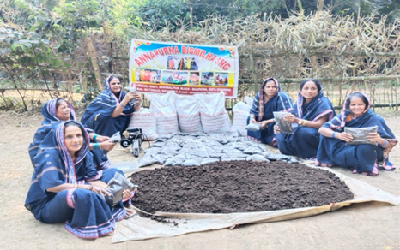
More than 300 Scheduled Caste farmwomen from 30 SHGs across villages including Majhihara, Dhanahara, Rajas, Danapada, Guapur, Alishi Sasan, and Barahala were trained in soil testing, integrated nutrient management, and scientific vermicompost production. With the support of silpaulin vermibeds and Eisenia fetida earthworms, training was quickly translated into practice, leading to the establishment of 100 functional vermicomposting units that effectively convert farm waste into valuable organic manure.
The economic impact has been substantial. Collectively, these SHGs now produce approximately 300–320 tonnes of high-quality vermicompost annually, catering to increasing demand from farmers, nurseries, urban households, and government agencies. With market prices ranging between ₹10–15 per kilogram, participating women are earning an additional ₹3,000–₹6,000 per month, transforming supplementary income into a stable and reliable source of livelihood.
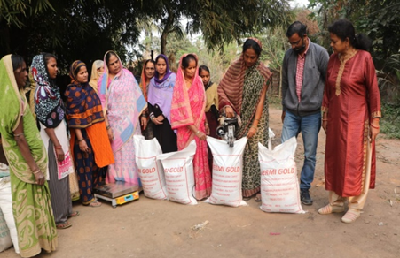
A notable example of this progress is the Annapurna Bismilah SHG from Majhihara village, which has successfully branded and marketed its product under the name “VERMIGOLD.” This transition from production to entrepreneurship has significantly enhanced market visibility, consumer trust, and profitability.
In parallel, the initiative has promoted soil test–based nutrient management by integrating vermicompost with the judicious use of chemical fertilizers. This balanced approach has improved soil structure and fertility, enhanced crop quality, reduced pest and disease incidence, and lowered input costs contributing to more resilient and sustainable farming systems.
The initiative exemplifies an integrated approach to rural development by linking soil health restoration, circular bio-economy, and women’s empowerment into a cohesive and field-ready model. Its low-cost, scalable, and replicable nature makes it well-suited for convergence with national programmes such as the Scheduled Caste Sub Plan and the National Rural Livelihoods Mission, while advancing the broader goal of climate-resilient and inclusive agriculture.
Beyond measurable economic gains, the intervention has catalyzed meaningful social change. Women have emerged as agri-entrepreneurs and knowledge leaders, gaining confidence and playing a more active role in household and community decision-making. They are now key advocates of balanced fertilizer use, promoting sustainable agricultural practices within their communities.
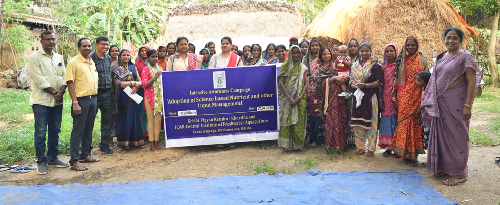
What began as an effort to address soil degradation has matured into a compelling model of ecological restoration and inclusive rural development. The Balipatna vermicomposting initiative stands as a testament to the impact of science-driven, community-led interventions in revitalizing soils, strengthening livelihoods, and empowering women offering a scalable blueprint for sustainable agriculture in similar agro-ecological regions.
(Source: ICAR- Agricultural Technology Application Research Institute, Kolkata)





Like on Facebook
Subscribe on Youtube
Follow on X X
Like on instagram